
A Blacksmith in Illinois
Bert Wikle was a member of the German-American Community in the early twentieth century


Alista Wikle introduces us to her great-great-grandfather, Bert Wikle, a German-American, who worked as a blacksmith in Illinois during the first half of the twentieth century.
This was a tumultous time for the old German community in America as the First World War brought their adopted nation into direct confrontation with their ancestoral country.
Complicating the lives of those like Bert Wikle still further was the brisk pace of technological change. The arrival of motor cars and electricity would, as Alista explains, redefine what it meant to be a rural blacksmith.

Almost exactly a century ago, the photos featured below captured Bert Wikle as he lived and worked in Illinois during a time of great cultural, political, and technological transition. As a German-American during the First World War aand a rural blacksmith faced with the boom of early automobiles, Bert’s cultural identity and career were completely transformed during his lifetime. His story and photos are a symbol of the adaptability and resilience our ancestors displayed in the face of a rapidly changing world.
The German-American population in the late nineteenth and early twentieth centuries had a fundamentally different social structure from what is seen today. It was then one of the country’s largest foreign populations. 7.2 million immigrants had arrived from central Europe in the century between 1820- 1920, and German-Americans were considered a distinct ethnic group. Families like Bert’s lived in communities immersed in German language and customs, comparable to a modern-day Chinatown district, with the largest concentration of this population falling within the Midwestern 'German Triangle'.
Unlike many heritage groups today focused on traditional cultural elements, the community thriving in the United States at that time still maintained active ties with contemporary Germany. This was largely thanks to new waves of immigrants, as well as families who kept in contact with their relatives overseas. Even for someone like Bert, born almost two centuries after his ancestors arrived in what was then the British colonies, this ethnic community would have been the backdrop to his youth.
As the United States prepared to enter the First World War in 1917, the community Bert belonged to confronted a dilemma. He was now a citizen of a nation who was at war with Germany. As American troops prepared to cross the Atlantic to Europe, those who remained encountered a secondary challenge as political propaganda supporting the war effort intensified.
The social climate in this period is often referred to as 'Anti-German Sentiment'. Identifying as a German during this time became very dangerous. Members of the community were ostracised, discriminated against, and even lynched. One of the most infamous such attacks happened in 1918 just 60 miles from where Bert was living, not long before these photos were taken.
In the interest of self-preservation, public rejection of the German identity became the pragmatic option for a majority of the population.
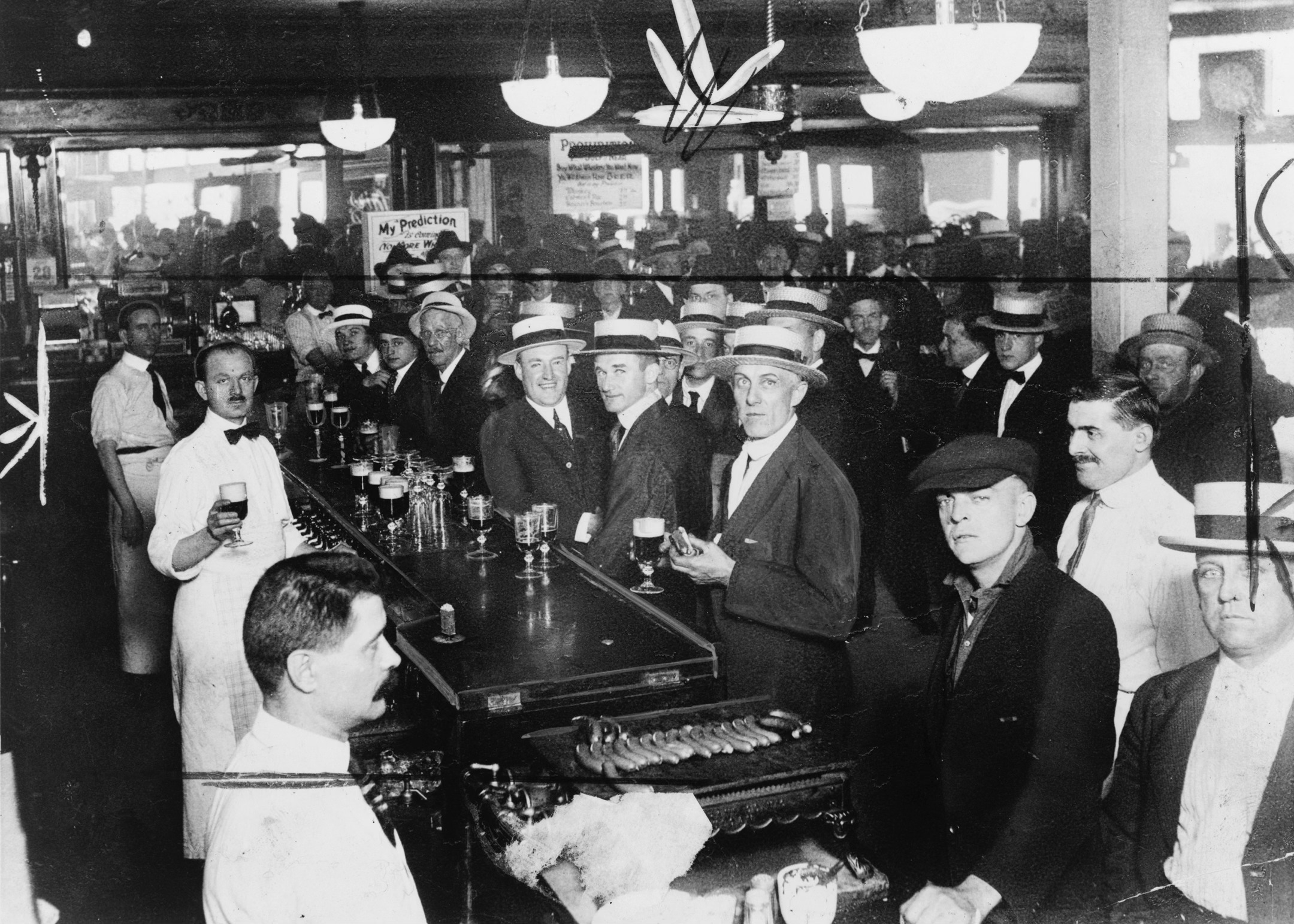
The beginning of Prohibition in January 1920 drove German-Americans into another uniquely vulnerable position. Beer production and distribution accounted for a significant portion of their income as German-style lager had come to dominate the country’s beer industry as a whole. In response many businesses were forced to close their doors or adopt new models.
Repression of this cultural symbol was a final blow to the German-American identity in the early twentieth century. It left the community literally and figuratively erased. By the 1930s, as another conflict approached, German-Americans were no longer considered a distinct ethnic group.
The interwar period brought about many technological advancements too, as money was reallocated from military to infrastructure projects. One great initiative was electrification. Long into the twentieth century rural areas remained cut off from the national grid. It was not, for instance, until the Rural Electrification Administration of 1935 that many Illinois households began benefitting from public utilities. Trade buildings like Bert’s workplace, however, made the transition more quickly.
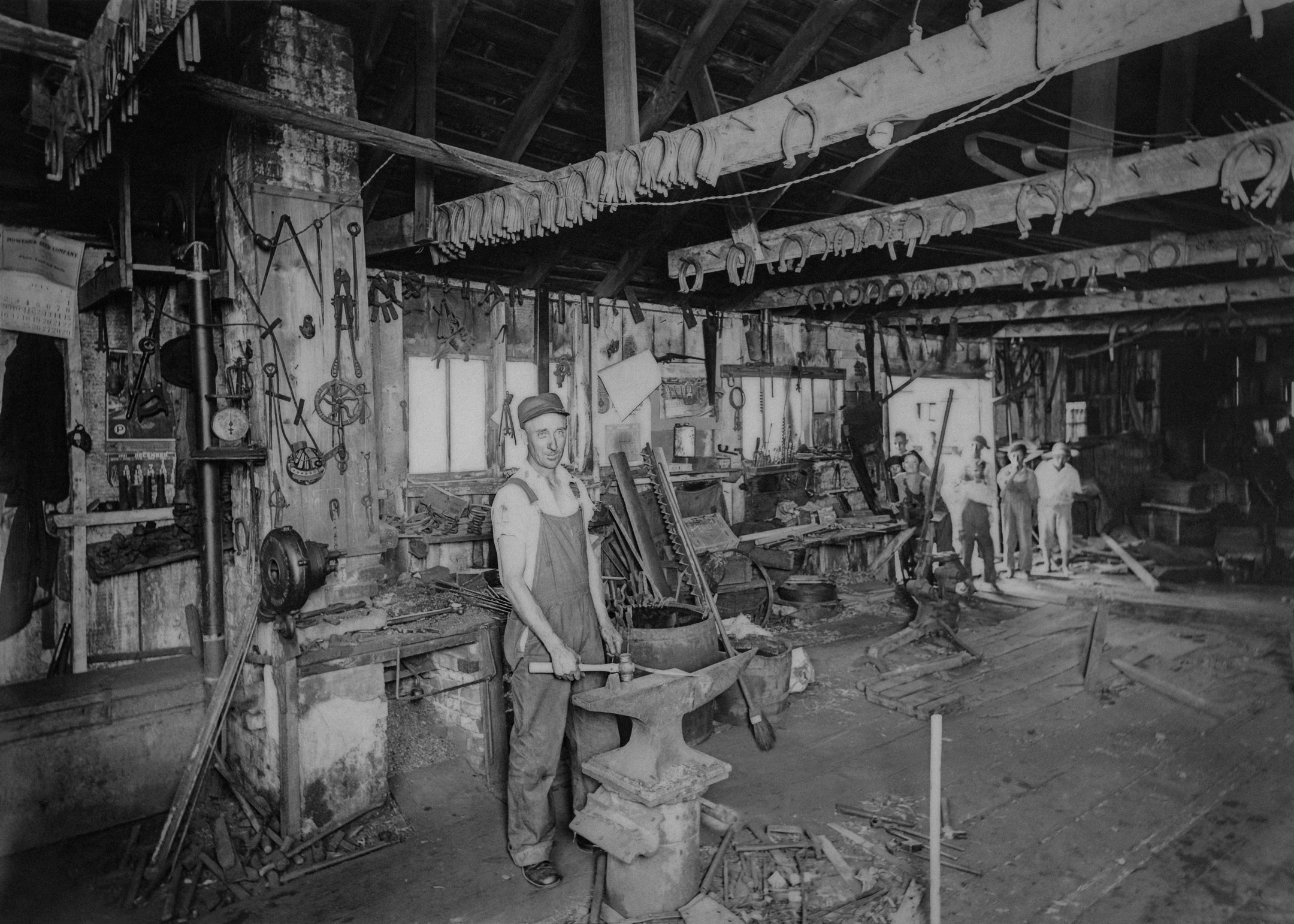
In this photograph of Bert's workshop, an electric forge blower and rheostat for controlling current can be seen fixed to the column on Bert’s left, with a long wire snaking up to the ceiling. Just over a decade earlier, the use of electricity in the blacksmithing profession had still been a topic for debate (The American Blacksmith, 1906).
The arrival of electricity transformed how Bert did his job, but it was another technological development that changed the nature of what it meant to be a blacksmith. First released in 1908 but with development stalled during the war, Ford’s ‘Model T’ entered the 1920s ready to impress (Scientific American, 1919).
By 1923, Ford’s prices had dropped sufficiently to bring automobile ownership to those in the lower income brackets, and the Model T 'accounted for almost 55 percent of American automobile production'.
In rural areas of Illinois, early automobiles were also used in creative ways around the house and farm. As early as 1903 and until the 1930s, there are reports of automobile engines being repurposed to power farm equipment and washing machines; to plough snow, and even shear sheep. For blacksmiths like Bert, this boom in popularity meant the expanding of horizons beyond horseshoes and carriage repairs as they became some of the very first car mechanics.
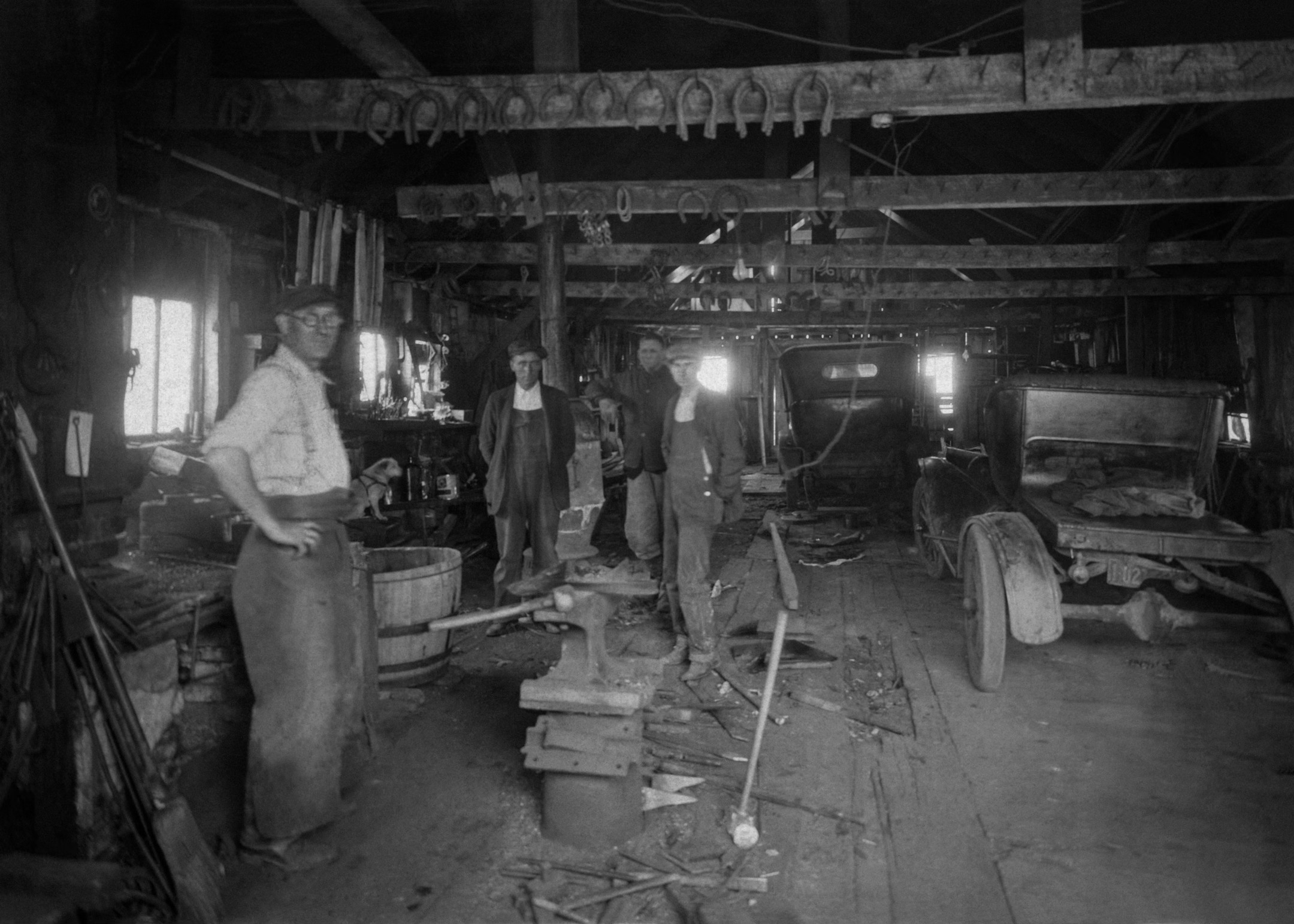
In this later photo, likely taken in the late 1930s or 1940s, the iconic 1915 Model T is pictured in the foreground along with a 1915-19 Stanley Steamer visible farther back. Horseshoes can be seen hanging above, just as in the earlier images, perfectly representing this transitory period in which horses and automobiles coexisted on the road, on farms, and in shops like Bert’s.
Bert Wikle’s life, profession, and community, all serve as a reminder of the changes and challenges many were experiencing in that period. In his youth, he went from a German-American of distinct ethnicity to an unhyphenated American in a culture where that heritage was suppressed and ostracised. As a professional, he adapted his role to meet changing demands by applying traditional smithing skills to the fledgling automobile industry.
Bert’s life as captured in this photo collection is representative of the real people who are often overlooked by the history books. His story, like that of so many of our ancestors, is a reminder of how much times have changed but also how much of the human experience remains constant.
In the 2020s, just as a century ago, we are learning to adapt our jobs to the new technologies available and the changing landscape of supply and demand. Just as the loosening of resource restrictions from the First World War led to a period of rejuvenation and innovation, we are once again entering a time of socio-economic recovery that is giving way to new opportunities.
Our country is continuing to redefine what it means to be American, and to explore what role heritage plays in our lives. By connecting with these forgotten stories from our past, we can gain new perspectives into the narratives shaping our world today •
This feature was originally published January 9, 2024.
Further Reading
The American Blacksmith: A Practical Journal of Blacksmithing and Wagonmaking, New York Public Library
Mark Benbow, ⇲ German Immigrants in the United States Brewing Industry (1840-1895).
Kline, R., Pinch, T. Users as Agents of Technological Change: The Social Construction of the Automobile in the Rural United States. Technology and Culture.
Germans in the Midwest. National Museum of American History.
Debra Reid, Illinois and the Interwar Years, 1914 to 1945. Journal of the Illinois State Historical Society
E. A. Schwartz. The Lynching of Robert Prager, the United Mine Workers, and the Problems of Patriotism in 1918. Journal of the Illinois State Historical Society
C. W. Wells. The Road to the Model T: Culture, Road Conditions, and Innovation at the Dawn of the American Motor Age. Technology and Culture.
With thanks to Desmond Wikle.
📸 Dive into our Features
🎤 Read Interviews
🎧 Listen to Podcasts
🖼️ Buy fine art prints & more at our Store


