
A Brief Atlas of the Lighthouses at the End of the World
Jose Luis González Macías on the wild beauty of lighthouses


Lighthouses have captured the imagination of artists for many centuries. They are the solitary outposts of civilisations; the crucial saviours of human lives; astonishing engineering marvels.
‘There is something beautiful and wild in these impossible architectures’, writes Jose Luis González Macías at the beginning of his evocative book, A Brief Atlas of the Lighthouses at the End of the World. ‘These precious structures have been the homes and workplaces of men and women, whose romantic guardianship has saved countless lives from cruel seas.’

Inspired by this thought, several years ago González Macías began to compile a list of these enchanting buildings. He sought out structures old and new, some built of stone and others resembling wicker baskets, in locations from Ukraine to New Zealand. All of these lighthouses stood in remote locations, where they have often stood, like silent sentinels amid the waves, for many centuries.
A writer and designer by profession, González Macías produced graphic art, maps and plans for each of the lighthouses he selected. To draw out the characters of these structures still further he researched the human stories, the engineering peculiarities and rich legends that were attached to them. The result was a 150-page atlas, filled with lively accounts thirty-four distinct lighthouses.
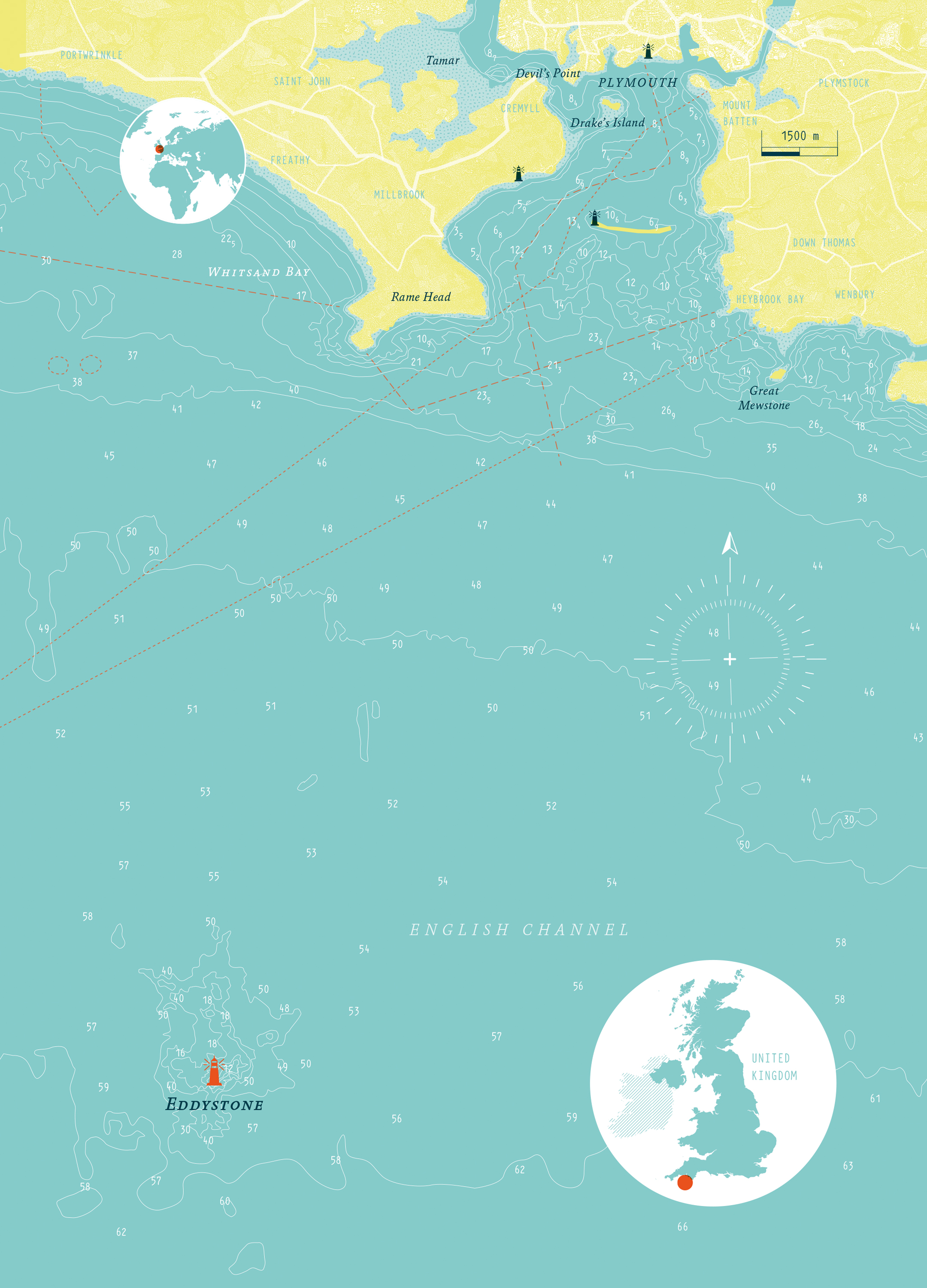
This extract for Unseen Histories is taken from his chapter on Eddystone Lighthouse. Situated on an outcrop of perilous rocks, twelve miles to the south of the Royal Naval port of Plymouth, Eddystone has been a familiar sight for generations of sailors.
A lighthouse was first built here in the last years of the seventeenth-century warning mariners of all types against the dangers of the sea. It still stands today.
For references please consult the finished book.
Eddystone Lighthouse
In one of the National Museum of Scotland’s collections, you can see a dark object, flat and oval-shaped, weighing about 200 grams. The accompanying text reads: A piece of lead taken from the stomach of a keeper after the fire of 1755.
It is the night of 2 December, and the lamp in the Rudyard Tower, off the Plymouth coast, is ablaze. Keeper Henry Hall, aged ninety-four and still active, tries to stifle the fire by throwing buckets of water towards the upper level. Because of the flames, the lead roof melts and a piece of molten metal falls into his mouth. Despite this, Henry Hall keeps struggling alongside his companions to get the fire under control. On the verge of exhaustion, the fire still raging, the lighthouse-keepers take refuge on a nearby crag until, eight hours later, a boat transports them to the shore.
Henry Hall survives another twelve days. The physician Edward Spry, who carries out the post-mortem, writes a report for the Royal Society giving an account of events, to the disbelief of some. Dr Spry spends the rest of his days obsessed with restoring his reputation and carries out repeated experiments on dogs and birds, pouring molten lead into their throats, to demonstrate that they could remain alive.
The Rudyard Tower was destroyed. But it wasn’t the first lighthouse to occupy Eddystone Rock, nor would it be the last. Fifty-seven years earlier, the Winstanley Tower had been built in this same exposed location, becoming the first lighthouse in the world located in the open seas.
Henry Winstanley was an eccentric businessman who loved architecture, hydraulic machinery and automated contraptions. After several of his ships were wrecked on the reef, he erected a delicate lighthouse that looked better suited to decorating a dolls’ house than withstanding the inclemencies of the sea. While he was assembling this precious Meccano set in the waters of the English Channel, a French ship seized him and carried him off to France as a prisoner. When King Louis XIV learned of the incident, he ordered his immediate release, saying: France is at war with England, not with humanity.
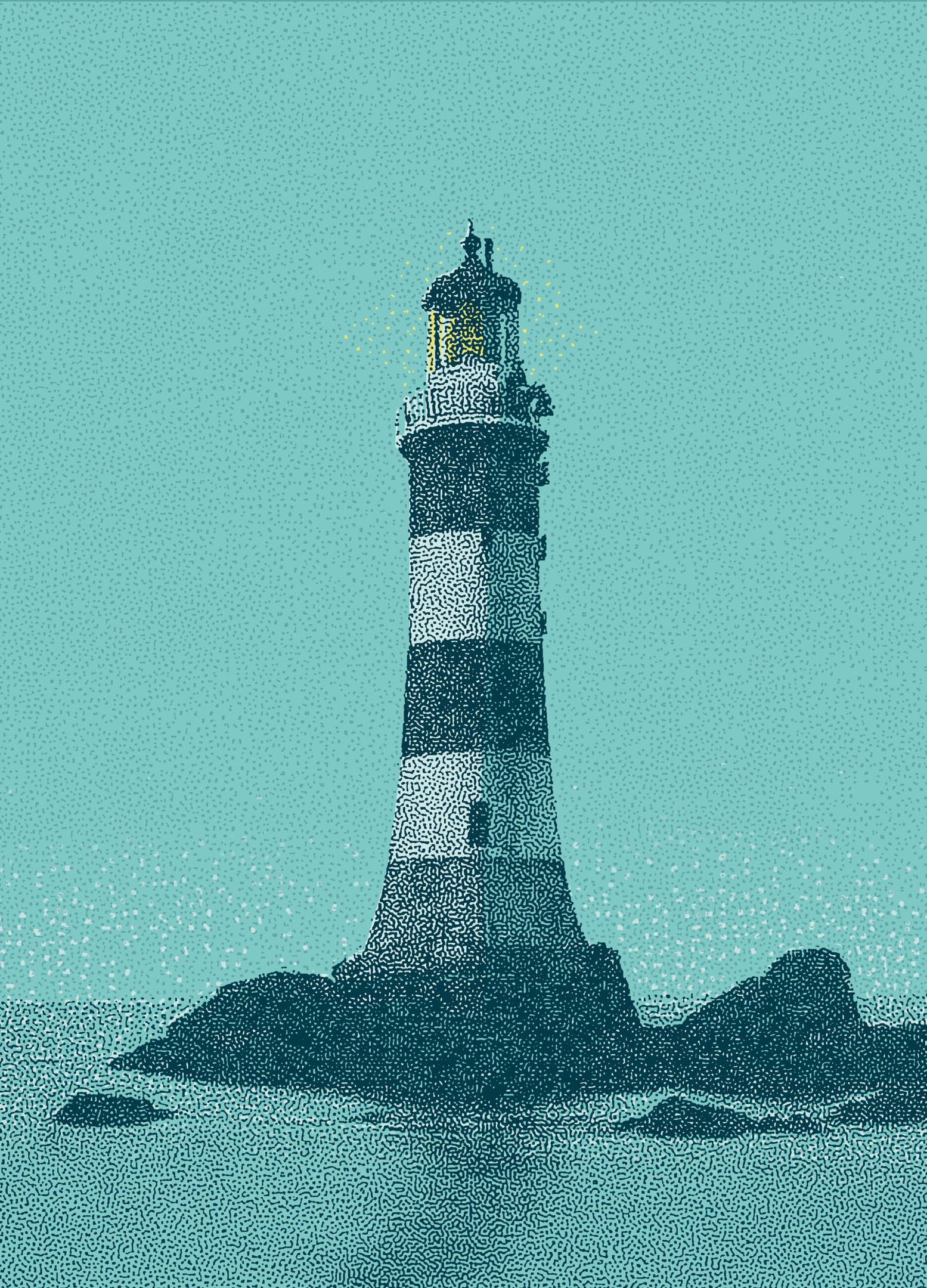
Winstanley returned to Eddystone, and though his first lighthouse was destroyed by a storm, he managed to erect an even more beautiful second tower that remained upright until 1703. He believed absolutely in the solidity of this latest construction, even stating that he would want to be inside it during the greatest storm there ever was. Ill luck or rashness meant that on 26 November, Winstanley was indeed on Eddystone. That night, a violent cyclone known as the Great Storm devastated the English coast, dragging the tower and all its occupants to the bottom of the sea •
This excerpt was originally published October 26, 2023.
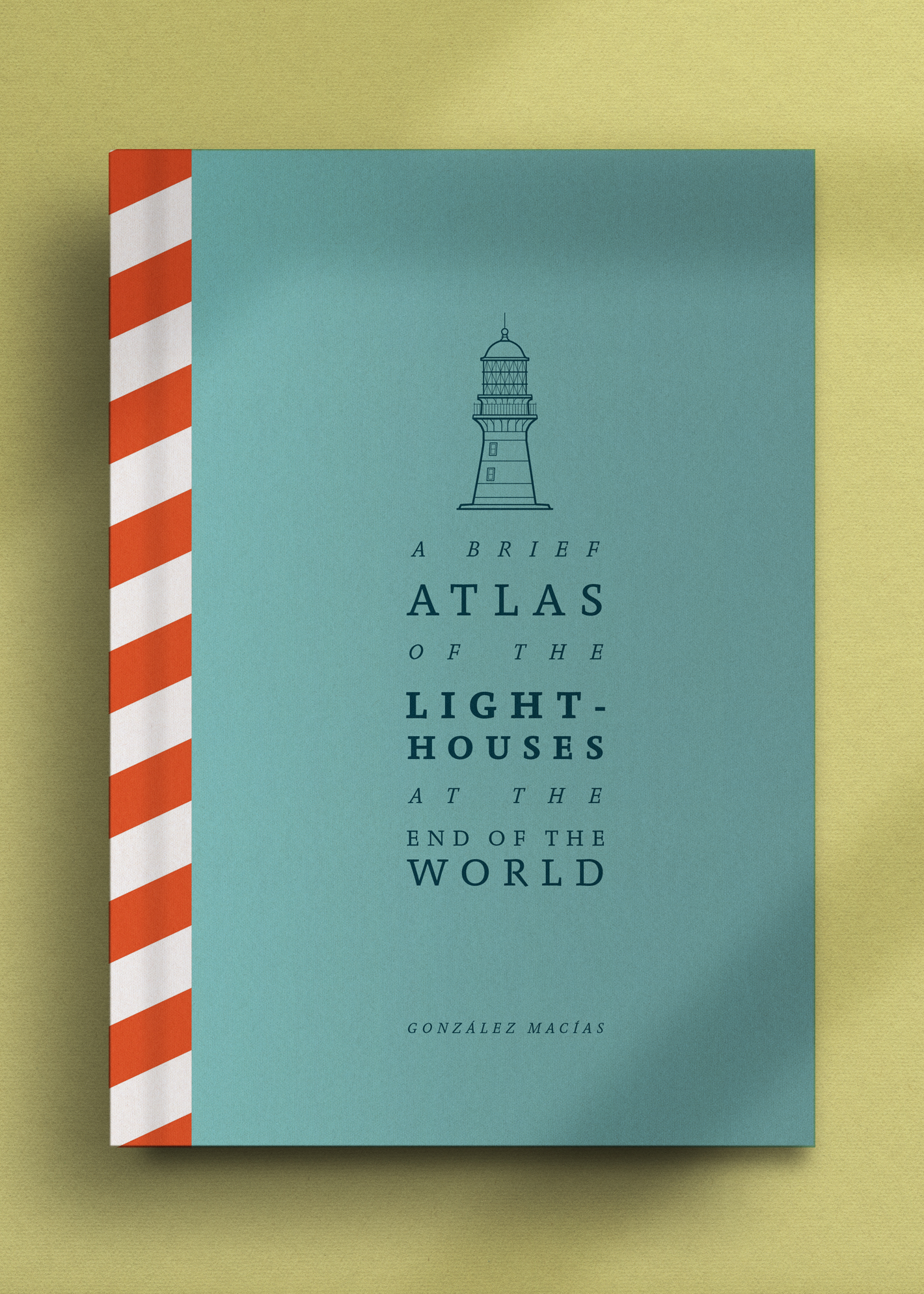
A Brief Atlas of the Lighthouses at the End of the World
Pan Macmillan, 19 October, 2023
RRP: £20 | 160 pages | 978-1529087147
“Illuminating” – The Observer
There is something beautiful and wild in the impossible architecture of lighthouses. They have been the homes and workplaces of men and women whose romantic guardianship has saved countless lives from cruel seas. Yet while that way of life fades away, as the lights go out and the buildings crumble, we still have their stories.
From a blind lighthouse keeper tending a light in the Arctic Circle, to an intrepid young girl saving ships from wreck at the foot of her father's lighthouse, and the plight of the lighthouse crew cut off from society for forty days, this is a glorious book full of illuminating stories that will transport the reader to the world's most isolated and inspiring lighthouses.
With over thirty tales that explore the depths to which we can sink and the heights to which we can soar as human beings, and accompanied by beautiful illustrations, nautical charts, maps, architectural plans and curious facts, A Brief Atlas of the Lighthouses at the End of the World is as full of wonder as the far flung lighthouses themselves.
Translated from Spanish by Daniel Hahn.
With thanks to Sophie Portas. Graphics reproduced with permission from Picador.
📸 Dive into our Features
🎤 Read Interviews
🎧 Listen to Podcasts
🖼️ Buy fine art prints & more at our Store


