
A Dream of Heavenly Horses
Louis D. Hall on horses, enchantment and Ancient China


Louis D. Hall's new book, In Green, is both the chronicle of an adventure across Europe and an exploration of the ancient bond that exists between humans and horses.
In this piece Hall recounts an old story that testifies the power horses have long held over the human imagination.
Two millennia ago the Emperor Wu-ti of China heard a story about some magnificent creatures, the 'Heavenly Horses'. In his quest to find them global geopolitics was forever changed.

Ever since he was a boy the Emperor Wu-ti (156-87 BCE) of the Han dynasty was transfixed by tales of Heavenly Horses. Twenty hands tall they stood, he was told, with hooves the size of a man’s fist; manes reached their knees and their tails were so long they swept the ground from which they flew. These horses lived in a land faraway and they sweated red pearls of blood.
In 138 BCE the Emperor was forced to begin a quest to find them. For years China had been at the mercy of its horse riding neighbours. Unruly clans of nomads had been pillaging settlements on its western frontier in quick return for bribes and gifts of Chinese appeasement.
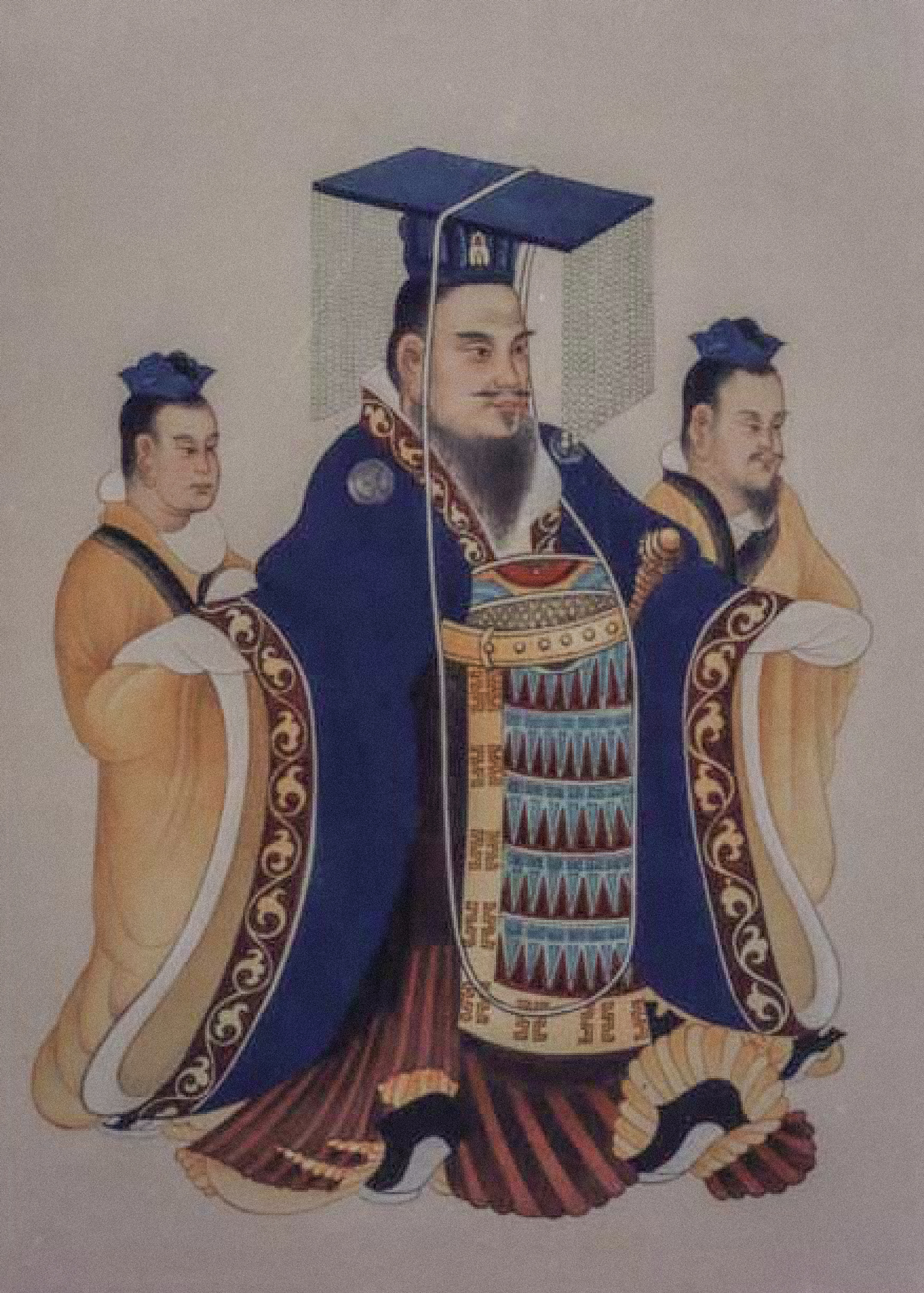
The nomadic Xiongnu people, later to reform as the 'Huns' that tore down the Roman Empire, were the fiercest. By the time Wu-ti came to the throne in 141 BCE China was on the brink. The conflict was costing a fortune and the illusive nomads were gaining in strength, numbers and ambition.
Channelling his childhood dreams, the Emperor proclaimed to the court that these Heavenly Horses were real and their existence was a sign, ‘a gift from the Great Unity’, as his fawning personal poet suggested. For further proof he sought out the sacred Yi Jing, ‘The Book of Changes’ , a script consulted when divine affirmation was required, and discovered an oracle that confirmed the message: ‘divine horses are due to appear from the northwest.’
With ministers told, he made his plans clear: from the offspring of these superior horses the plundering and the raids dealt by the lawless Xiongnu could finally be balked. Further to this, believing his own rule to be one both infallible and predestined, with the nurture of this heavenly breed Emperor Wu-ti could be assured of life after death. As it was pre-ordained, upon his final hour he would vanish ‘in his skyward gallop’ and at last claim his immortality.
Little did the Emperor know, this quest for the Heavenly Horses would not only change the fate of China, Central Asia and Europe, but come to define the modern era. Wu-ti’s immortality remains unquestioned.
At fifteen years old Emperor Wu-ti inherited a vulnerable China out of step with its neighbours. In the aftermath of the Warring States Period (475-221 BCE) it became apparent that those with the better horses were those who stood a greater chance of survival.
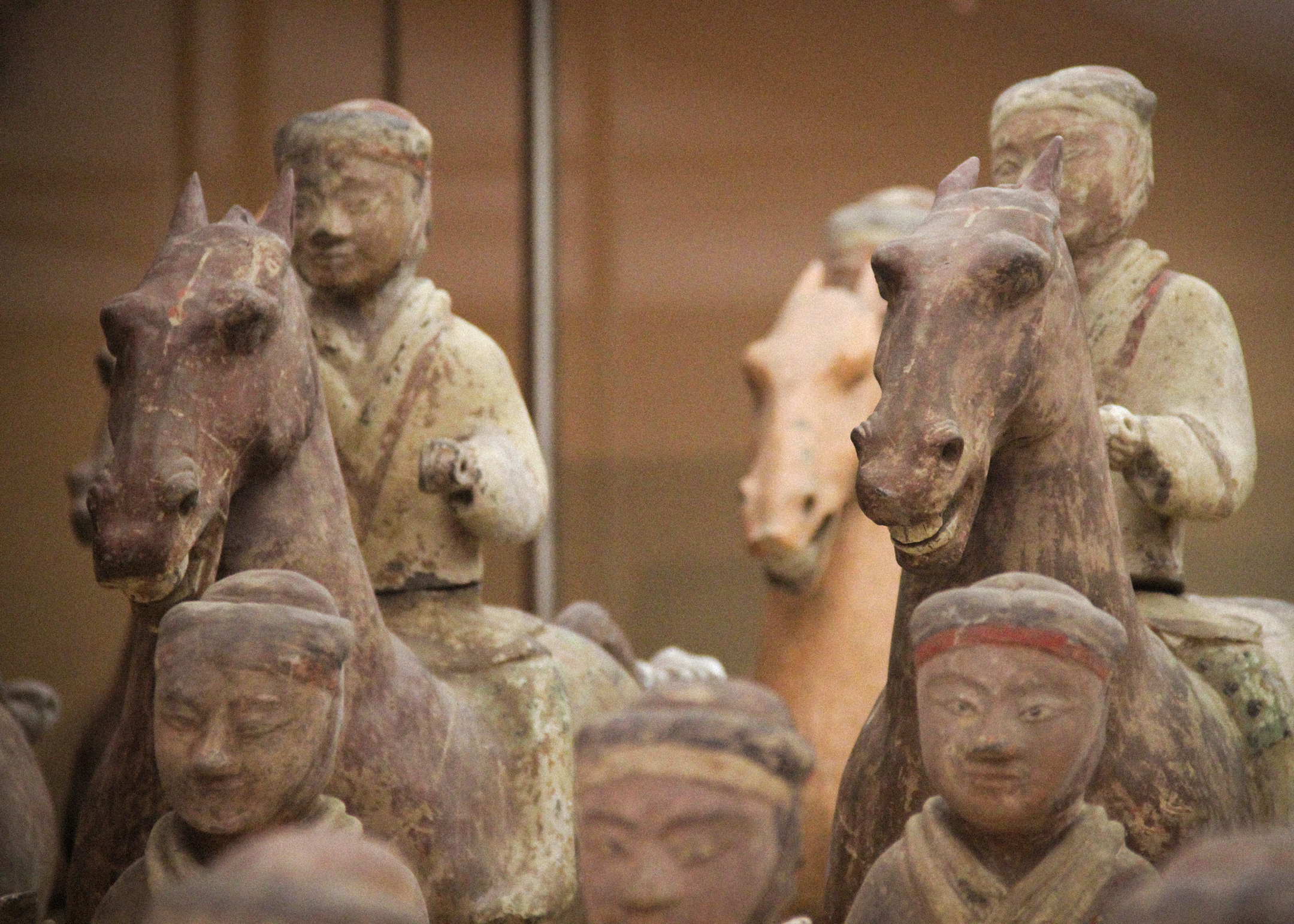
Although introduced to horses by the Indo-Europeans sometime between 1500 - 1200 BCE, China had never quite grown out of their old reliance on chariots. Associated with their uncivilised nomadic neighbours, mounted warfare was avoided at all costs. Horses were to be driven not ridden. With a juvenile understanding in the subtleties of breeding and care, China would come to rely heavily on equine imports.
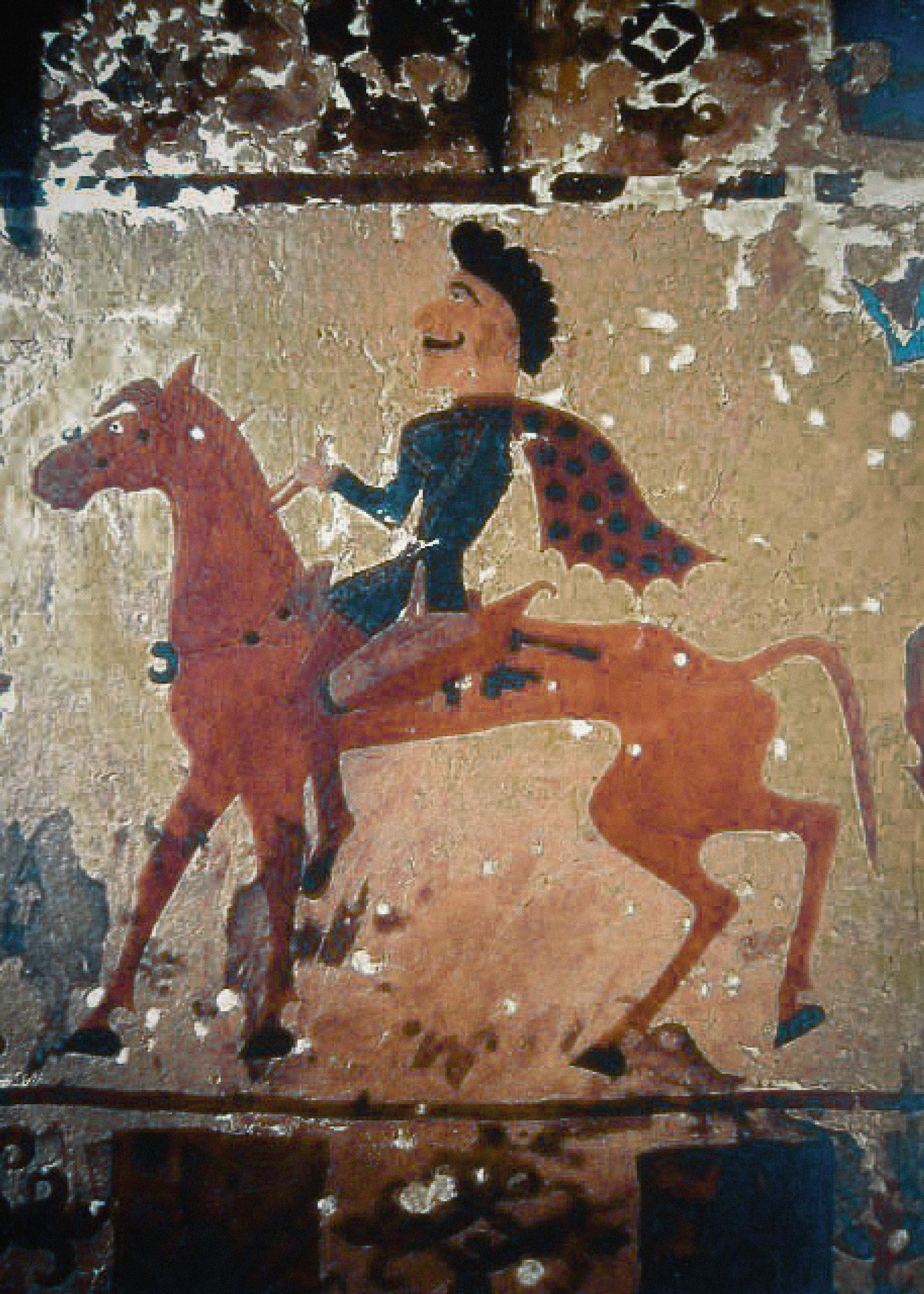
Indeed, the Chinese word for war horse, rong ma, literally translates as ‘western foreigners’ horse.’ Wu-ti’s predecessors paradoxically found themselves buying horses from the very steppe people that were attacking them - all under the command of the Xiongnu. Recognised by the Chinese as ‘clamorous barbarians’ who would drink from the skulls and wear the skins of those they killed, the Xiongnu were the finest horsemen in Eurasia.
While adopting many of the habits of the horse-mad Scythians, much of the Xiongnu's terror was fostered through their nomadism. Able to move throughout the Pontic-Caspian steppe at will, they roamed in an abundance of mineral rich grasses and alfalfa, ideal for breeding tall, fast horses.
This ocean of grass the Xiongnu controlled was a world away from the irregular lands of the Han heartland. While heavy rainfall scoured the soil upon the banks of China’s Yellow River, disrupting any hope of consistent feeding for animals, the Gobi desert lay like a lifeless body of sand and pebble, morphing into viridescence only once the forbidden steppe of the uncharted regions had been reached.
In contrast to China, a settled empire defending a thousand-mile steppe frontier, the ever warring Xiongnu evolved fast in their capabilities, absorbing equine tricks and breeding nuances with every ride and battle they made.
As one of Wu-ti’s ministers explained, the Xiongnu ‘move on the feet of swift warhorses, and in their breasts beat the heart of beasts.’ Wu-ti needed change. While the Xiongnu galloped ahead, China stood static, encased by borders and shadowed by a chariot-driving history. It was time they took a leap of faith.
The Quest
The Heavenly Horses were to said to live in a place called the Ferghana Valley. Drawn out between modern eastern Uzbekistan, southern Kyrgyzstan and northern Tajikistan, this valley was pictured as a land of eternal jade-green rivers and roses that grew as high as the sky, wrapped around poplars with roots entrenched deep into the earth.
Despite being three thousand miles away, risking a quest to this otherworldly realm was something that made perfect sense to the Emperor. Not only was his nation in need of change, but from his teenage ascension to the throne, Wu-ti believed very strongly that he controlled the seasons and that his power was of a celestial nature. The banks of the Yellow River would break in flood because of his own dark mood. A poor harvest was a consequence of a bad night’s sleep.
Of all the sovereigns who claimed the authority of Heaven, Wu-ti was the most outspoken. His Han and Qin predecessors had been largely content with opulent ritual and public adoration, but Wu-ti was different - his belief ran deeper. No quest was beyond his reach. In this state of self-claimed transcendence, therefore, what the Emperor struggled with most was the fact that his earthly borders were being pillaged and his nation was on the precipice of collapse.
The horse riding enemy was no ethereal matter: the very existence of China and the Han dynasty was under threat. The plan to retrieve the Heavenly Horses was not made merely as a solution to protect China, but was the manifestation of a predetermined calling; the very oasis in which to plant the Emperor’s immortality.
‘They will draw me up,’ he wrote in a poem, ‘and they will carry me to the Holy Mountain.’ Wu-ti’s celestial soul required a vehicle through which to be taken to Heaven and these galloping horses were his sign and his right.
This wouldn’t be the first time a Chinese leader had tried to face up to the threat of the nomad enemy. In 307 BCE King Wiling of Zhao (a contemporary of Alexander the Great’s) broke Chinese conventions and began to dress his troops in nomadic trousers and robes. He then trained them in mounted archery, the art so well exemplified by the enemy. ‘A talent for following the ways of yesterday is not sufficient to improve the world of today,’ he stated.
Like Wu-ti, this deviation from the norm came not out of choice but necessity. While mimicking the enemy certainly improved the state of the Chinese cavalry, by the time Wu-ti came to the throne, however, the nation’s military strength had deteriorated.
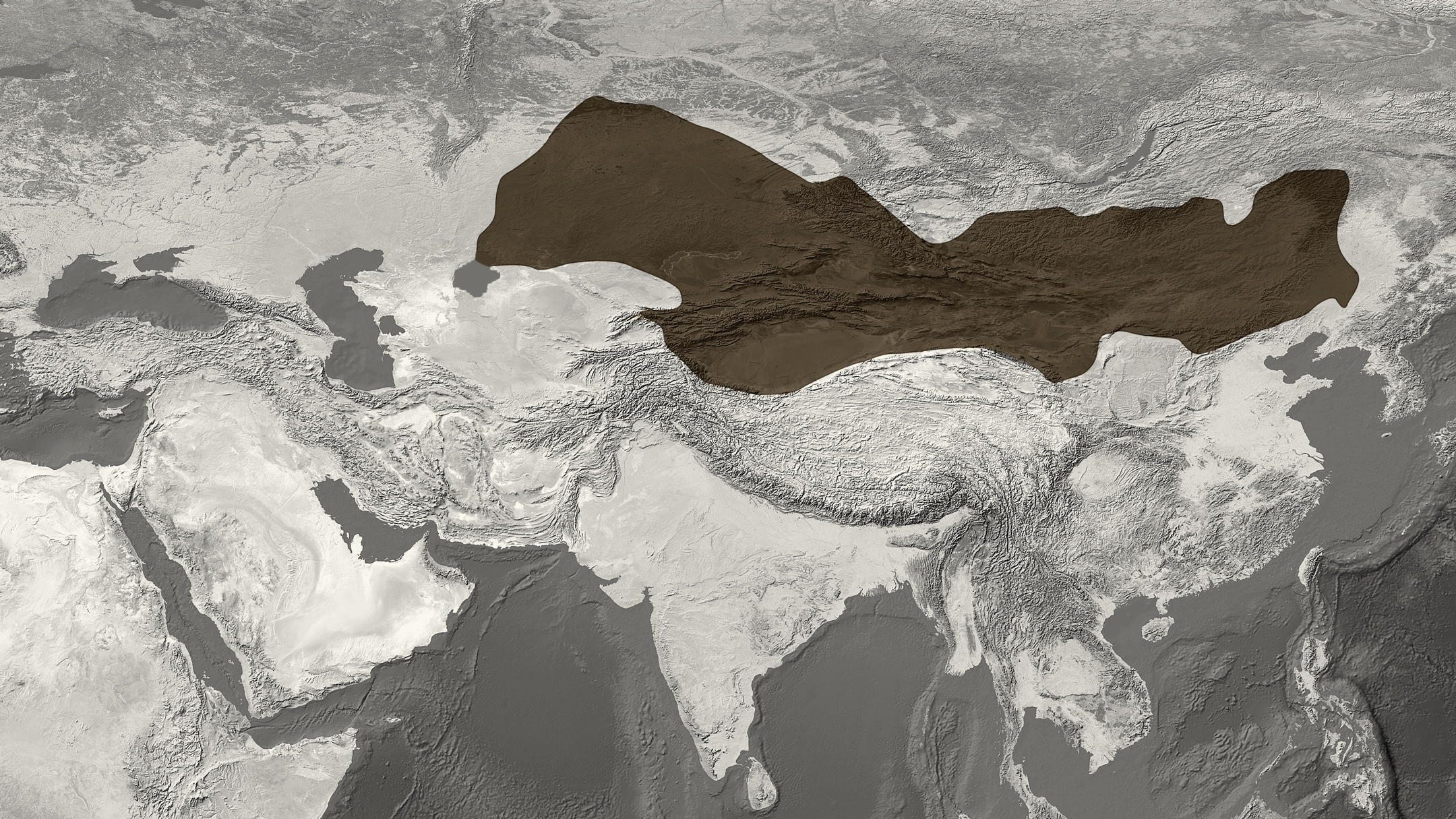
On the backs of horses, the Xiongnu had absorbed the weaker clans and had gained control of the 500-mile fertile Gansu Corridor connecting the plains of China to the trading routes of the west, the path to the Silk Road. With territory control all the way from the Yellow Sea in the east, through the Gansu, to the lakes of modern day Kazakhstan and Kyrgyzstan, the persistent Xiongnu had gradually ensured domination in both land and trade.
Most significantly for the young Wu-ti, through all this raiding and seizing, the enemy had firmly entrenched themselves between China and the land of the coveted horses. For the Emperor to gain access to the Valley of Ferghana he would have to infiltrate the land of the very people he aimed to destroy.
In 138 BCE Wu-ti sent out Zhang Gian, a trusted advisor, on a mission to retrieve the dreamed horses. An assembled cavalcade proceeded northwest, journeying across the merciless Gobi desert towards the Gansu Corridor - the enemy heartland.
Despite travelling at night and only in the remoter areas of the region, Zhang Gian and his men were captured by roaming Xiongnu scouts. While some of the Chinese expedition were exiled, many of them were enslaved or killed.
Remarkably, after ten years imprisonment, Zhang Gian managed to escape from enemy clutches. Loyal to his Emperor’s mission, he pushed on west and soon reached the fated Ferghana Valley.
Three years later the adviser returned to China’s capital of Xi’an. Proudly he confirmed the existence of this faraway land and heroically informed the enchanted Wu-ti that on his travels he had come across mystical horses: the creatures sweated blood, had manes to their knees and were, of course, Heavenly.
Zhang Gian’s epic journey to Ferghana lasted thirteen years and covered more than 8,000 miles. Inspired by his advisor’s efforts, and further inflamed by his belief that these horses held the answers, in 121 BCE Wu-ti dispatched a second troop, this time under the command of his most trusted cavalry commander, Huo Qabing. Along with horses and soldiers, Huo took with him two million civilians. With instructions to let nothing get in their way to Ferghana, they marched into the Gansu Corridor and set about to colonise the Xiongnu territory.
The Chinese force was strong. Shocked by manpower, the bulk of the Xiongnu forces swiftly declined, the uncaught fleeing west to Northern Mongolia and the Transbaikal. Huo Qabing’s march to the Ferghana Valley was not only broadening and securing China’s borders, but after taking control of the entire Gansu Corridor he had managed to forge direct access to the west and the profits of trade. All the while, Emperor Wu-ti’s Heavenly Horses slowly turned from dream to reality.
Throughout the Emperor’s life, there was forever a gap between what was real and what was not. Huo Qabing’s mission exemplified this. With land gains reshaping China and with the Emperor’s boyhood fantasy slowly being realised, the human and material cost was catastrophic. The funding effort to sustain the travelling army and colonisers was crippling China’s economy.
To supplement the ongoing mission, the Han government introduced a series of taxes upon an already impoverished people. With all resources being directed beyond the western borders, China’s domestic population suffered through starvation and disease. The life of a Heavenly Horse was priceless, it seemed. But Emperor Wu-ti’s dream was unwavering - the Ferghana Valley had to be reached.
Finally, envoys to Huo Qabing’s force came across the destined land in 104 BCE. Unfortunately for the exhausted travellers, after stating their intentions to the Scythian King of Ferghana, the entire delegation was swiftly executed. The War of the Heavenly Horses had begun.
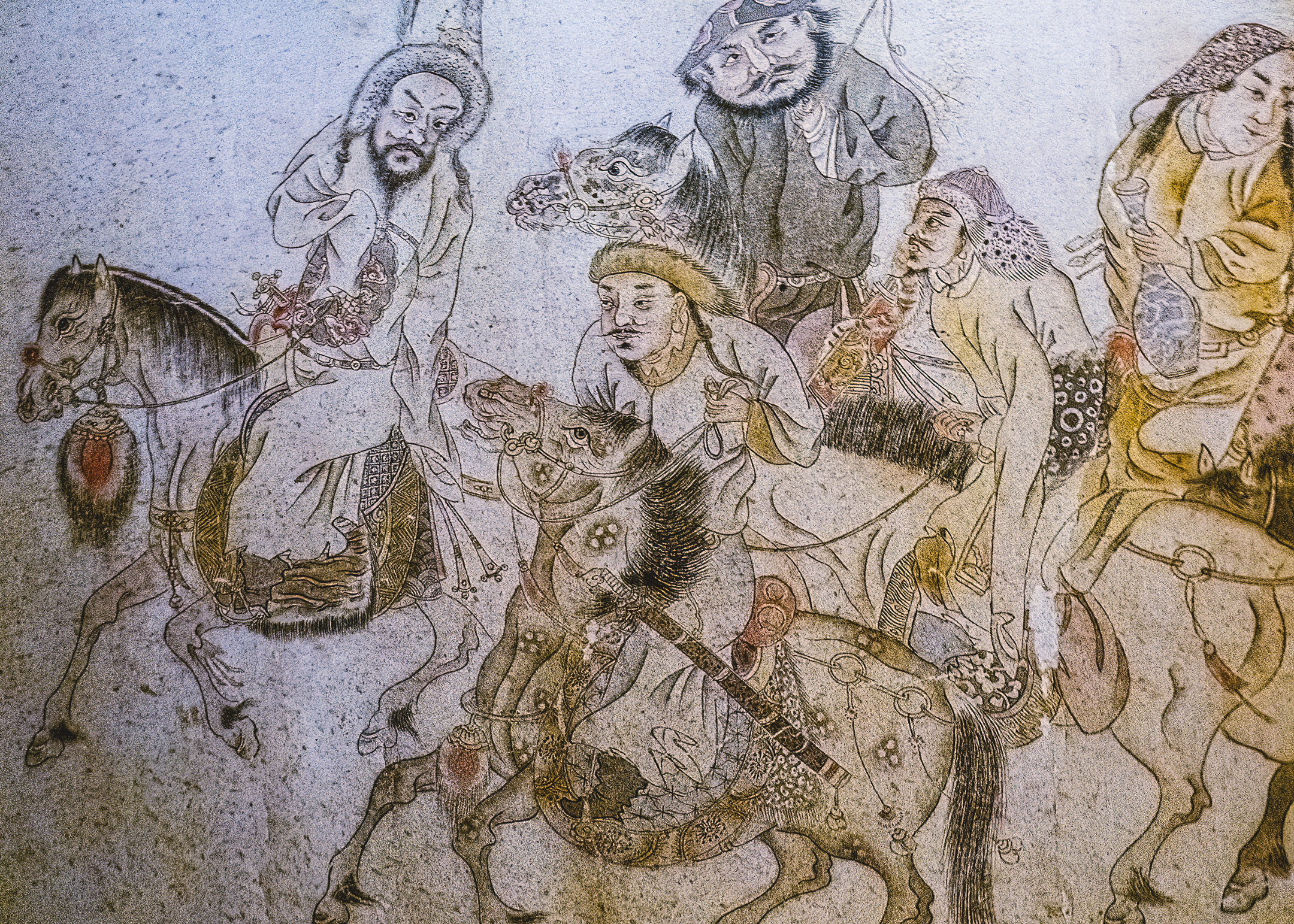
In immediate response, the seething Emperor Wu-ti ordered a punitive expedition of 26,000 men under General Li Guangli, the brother of his favourite concubine. With no supply chain to support the crossing of the merciless Xinjiang desert, the campaign quickly came to its knees. Undeterred, the Emperor ordered Li to launch a second expedition to Ferghana two years later.
This time the Chinese were better prepared for this 3,100 mile journey across the vast hinterlands. Li’s horse-retrieving army consisted of 60,000 foot soldiers, 30,000 cavalry and a slow moving line of 180,000 potential colonising civilians. Beyond that there followed 30,000 additional horses, 100,000 oxen and 20,000 donkeys and camels.
Despite half of the army dying from starvation, Li marched upon the promised valley with a surviving force far superior to that of the King of Ferghana. A forty day siege ensued and only ended after the Ferghana King was assassinated by his own people. Li returned with 30 of the prized Heavenly Horses and 3,000 of an unknown breed. Emperor Wu-ti demanded more.
Between 138 - 101 BCE 10,000 men and 1,000 horses from Ferghana made it back to China. Some of the horses were Heavenly, others were not. As a result of the expeditions, the Han Empire expanded beyond recognition. For the first time in history contact and trade was established between the east and the west; the bartering of spices and deities began, the Silk Roads were formed and globalisation took hold.
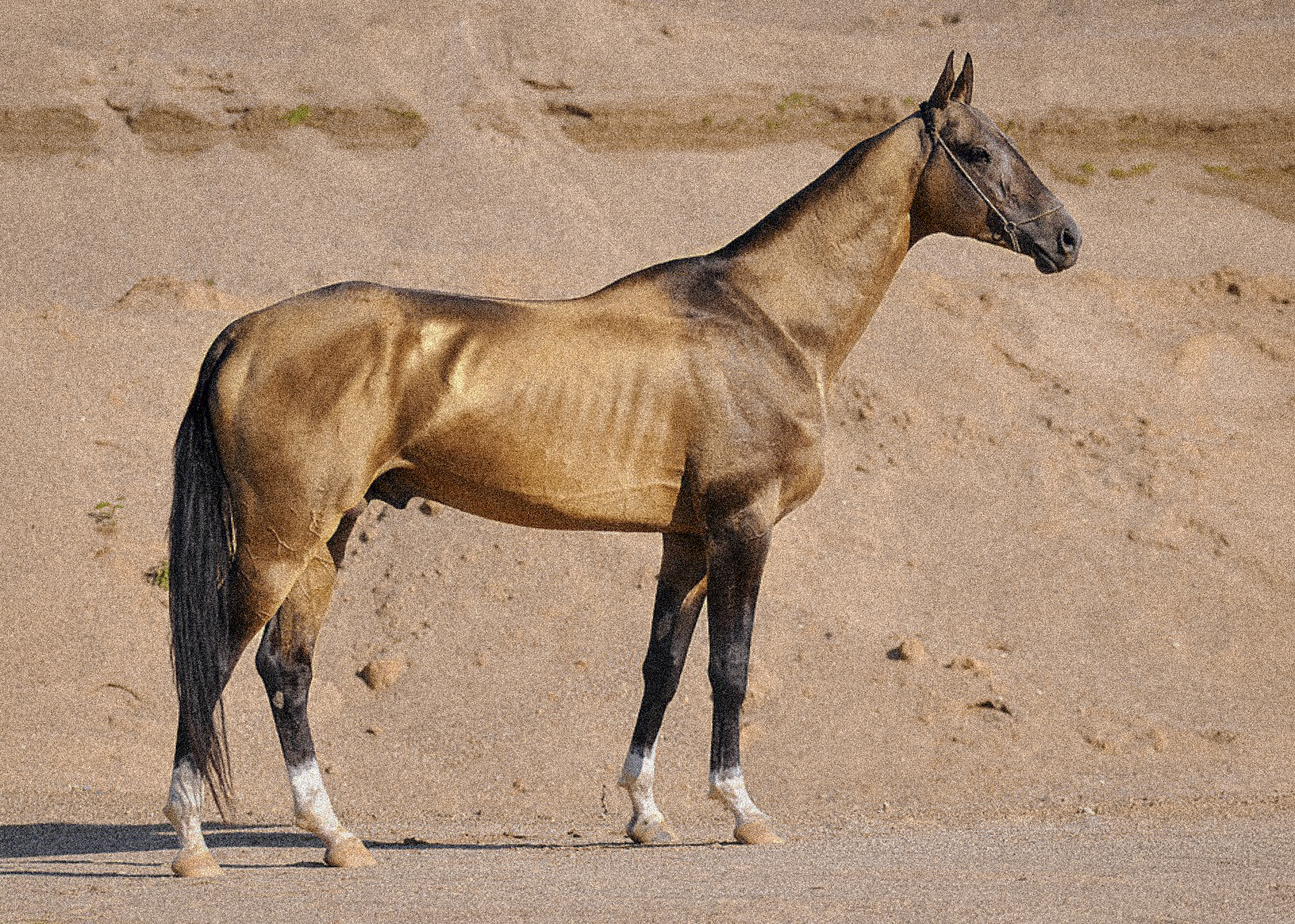
From a boy to his death, the Emperor’s quest to retrieve the Heavenly Horses altered the course of history. What remains today of these animals is unknown. Some say they live on through a Turkmen breed known as the Akhal-Teke, others suggest they died out long ago.
Either way, the Heavenly Horses were once very real for one man and his nation. Their ability to take flight is a question of perspective; China’s deliverance was ensured and Emperor Wu-ti’s reckless dream for immortality was granted •
This feature was originally published March 25, 2025.
In Green: Two Horses, Two Strangers, a Journey to the End of the Land
Duckworth Books, 20 March, 2025
RRP: £18.99 | 304 pages | ISBN: 978-1914613838
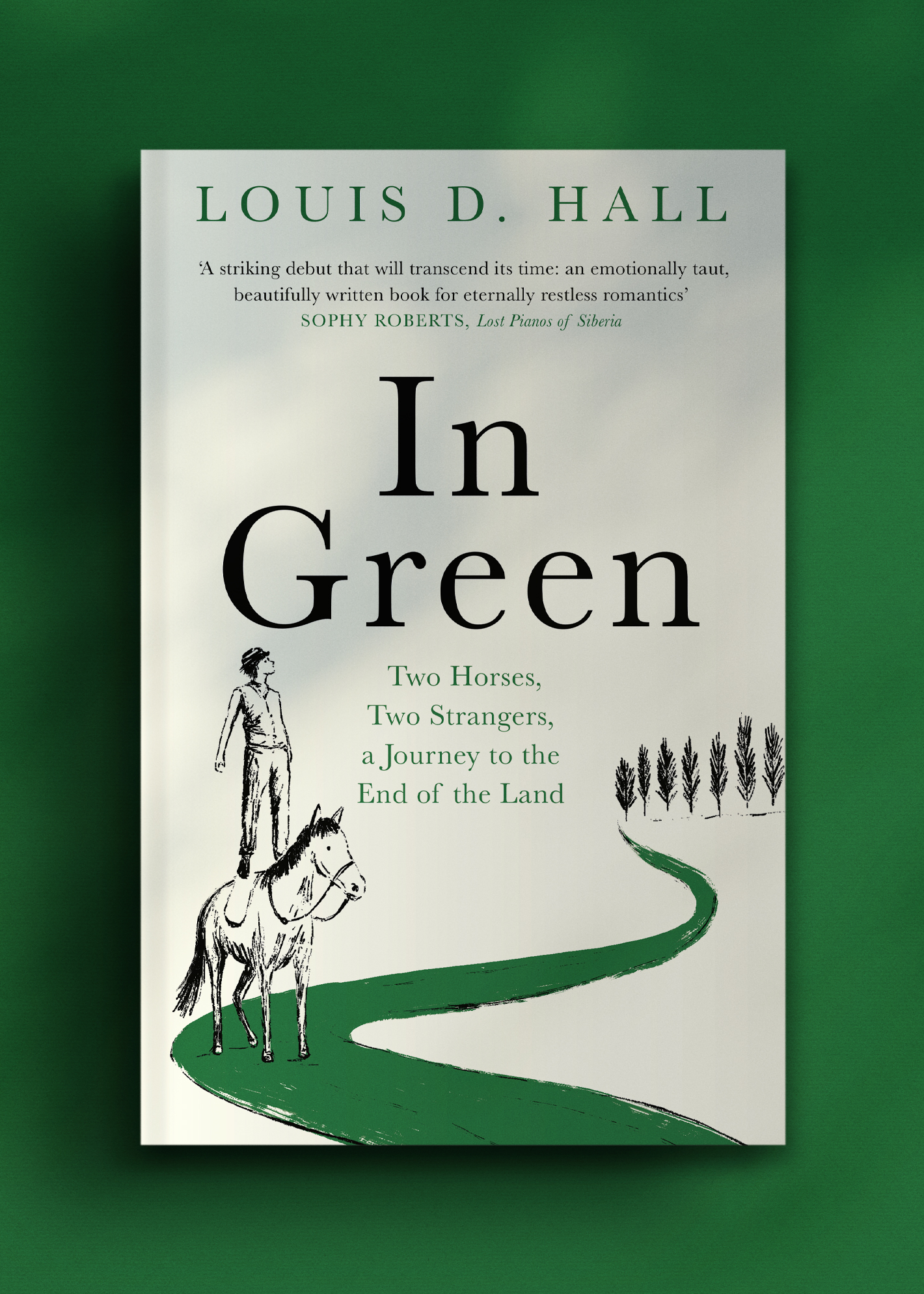
“An utterly enchanting debut – a new favourite book. I was riding side by side with the author, every step of the way” – Antonia Fraser
‘I need to ride now, to explore, to uncover more life; to reach strangers, to feel danger and to learn; to share this old, slow way, with man’s patient, most forgiving and most loyal friend – the horse.’
In his mid-twenties, restless in the routine of a city, Louis D. Hall found himself wondering how to create the life he wanted to lead. Inspired by Don Quixote, he decided to fulfil a childhood dream – to make an uncharted journey on horseback.
After finding his horse Sasha in Italy’s Apennine Mountains, the pair set off and headed west for Cape Finisterre, ‘the end of the land’, unprepared for most of the dangers – snow, storms, wolves – that faced them. He was even less prepared for the lessons that both Sasha and the young woman who joins them part way taught him about life's potential and its complexities.
A glorious piece of rich, romantic travel writing that takes the reader along old paths, into ancient villages, sharing rural homes and stables of farmers and shepherds in the Ligurian Alps, Pyrenees, Basque country and Galician coast, from a brilliant new talent.
“A classic adventure narrative in the vein of Patrick Leigh Fermor and Robert Louis Stevenson: this is a life-changing, continental trek on foot and on horseback that captures the clarity, freedom and desperate joys of long distance travel and the closeness and intimacy of the herd. Romantic in so many senses of the word – a love story, a wilderness quest, a kaleidoscope of European culture and language”
― Cal Flynn
With thanks to Duckworth Books.
📸 Dive into our Features
🎤 Read Interviews
🎧 Listen to Podcasts
🖼️ Buy fine art prints & more at our Store


