
The Dispatch Edition #1: Shipwrecks, The Armistice & Haunted Museums
Week beginning November 18, 2024


Welcome to Edition #1 of The Dispatch.
Hello,
Jordan here. I’m the Creative Director at Unseen Histories and if you’re reading this, it’s because you signed up for a newsletter through our website unseenhistories.com (or our previous incarnation at dynamichrome.com).
That newsletter is now The Dispatch, our free email roundup of long-form pieces, previews, interviews, pictures and more published on Unseen Histories; curated in one place for you to read at your leisure.
You can read previous editions in our archive.
For compliancy, if you don’t wish to hear from us again, you can find an unsubscribe link at the bottom every email, but I hope you’ll find The Dispatch a welcome addition to your inbox – we’ve got a fantastic first edition below.
Many thanks for reading,
– Jordan Acosta, Creative Director, Unseen Histories

Headlines
The latest from Unseen Histories –
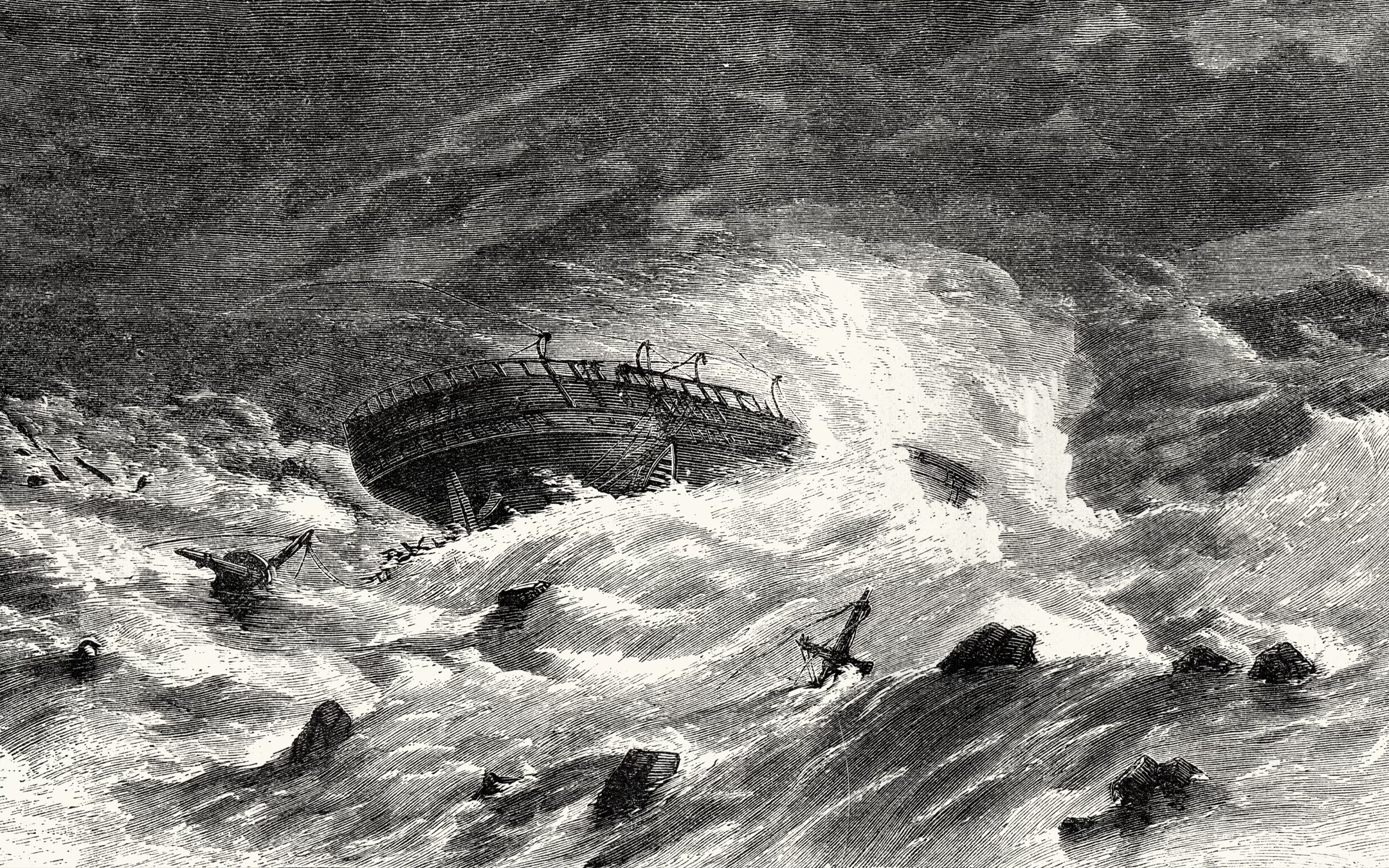
The Wreck of the Royal Charter
Our editor Peter Moore on how hundreds of people were lost in a disastrous shipwreck in 1859
Jordan’s Pick –
In our continuing series First Draft, Unseen Histories’ editor Peter Moore has raided the newspaper archives to revisit significant events of their day, and how the news was broken. The sinking of the Royal Charter was a tragedy only eclipsed by the Titanic five decades later; and, for the first time, Unseen Histories traces the actual route taken by the ship before its eventual doom off the coast of Anglesey.
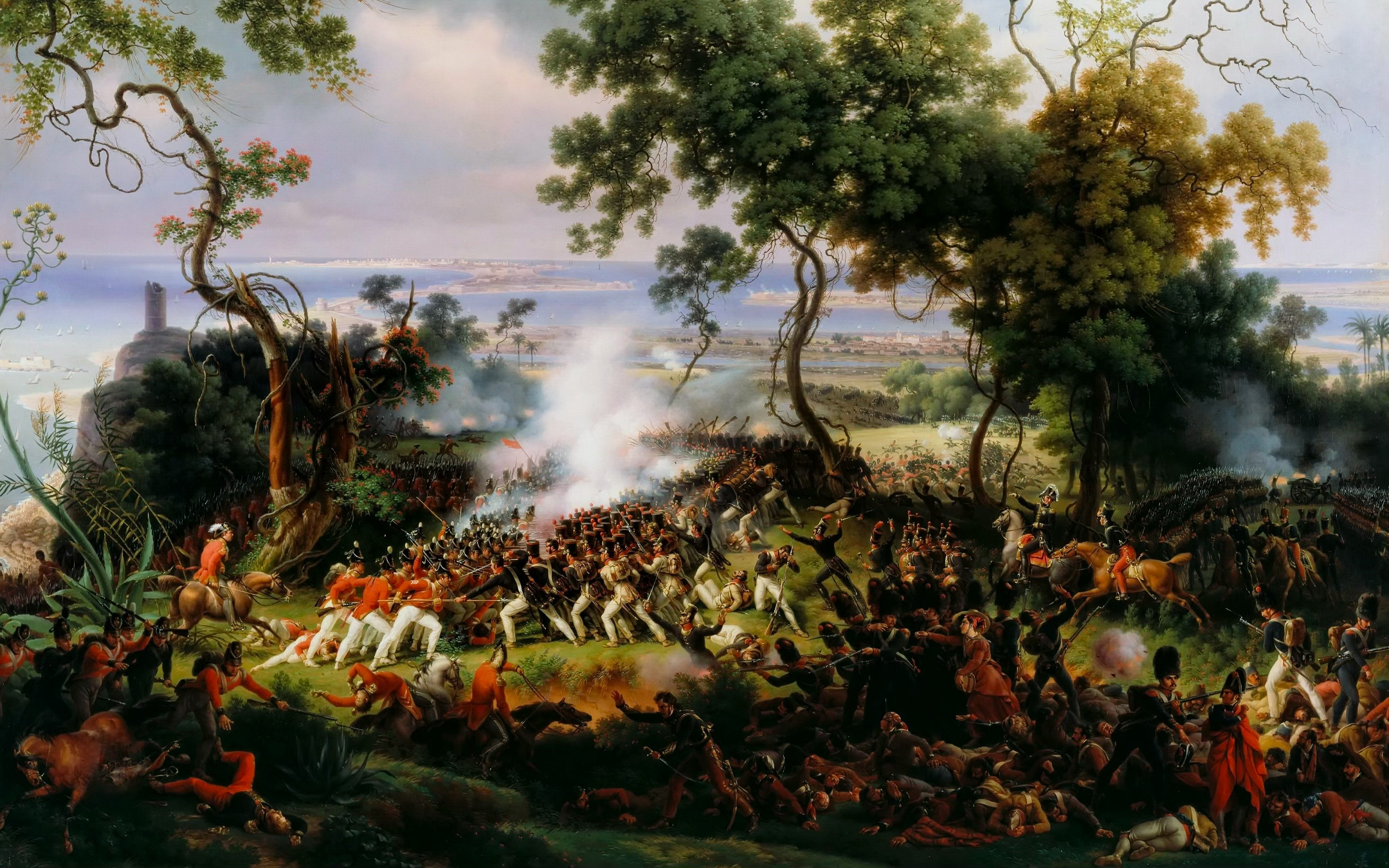
The 1812 Constitution of Cádiz
Helen Crisp and Jules Stewart take us back to a revolutionary moment in European history
As the nineteenth-century began, there was much talk of 'the rights of man'.
Revolutions in the American Colonies and later, more fiercely, in France, had been fuelled by questions about the nature of power and political representation.
A significant episode in this story took place in 1812 in the ancient port city Cádiz, Andalucia. It was here, explains Helen Crisp and Jules Stewart, that Europe's 'first liberal constitution' was written.
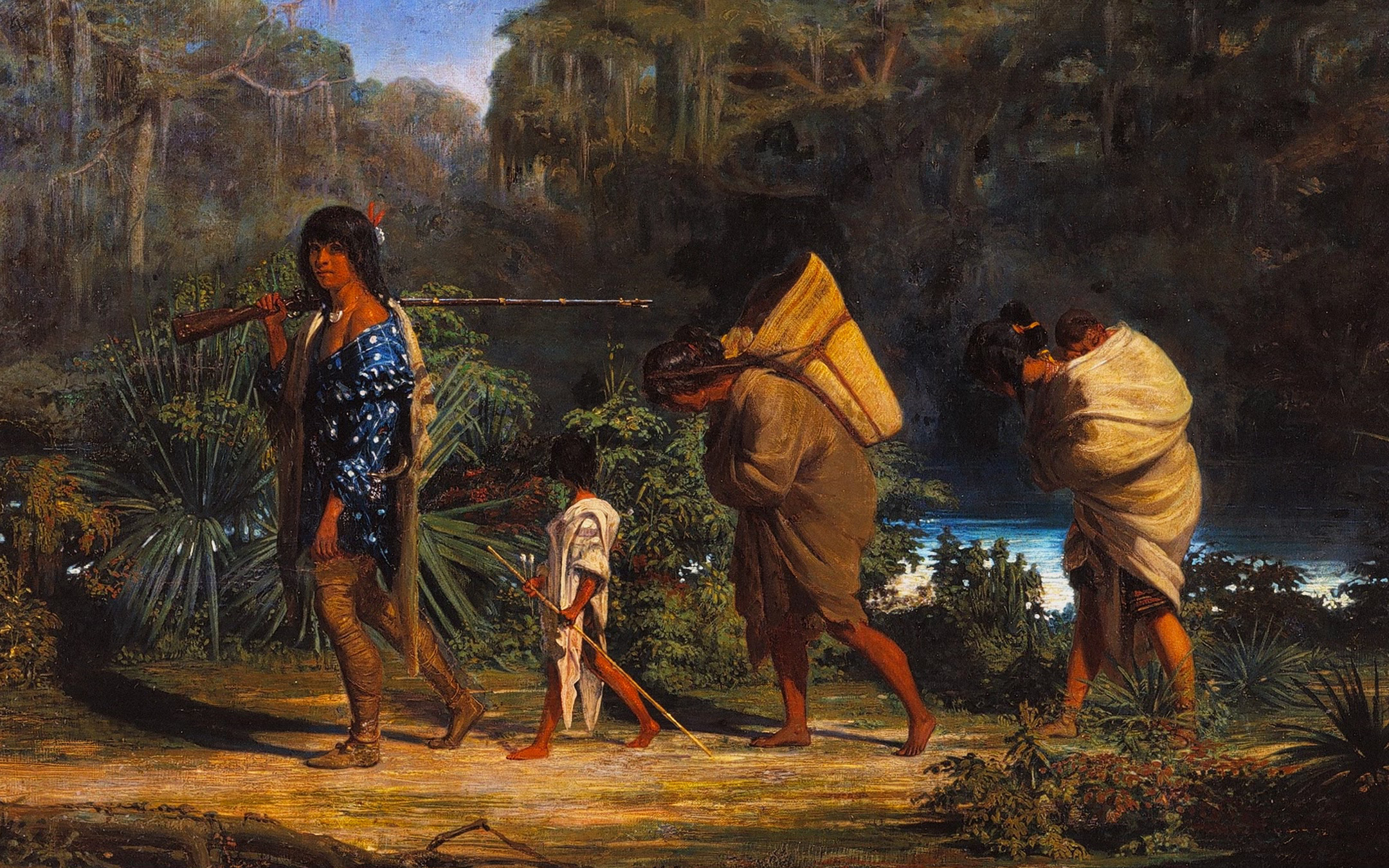
Winner of the Cundill History Prize: Native Nations
Historian Kathleen DuVal is awarded one of the most prestigious history prizes
Each year the Cundill History Prize is awarded to a newly published book that 'embodies historical scholarship, originality, literary quality and broad appeal'.
At a ceremony in Montreal the prize for 2024 was presented to the American historian Kathleen DuVal, author of Native Nations, a groundbreaking book that brings Indigenous America into rich and vivid focus.
Here DuVal, Professor of History at the University of North Carolina at Chapel Hill, sets out what prompted her to write Native Nations.
Bookshelf
Previews, excerpts, and more from the very best published history books –
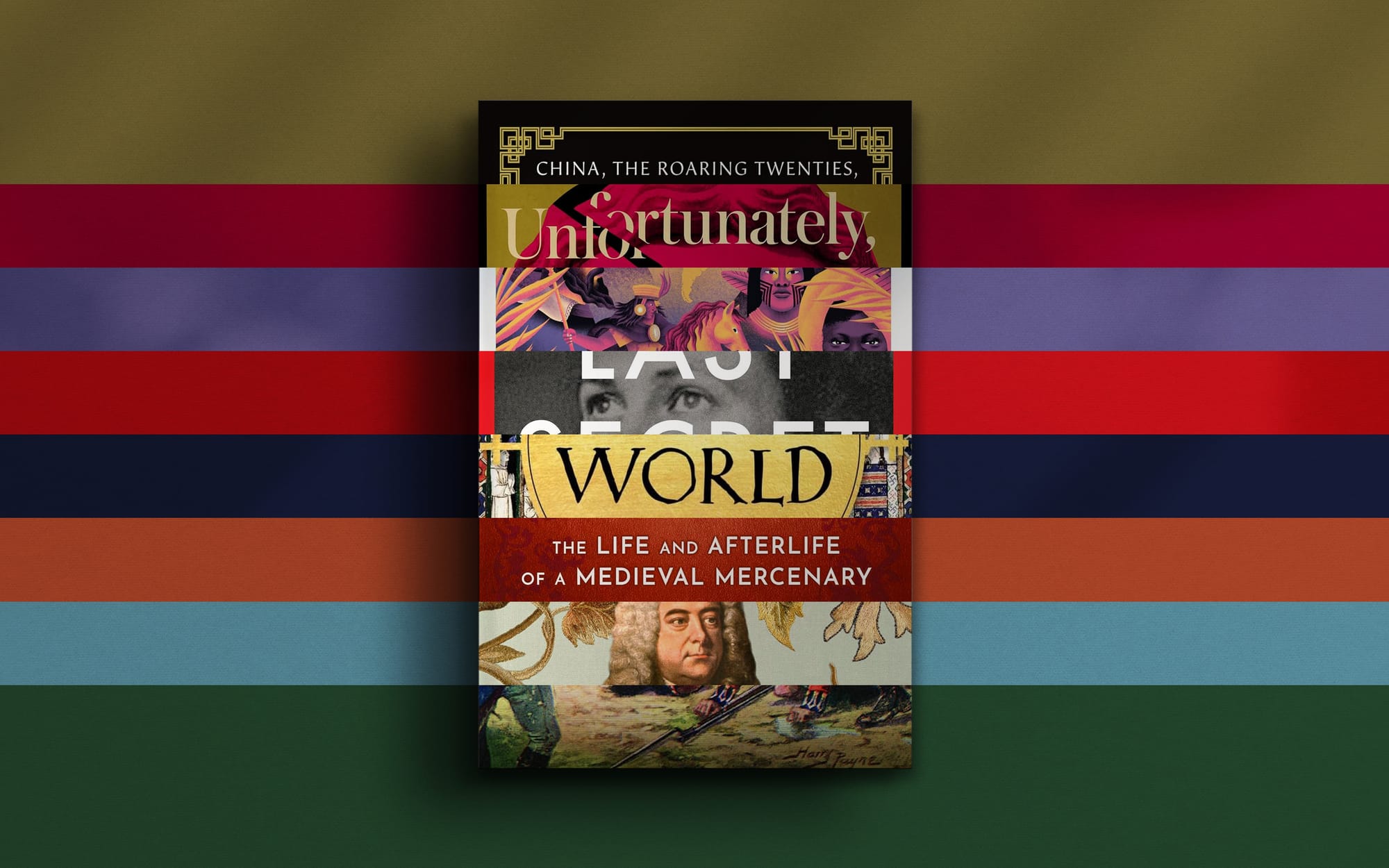
New History Books for November 2024
From South America to Castile, Handel to Wallis Simpson, here is a selection of anticipated new history books released over the month ahead.
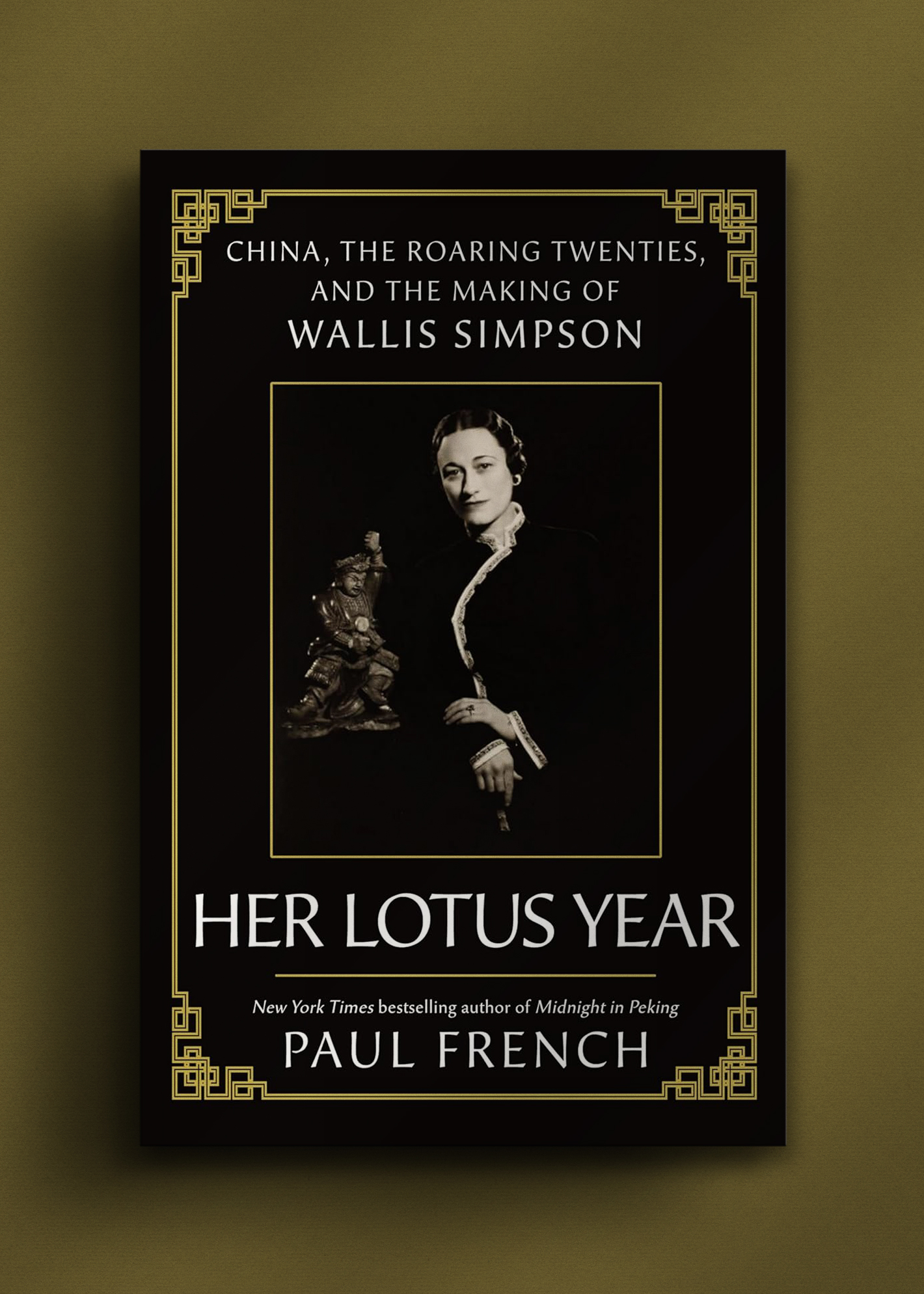
Jordan’s Pick: Her Lotus Year by Paul French (Elliott & Thompson Limited, 2024) –
Sino scholar Paul French returns with an account of a year in the early life of Wallis Simpson (née Bessie Wallis Warfield), the American socialite vilified by the British press as the cause of King Edward VIII’s abdication of the throne in 1936. Her Lotus Year examines the life of Simpson in the previous decade, then wed to her second husband Ernest Simpson during his posting in Hong Kong, before fleeing to Shanghai (and later, Peking) to escape his alcoholism. Simpson’s privileged status as a ‘Navy wife’ allowed her to courier sensitive documents for the US Foreign Service across Communist China in a time when bandits ripped up telegraph poles and sabotaged railway tracks.
Back Page
Stories from the Unseen Histories’ archives –
Stones of Empire
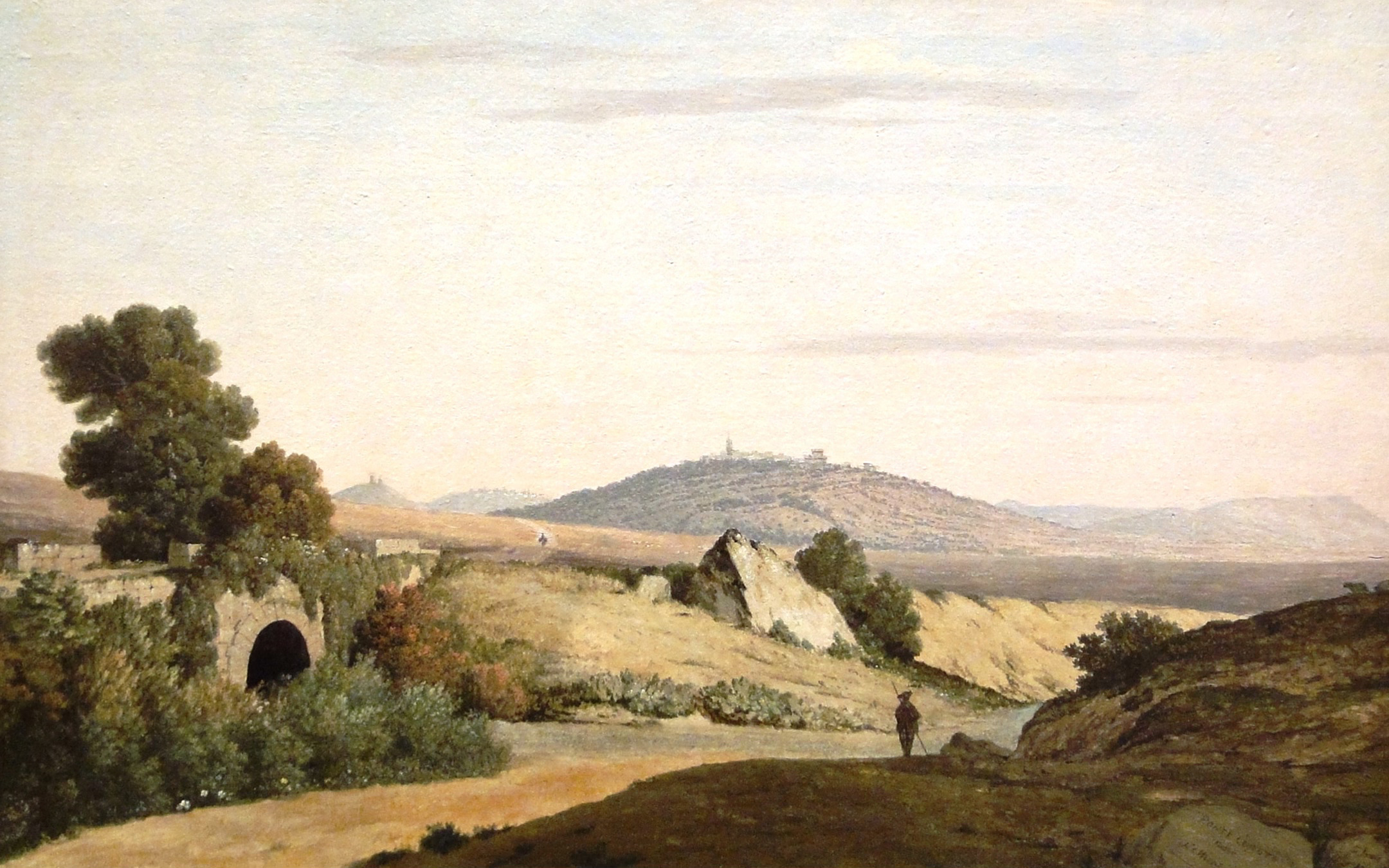
Catherine Fletcher reflects upon travellers' tales and political spaces as she follows Europe's Roman roads
There is something certain and reliable in our conception of a Roman road. These great arteries of travel and trade knitted together the ancient world and the remains of many of them survive to this day.
Several years ago the historian Catherine Fletcher set out to investigate the cultural history of these roads.
For Fletcher, however, as for so many others over the centuries, her travels along the Via Appia and Via Agrigento would be both disrupted and provoking.
The Most Famous Actress in the Georgian World
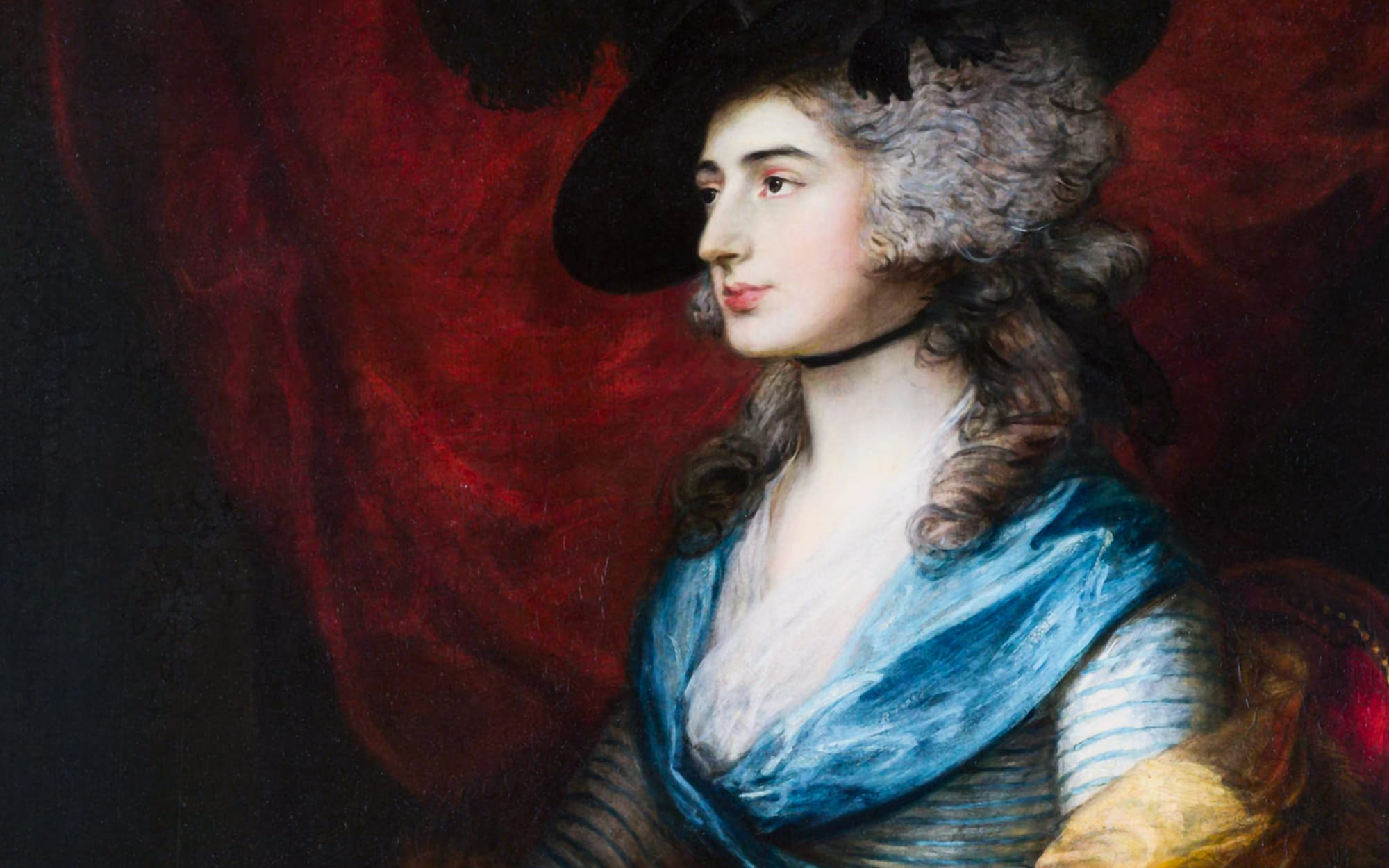
On her retirement the television producer Jo Willett set out to write a biography of Sarah Siddons
In the mid-1770s, when the Prime Minister, Lord North, was leading Britain into a war against the American colonies and the Industrial Revolution was gathering pace, a twenty year-old actress called Sarah Siddons walked onto the stage at the Drury Lane Theatre for the very first time.
Siddons had an unusual flair for acting and her profile rose quickly. Within a few years she had become one of the best known figures in the kingdom. She was wealthy, fashionably connected and hugely admired.
In this piece the television-producer-turned-author, Jo Willett, explains how she came to write the story of Siddon's colourful life.
Is the British Museum Haunted? with Noah Angell
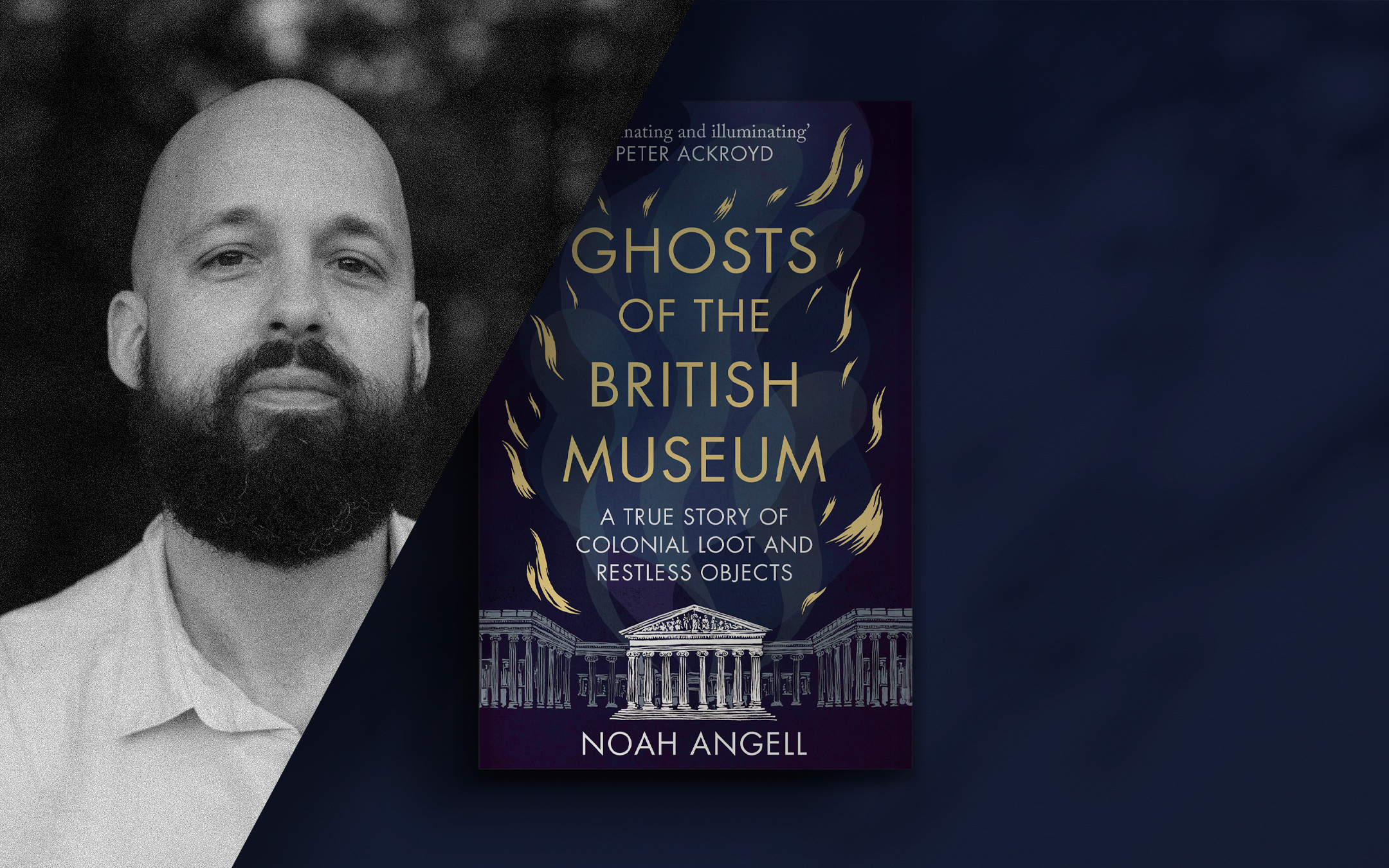
Writer Noah Angell on the ghosts of the British Museum
The British Museum is one of Britain's leading cultural institutions. Set in the heart of Bloomsbury in central London, its imposing façade and expansive Great Court project a sense of power and enlightenment.
But the writer Noah Angell explains that beyond this lies a more curious and opaque history. The museum, he discovered through conversations with its staff, is said to be a deeply haunted place filled with restless energy.
In this interview Angell explains more about this intriguing subject, which provides the material for his newly published book: Ghosts of the British Museum.
Jordan’s Pick –
I actually met Noah nearly a decade ago browsing Eventbrite for things to do. Among the MLM seminars in hotel conference rooms across London, I saw an entry for a Ghost Tour of the British Museum. I signed up (of course) and been on the tour more than once, since. In the years since we became friends, I was delighted to learn that Ghost Tours of the British Museum had morphed into Ghosts of the British Museum: A True Story of Colonial Loot and Restless Objects (Hachette, 2024), a book described by New York Times bestselling author Dr Lindsey Fitzharris as a 'heady cocktail of history and folklore that leaves a haunting aftertaste.'
Snapshot
Our picks from the picture archives, remastered –
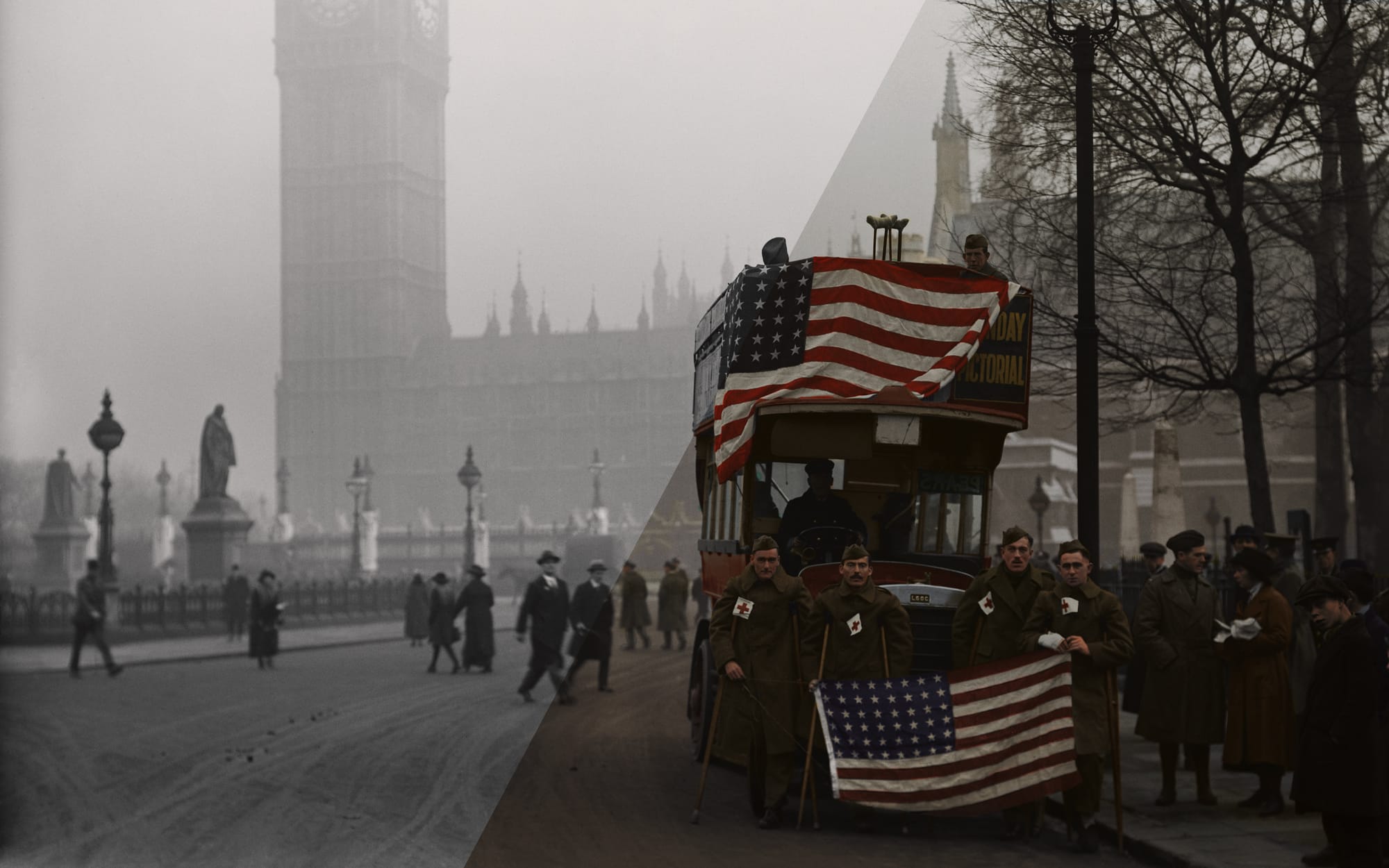
The setting for this photograph is one that will be instantly recognisable to many people. The background is dominated by the jagged outline of the Palace of Westminster with the Clock Tower (now officially the Elizabeth Tower), home to the fabled ‘Big Ben’, rising high into the dreary November fog.
In front of the Palace the view opens out onto Parliament Square where the subjects, four wounded American servicemen, hold the Stars and Stripes in front of a bus belonging to the London General Omnibus Company. The date is November 1918.
Jordan’s Pick –
This colorization is based on a glass plate gifted by the American Red Cross, depicting recovering U.S. soldiers sightseeing at Armistice. The group is posing in front of a London General Omnibus Company B-Type bus on the western side of Parliament Square: with Westminster Hall, the Palace of Westminster and Big Ben behind them. This shot in particular was just spectacular and I knew I had to do it. It happily coincided with filming for France’s national television station TF1, so we shot the segment on location between groups of tourists. The view remains largely unchanged.
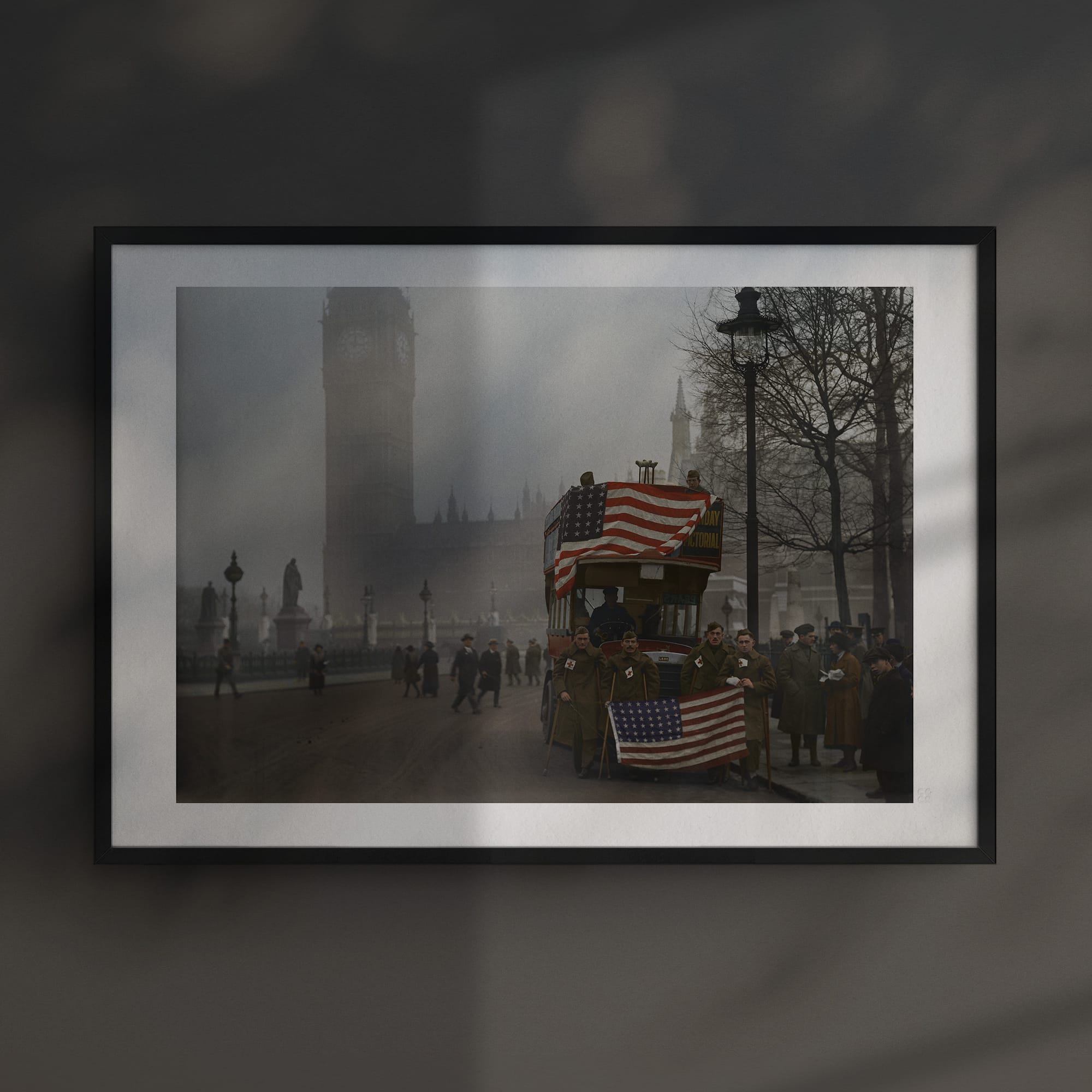
You can support Unseen Histories by purchasing an Archival Giclée Art Print via our webstore. Thank you for your support.
A restored, high resolution version of the above image can also be found on our Unsplash account, which can be downloaded and shared, for free.
Op-ed
More from around the web –
“Ormond and Patterson said that while they had known about the letter for “many years,” confirming that the flowers had once been a hue of purple required removing the popular work from public display.”
– Hyperallergic
“Their plan had been to break Warwick’s chains, and when the king was away from London, to escape the Tower, board a ship, and take the earl across the sea. Cleymond was key to spreading the plot, as he had some degree of movement in the Tower and was able to exchange details between Warbeck and Warwick.”
– Nathen Amin
“Pierri had an astounding faculty for making the public believe what he said and caused to be written,” wrote a Sporting Life correspondent in their obituary for “one of the greatest personalities”, the man “who created the professional wrestling boom”, “the hippodromer”, who “achieved many triumphs”. The fellow “did more harm to genuine wrestling in this country than any man who ever lived.”
– Sarah Elizabeth Cox
“Integrity without knowledge is weak and useless, and knowledge without integrity is dangerous and dreadful.”
― Samuel Johnson, The History of Rasselas, Prince of Abissinia (R. and J. Dodsley, W. Johnston, 1759)
Thanks for reading The Dispatch by Unseen Histories. Edition #2 will be published week beginning December 2, 2024. You can read previous editions in our archive.
📸 Dive into our Features
🎤 Read Interviews
🎧 Listen to Podcasts
🖼️ Buy fine art prints & more at our Store


