
1945: Raising the Flag on Iwo Jima
On 23 February 1945 one of the iconic photographs of the Second World War was taken on the Pacific island of Iwo Jima. Here it is in colour.


Joe Rosenthal’s depiction of six US marines planting the Stars and Stripes on Mount Suribachi, Iwo Jima, is one of the most recognisable photographs of the Second World War.
It was taken at around 1 p.m. on 23 February 1945 as a ferocious battle raged on the slopes below. Once developed, the photograph’s narrative power was immediately apparent. It showed tremendous heroism in the face of adversity as well as great patriotism and kinship. Rosenthal's image was swiftly reprinted in newspapers around the world.
The Soviets were so impressed that they went to great lengths to replicate it when the Red Army arrived in the centre of Berlin several months later.
Words by Peter Moore
Photographs Remastered and Colourised by Jordan Acosta

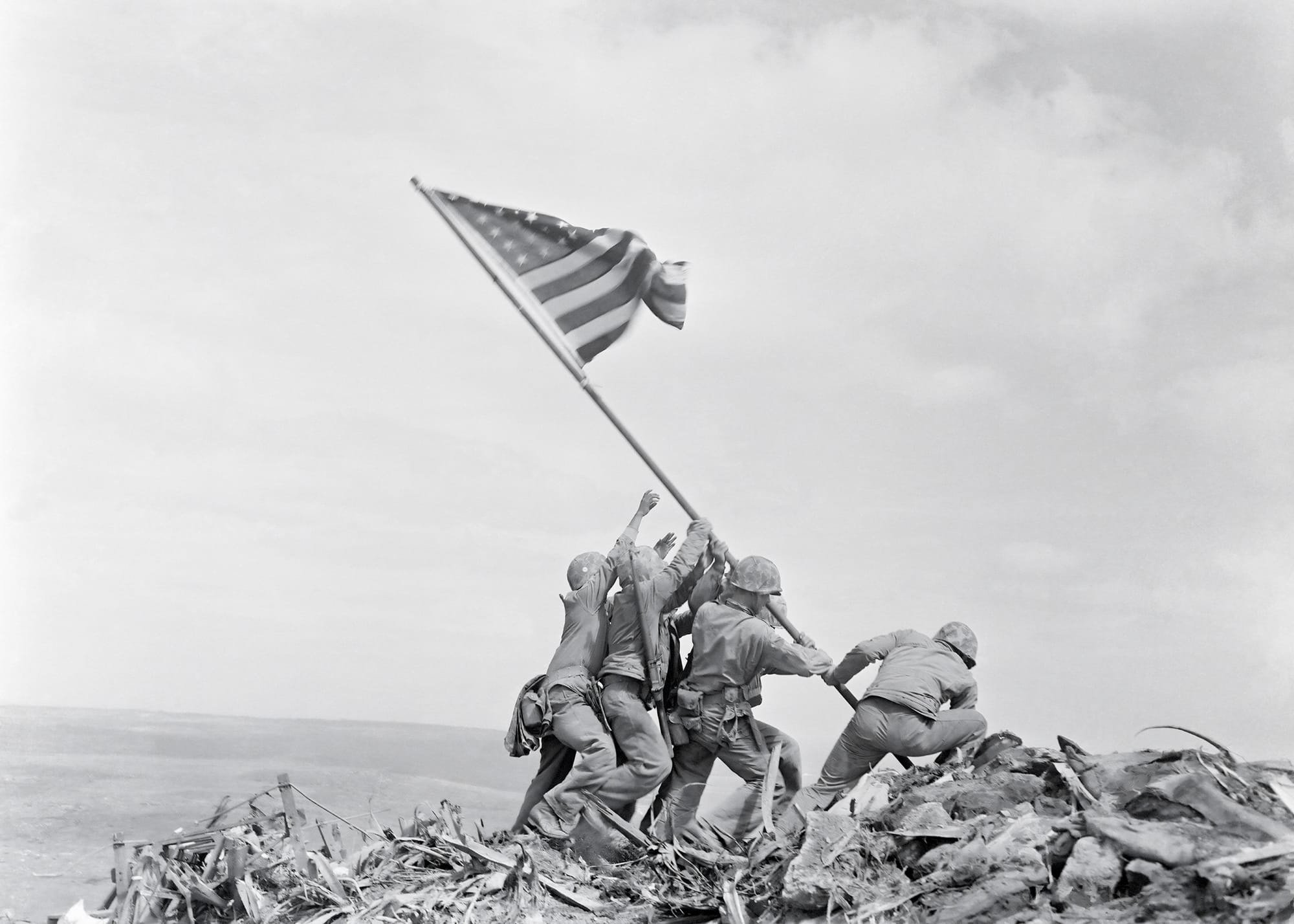
The Battle of Iwo Jima was one of the most deadly confrontations of the Pacific War. A small island located due south of the Japanese mainland, Iwo Jima became a place of huge strategic importance in the early months of 1945. Its two airfields, it was clear to US generals, would provide a perfect base for future attacks on Japan.
After an amphibious landing on 19 February, US marines confronted a defending force that was dug in and determined to hold their ground. American casualties on the island’s black sands during the first three days were steep, totalling 5,372 with 644 killed, 4,168 wounded and 560 missing.
Once ashore the defensive fortress Mount Suribachi became a vital target. Rising on the southwestern tip of the island, the volcanic peak was a particular stronghold with its many caves and tunnels. Clashes here were deadly. On 23 February, Barbara Finch, the Reuter’s Special Correspondent reported that US forces were advancing up Suribachi’s slopes, sweeping caves with flame throwers as warships shelled the mountainside from the coastal shallows. ‘The defending Japanese threw hand grenades in an attempt to stop the Marines scaling the cliffs.' ran Finch's report, 'Eight Japanese were seen to leap to death from the rocks hundreds of feet above the ground.’
This was the context for Rosenthal’s photograph. As the fighting continued below, on the morning of 23 February members of the 28th US Regiment of Marines fought their way to the volcano’s summit. An American flag was planted here shortly after 10.30, but this was not the moment captured by Rosenthal. Instead he arrived several hours later, at around one o'clock, as a second flag was hoisted up at the same location.
The photograph Rosenthal shot was taken with a Speed Graphic camera, with an exposure length of 1/400 sec, an aperture of between 8 and 11, on Agfa black and white film. A video exists of the scene, which shows that Rosenthal had only a fraction of a second to take his shot.
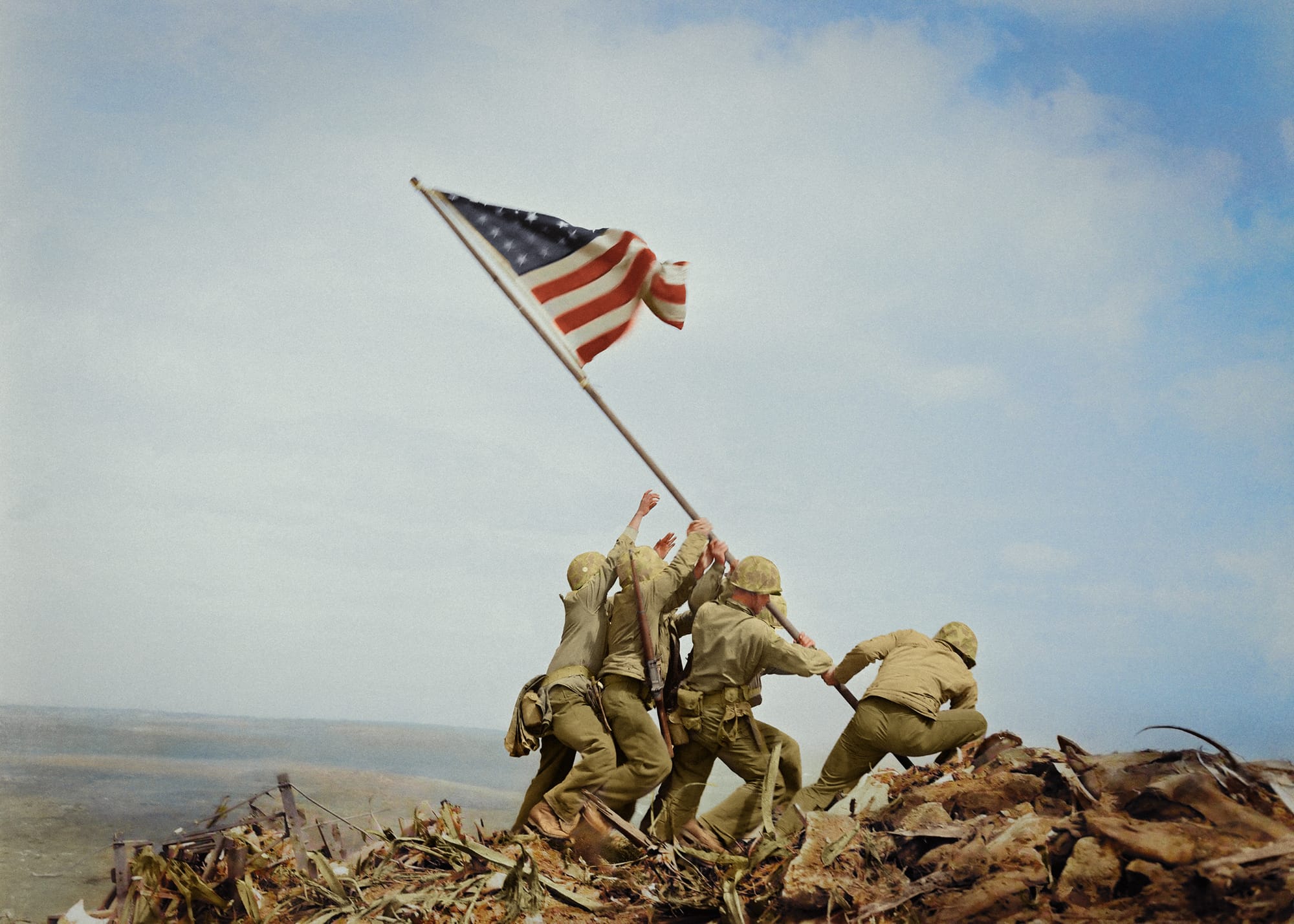
Out of the corner of my eye, I had seen the men start the flag up. I swung my camera and shot the scene. That is how the picture was taken, and when you take a picture like that, you don't come away saying you got a great shot. You don't know. — Joe Rosenthal
‘Raising the Flag on Iwo Jima’ would soon win Rosenthal a Pulitzer Prize for Photography. On one level it is a depiction of military triumph, but it equally must be seen as a testament to human sacrifice. Of the six marines in the frame, three would be dead within a month. These were just three of the twenty-five thousand or so who lost their lives in little more than a month.
This colourisation brings out many new details. The ground is strewn with debris. Overhead there is a hint of a bright blue Pacific sky. The rich colours of the Stars and Stripes stand out all the more thanks to the cloud that lies directly behind.
Within hours the news would be carried in newspapers around the world. ‘The American flag to-day flies on the summit of Mount Suribachi’, reported one English paper on 23 February. A few days later re-printings of Rosenthal’s photograph would follow •
This Snapshot was originally published February 23, 2024.
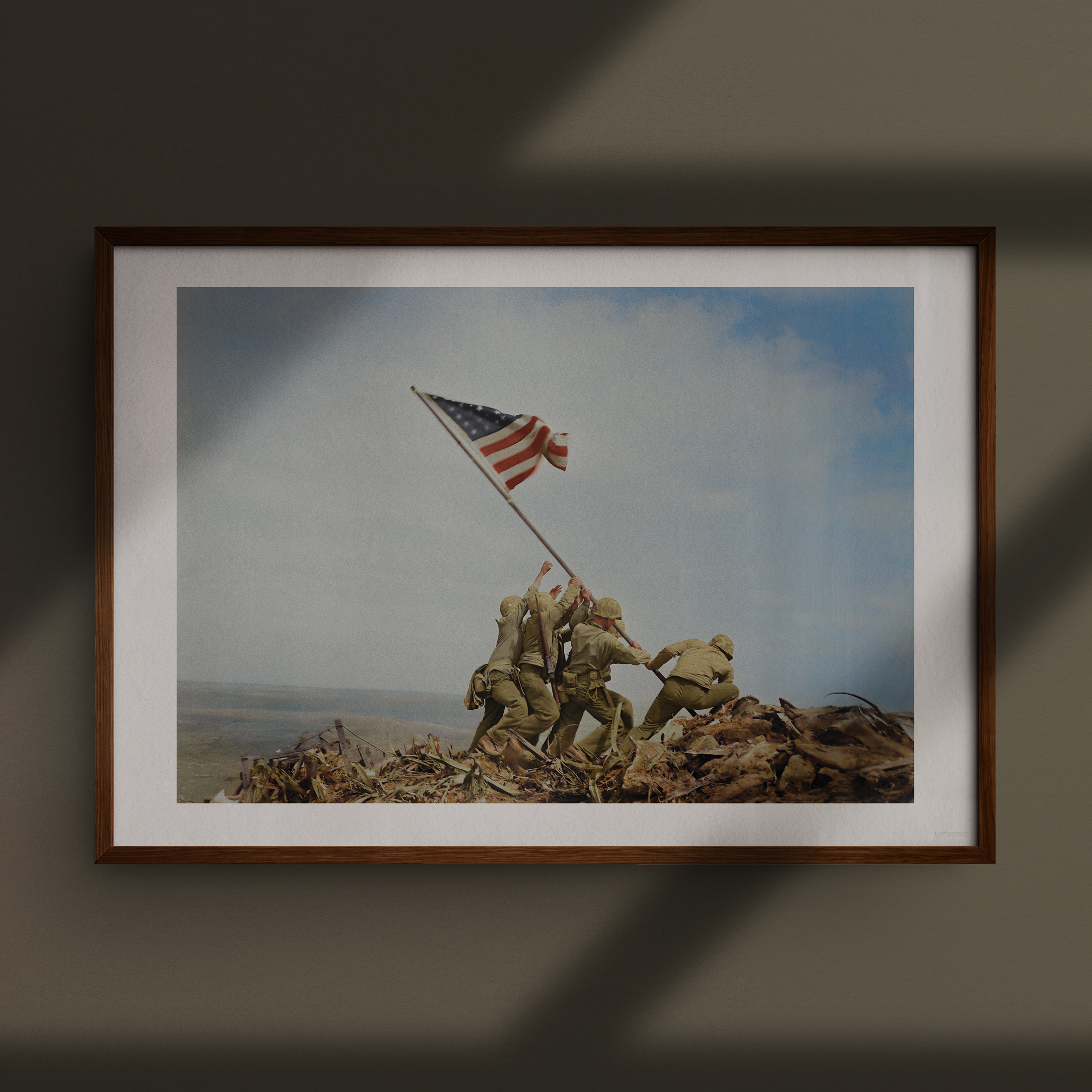
Ad: Unseen Histories relies on your patronage to operate. Our webstore offers a wide range of collectible museum-grade fine art prints, hand-printed in England for your wall space.
ColorGraph™ presents the most incredible colorized photography bringing the past to life. From start to finish, a ColorGraph print is made with exceptional care and attention. To mark its provenance, we emboss each one in the final stage of the hand-finishing process.
More
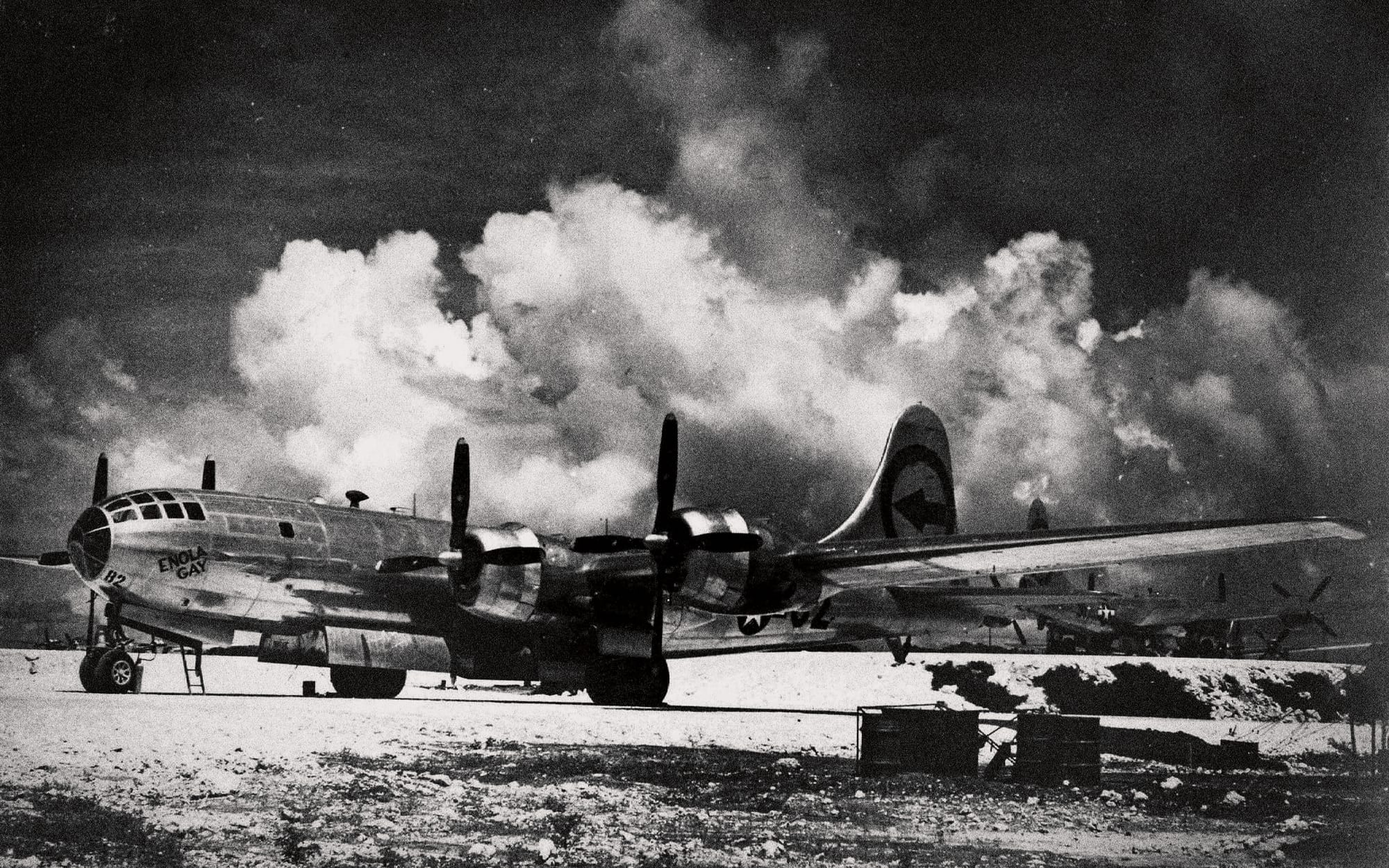
August 1945
Barrett Tillman tells us about his research into the month 'when the shooting stopped'
📸 Dive into our Features
🎤 Read Interviews
🎧 Listen to Podcasts
🖼️ Buy fine art prints & more at our Store


