The Village of the Damned
Matthew Green revisits the Welsh village of Capel Celyn, and how it ended up beneath 68 million tonnes of water


A deeply evocative and dazzlingly original account of Britain's past, Shadowlands tells the extraordinary stories of how these places met their fate, animating the people who lived, dreamed and died there and uncovering how their disappearances explain why Britain looks the way it does today.
From an Orkney settlement buried in sand five thousand years ago to a medieval city mouldering beneath the waves of the North Sea, Britain's landscape is scarred with the haunting and romantic remains; these shadowlands that were once filled with life are now just spectral echoes.
With an introduction by Matthew Green

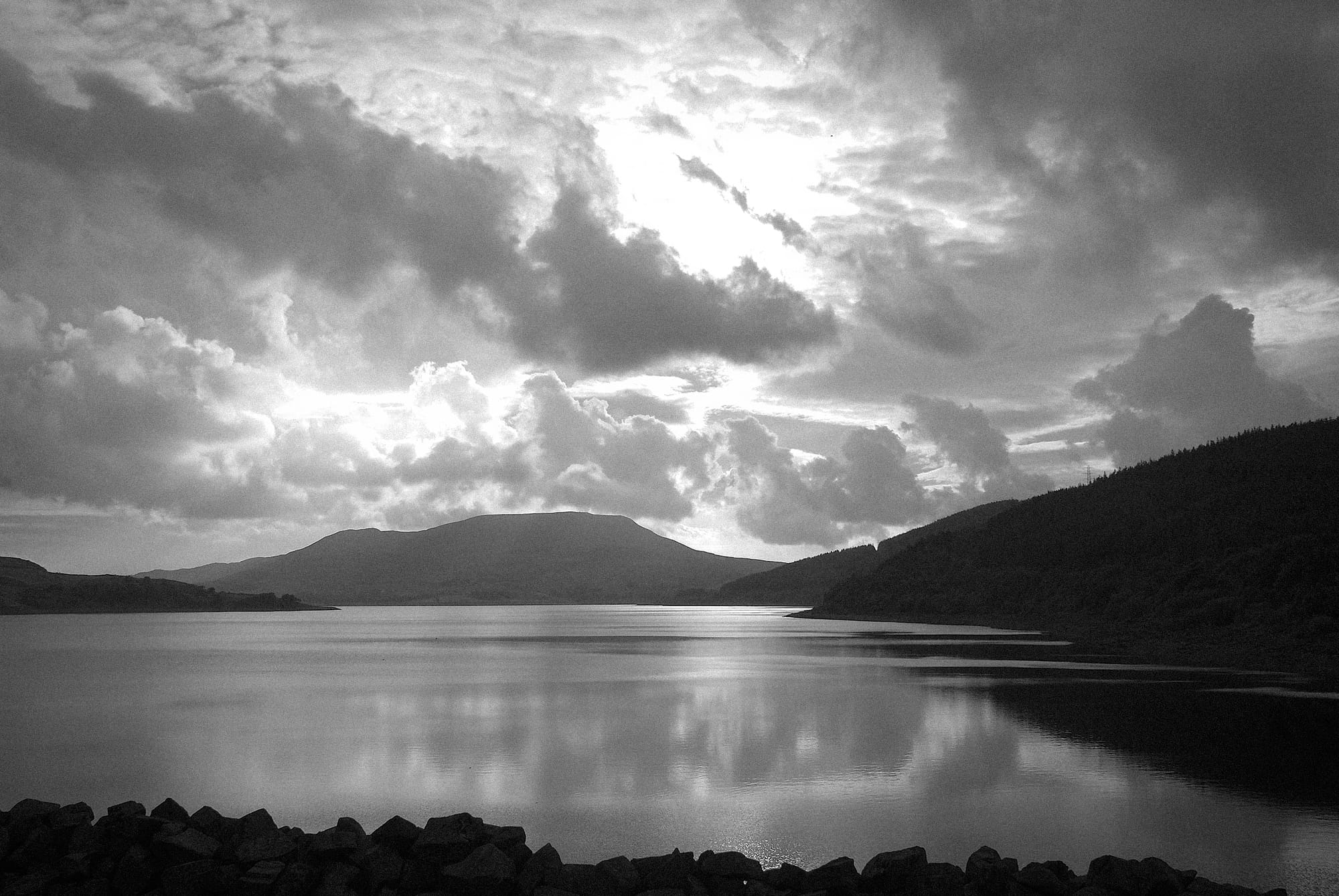
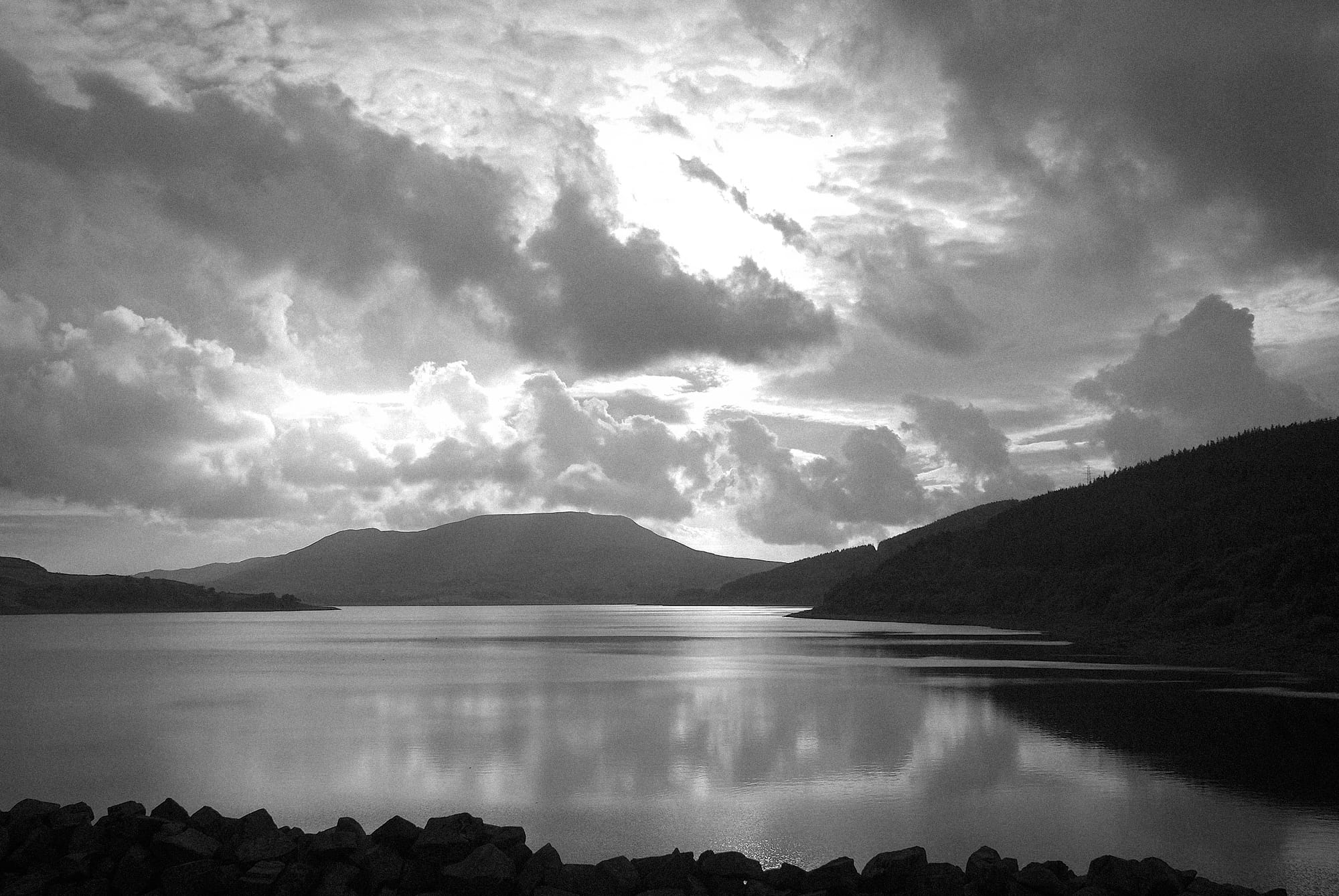
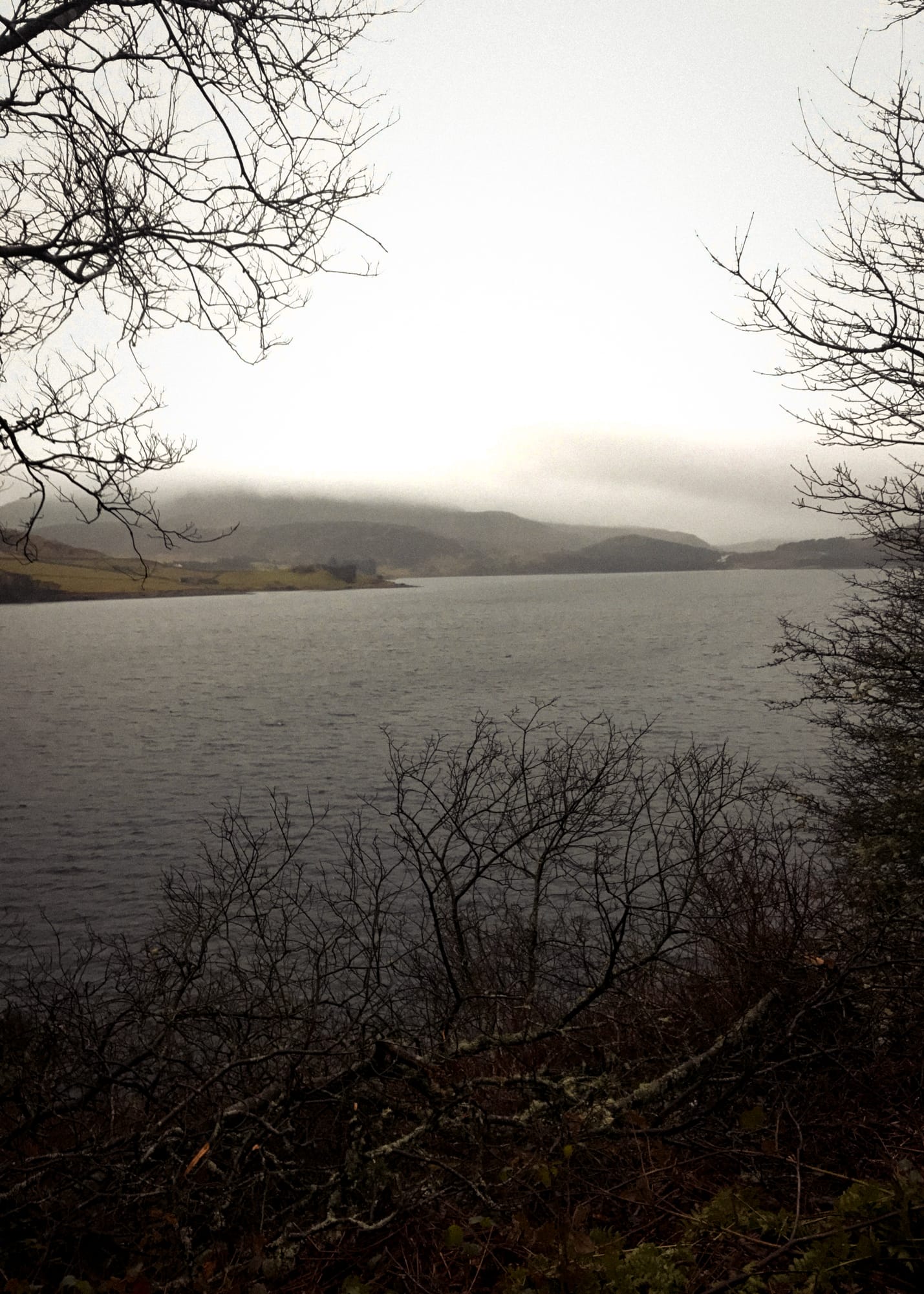
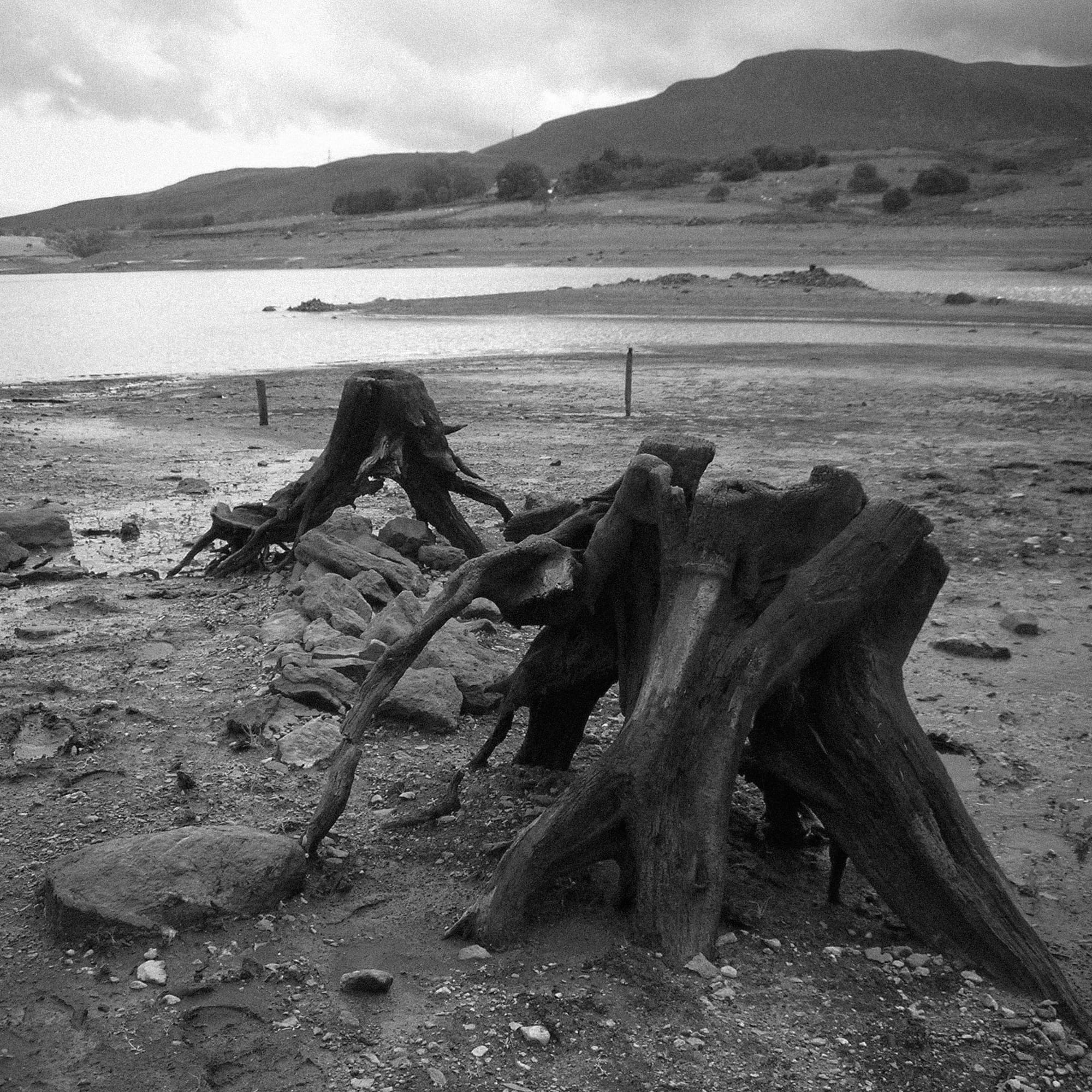
Peering, in the dying light, into the dead-still reservoir in which the village of Capel Celyn is drowned, was one of the most harrowing and affecting experiences of my entire itinerary of destruction through 'Ghost Britain' for Shadowlands. For me, the story of how this bastion of Welsh language and culture ended up beneath 68 million tonnes of water to slake the industrial thirst of Liverpool is perhaps the most dramatic — and tragic — in the entire book.
The residents of Dunwich, in Suffolk, were powerless to prevent the sea clawing their city off a cliff; those who woke up to find their villages noosed within a military training area in Norfolk in the 1940s sacrificed their homes to the greater national good; those of St Kilda actively elicited their delivery from their deadly Hebridean sea-mountain in 1930.
But at Capel Celyn we find resistance.
In fact the mother of all resistance campaigns which ignited the Welsh, and their allies, into a state of ‘white-hot indignation’ as they resisted the outrageous design of the Worshipful Corporation of Liverpool with letters, marches, pleas and eventually bombs. But to no avail. Pushed through by English MPs, against the express wishes of another part of the United Kingdom — a spectre that still haunts politics today — it exposes the void beneath myths of national identity, and I challenge anyone to read the following without their blood boiling.
The story of how the Tryweryn valley was systematically scoured of buildings, trees and graves is an appalling synecdoche for England’s 800-year subjugation of Wales and, as I see it, a striking metaphor for the ravages of man-made climate change that feature so prominently elsewhere in the book. I hope you enjoy immersing yourselves.
– Matthew Green
For references please consult the finished book.
For the people of the valley, it was just another day – farmers milked their cows, rapids poured down the hills into the creaming turbulence of the Tryweryn river, the tiny schoolroom resounded to the sound of Welsh poetry, and the bereaved laid flowers at the tombstones of the dead – but little did they know, there were aliens in their midst, eyeing the land. On the edge of the village, in the fields, had appeared people no one recognised, men in trench coats and wellington boots sinking their spades into the soil, measuring the depth of rock, photographing the landscape, and making notes. A few people asked them what they were doing but their answers were evasive, and they soon disappeared. No one gave them another moment’s thought.
Life continued in the remote rural community much the same as it had done for generations. In the school, Martha Robert Jones translated English sentences into Welsh; in the post office, John Parry Jones swapped gossip with the parcel-wielding villagers; in the chapel, an adolescent, full of remorse, prayed for forgiveness; in the farmhouses, wives prepared a mid-morning snack of toast, tea and currant buns for their husbands in the fields. In some of the farmhouses, a batch of official-looking letters lay unopened, stacked beneath bills and old newspapers. They were soon discarded by anyone who bothered to open them, for they were oblique and full of jargon, concerning some agricultural project which may or may not go ahead. They were stamped, as far as anyone cared, with the bold insignia of the Worshipful Corporation of Liverpool.
Three months passed, and some of the villagers were sitting down for breakfast. It was five days before Christmas 1955. They glanced at a paper, the Welsh edition of the Liverpool Daily Post. There was the usual quota of good news and bad news, sad news, and all other types of news. Wales was to have its own capital, Cardiff. Submissions for the National Eisteddfod were now closed. The robber of Dolgellau had struck again. Then, at the top of page two, something no one was expecting. Their village was to be drowned.
Capel Celyn was a request stop; passengers had to inform the guard they wished to get off or they would have ended up in the granite quarry by Arenig Fawr. The sign looked homespun – crooked cream letters crucified on thin planks of dark-brown wood, on stilts, looming over daisies. It felt like arriving at a funfair or Wild West set. The truth was more austere.
Visitors to Capel Celyn found themselves in a broad valley surrounded by dark, undulating hills, in the hill country of Merionethshire, North Wales, about five miles north-west of the town of Bala. White heather grew on the hillside and grouse fluttered through the air, but it was hardly a beauty spot. The terrain was stark and rocky. It was dotted with white-washed farmhouses. Peering through the windows one might have seen a woman in a white apron mashing up rhubarb. There were usually thousands of sheep grazing on the hillside and in the valley – no farmer had fewer than three hundred – and a few hundred black cows too. A faintly rutted track led to the village, past, on a typical afternoon, a young boy and his sister riding tricycles though a meadow of budding daisies, a cadaverous man waving a bucket beneath the nose of a playful cow, and, in the undergrowth, a fox ripping out the throat of a vole.
Over a bridge, a sliver of dark-grey buildings lay on a gently curving road. This was Capel Celyn. With twelve farms spread over eight hundred acres, the valley had a population of just sixty-eight, a small majority of whom lived in the village. There was a post office, a school and a Methodist chapel. There were also around a dozen stone houses. Visitors glancing through the window of one, Rhyd-y-fen, may well have seen a man with a shock of silver hair and angular features sitting, lost in thought, as a huge harp loomed over him. His front room was wallpapered but with bare light bulbs. Here, he handcrafted all manner of harps each evening, after he had finished herding his sheep. There was high demand, for in Cwm Tryweryn, all the farmers were poets and all the poets were farmers. Standing outside the farmhouses after dark, it would have been possible to hear the lilts and tones of Welsh poetry rise into the darkening skies as farmers gathered around hearths to recite verse to harp music.
There was a powerful sense that the mist-swirled hills shielded the village from the outside world. But Capel Celyn wasn’t completely archaic – some of the houses had electricity and running water (occasionally radios and the odd television set with terrible reception, too); there were pylons in the fields, and beetle-backed cars parked outside some of the houses.
A small cottage with heavy oak beams was the post office, the village’s main interface with the outside world, from the stone porch of which a terrier watched the world go by with fear in its eyes. Inside could be seen, on a typical day, an elderly woman cheerfully thwacking a parcel on shuddering scales whilst a few customers milled about, chatting (everyone knew each other in the valley). Nobody could have predicted that years on it would be the final outpost in a war against a faceless enemy.
The village took its name from the Methodist chapel, which was a modest affair – everything in the village was a modest affair, on the outside at least – no ostentatious spire or cross, just a rectangular building with a steep roof and slender sash windows. In spite of slightly dwindling attendance, it was still the fulcrum of the community (there was no pub, note) and it was here in the bleak midwinter days of early January 1957 that we find the entire community gathered together to discuss the dark cloud that had unexpectedly appeared on the horizon, threatening to destroy their whole way of life.
They sat on the pews, their faces white and horridly curious, as their enemy’s strategy was uncloaked.
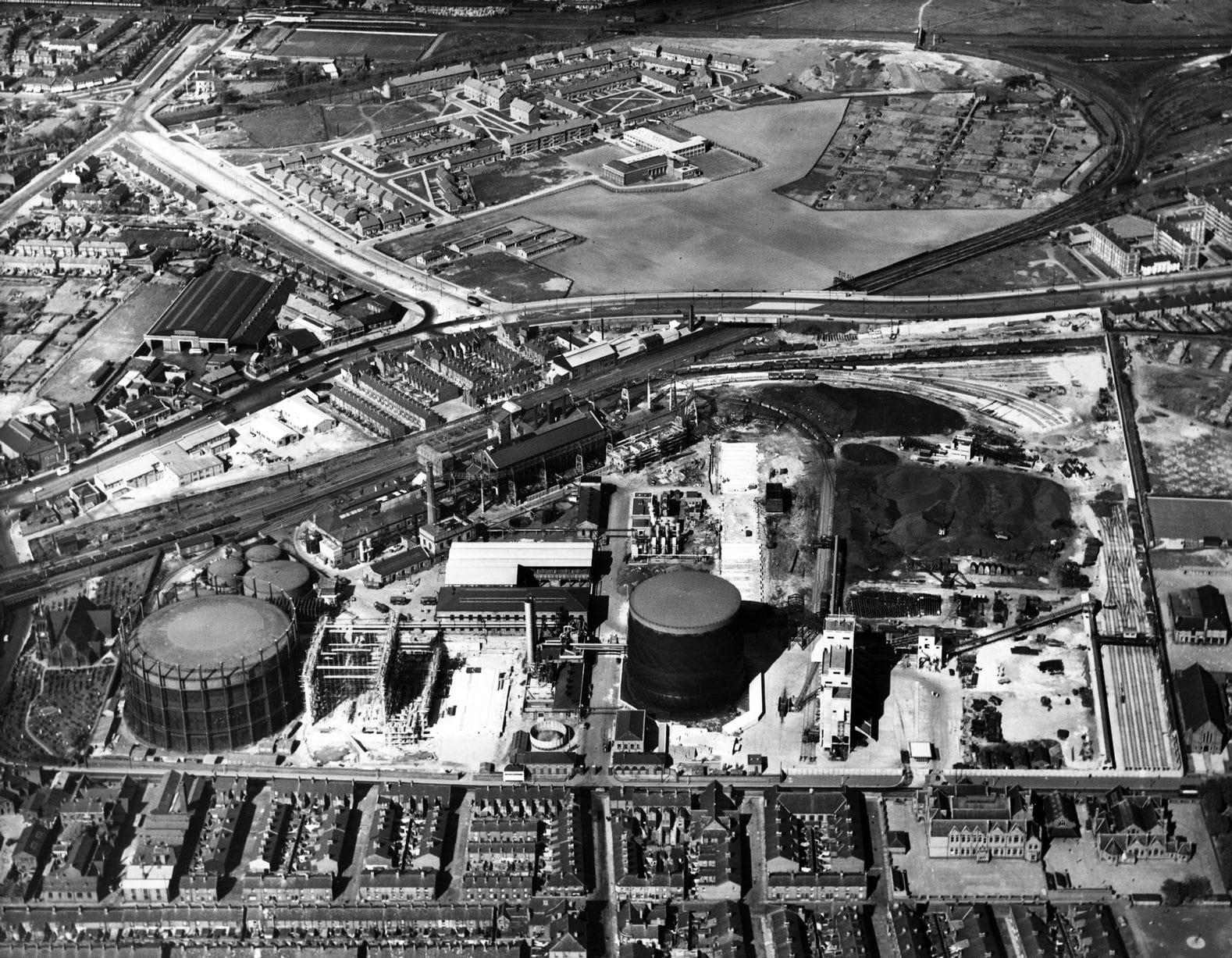
Liverpool, the great industrial city of the North West, was running short of water. The Corporation of Liverpool had calculated, with great mathematical exactitude, that to sustain industrial output, facilitate economic expansion, and meet its obligations to provide water for Merseyside, it was in dire need of a new reservoir.
The Corporation had originally pinpointed six potential locations, but this was soon whittled down to two, both safely across the border in Wales. It had been decided, after great deliberation, that the most efficient option would be to impound the Tryweryn river by turning the valley – which had one of the biggest watersheds in Wales – into an enormous reservoir and dam. The Corporation fully realised this would mean flooding the village and a dozen of its outlying farms, dispossessing some sixty people, but they would be amply compensated and they were sure there would be no hard feelings because Great Britain was a ‘tight little island’ and this was a ‘just’ and ‘necessary’ measure.
The congregation – not just the valley folk, but concerned parties from nearby communities – sat through these astonishing revelations in silence, incredulous, and almost grimly entertained by the audaciousness of such a proposal. Then, a blizzard of questions whose answers they collectively pieced together from recent newspaper reports. Was this legal? Potentially, yes. The Corporation was planning to bulldoze a private members’ bill through an English-MP- dominated Parliament to obtain a compulsory purchase order.
And what were the people of the valley meant to do? Sit back and watch as the Corporation of Liverpool buried their village and everything it stood for under 68 million tonnes of water? Not a chance, they would fight them tooth and nail, with every fibre of their being. But how?
The odds were against them. It was a tiny rural authority against the full might of the Corporation of Liverpool; in essence, a smalltown David versus a corporate Goliath. ‘May God guide your throw’, urged the Star newspaper, ‘to keep the hymns of Capel Celyn, and the ballads of Bob Tai’r Felin from being murdered by the devil’s dam.’ In time, the Committee plotted a march on Bala, a conference in Cardiff, and a show of strength in Capel Celyn itself. But most of all, they encouraged people to write, and write they did, in their thousands. The red dragon of Wales had roared back to life and was ready to breathe fire.
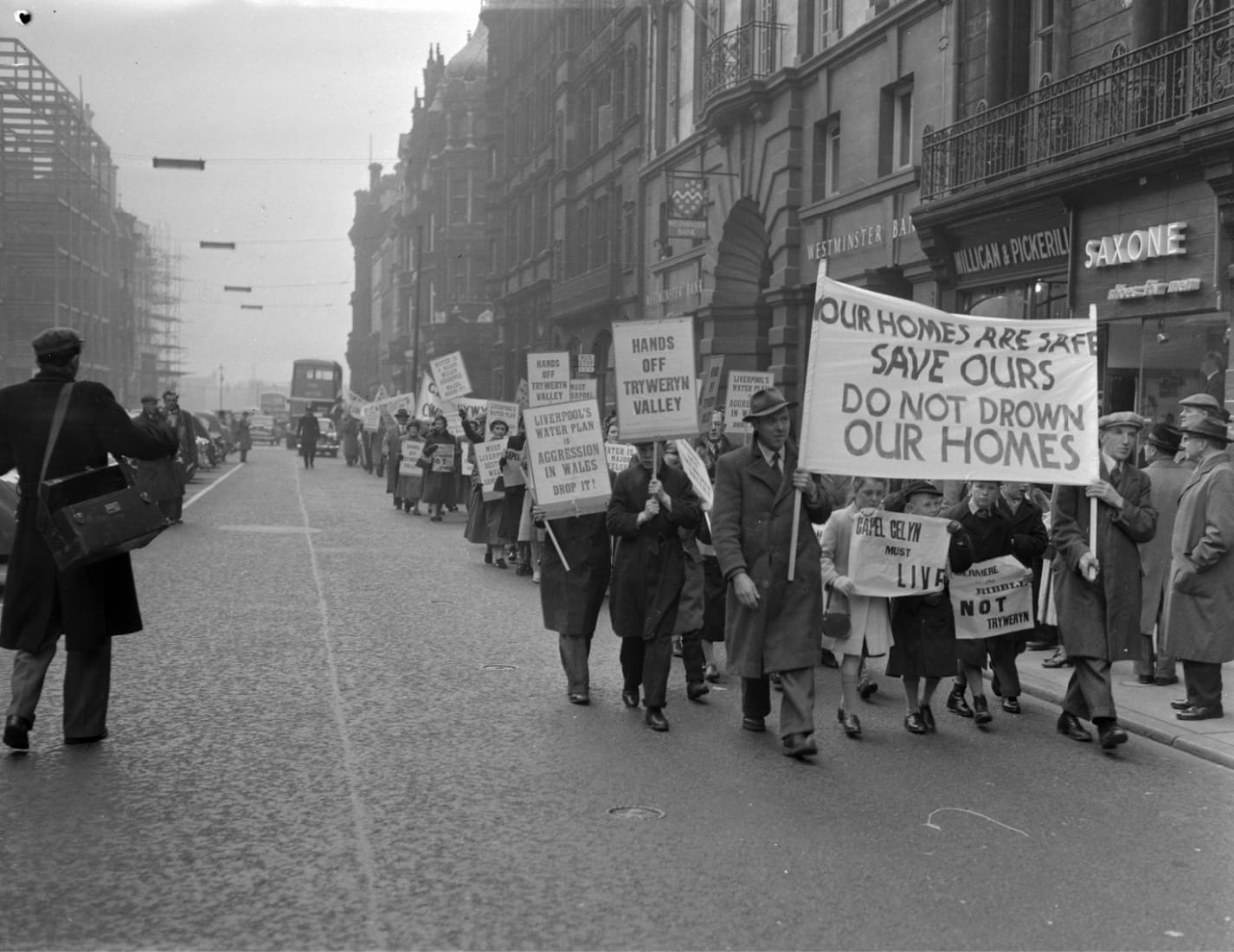
How would Mr Cain of Liverpool Corporation’s Water Committee feel if he experienced his country ‘being sucked away from you, as it were by a voracious swallowing wind into the hands and possession of another country and civilization’? England had annexed their nation, beheaded their princes, abolished their laws, impoverished their language, flooded their villages, stolen their youth, diluted their culture and gagged their voice; was it really now going to go ahead and drown – in the face of overwhelming opposition – one of the last remaining strongholds of Welsh language and traditions in the land?
It was. The Corporation of Liverpool, with great tenacity and clear-headedness of purpose, vowed to rise above the popular clamour, to crack on with the scheme undeterred by all the rants that were every day landing on the desk of the Liverpool town clerk. Nothing must impede the flow of progress.
The spectacle of England’s MPs passing a law that would adversely affect another part of the United Kingdom against the express wishes of its population and politicians was deeply unfortunate – a spectre indeed that still haunts British politics to this day – but constitutionally, there was nothing illegitimate about it at all because Wales and England had been part of the same country for four hundred years, since the sixteenth-century Acts of Union. But because it felt a summary execution, it intensified calls to restore Wales’s ancient political independence.
At the end of the month, the [Parliamentary] Bill passed at its third reading by an increased majority of ninety-six with no further debate, and received the royal assent the next day. The rain would continue to fall on the hills of Merionethshire but much of it would now flow to England, and Capel Celyn and the Tryweryn Valley found themselves in the shadow of oblivion.
Work on the lake began in November 1959. Plaid Cymru never gave up, continuing to produce ever more elaborate schemes to prevent the drowning, but few of the residents had time for these pipe dreams. It was bad enough to be on death row, even more so to cling to the remote prospect of a last-minute reprieve.
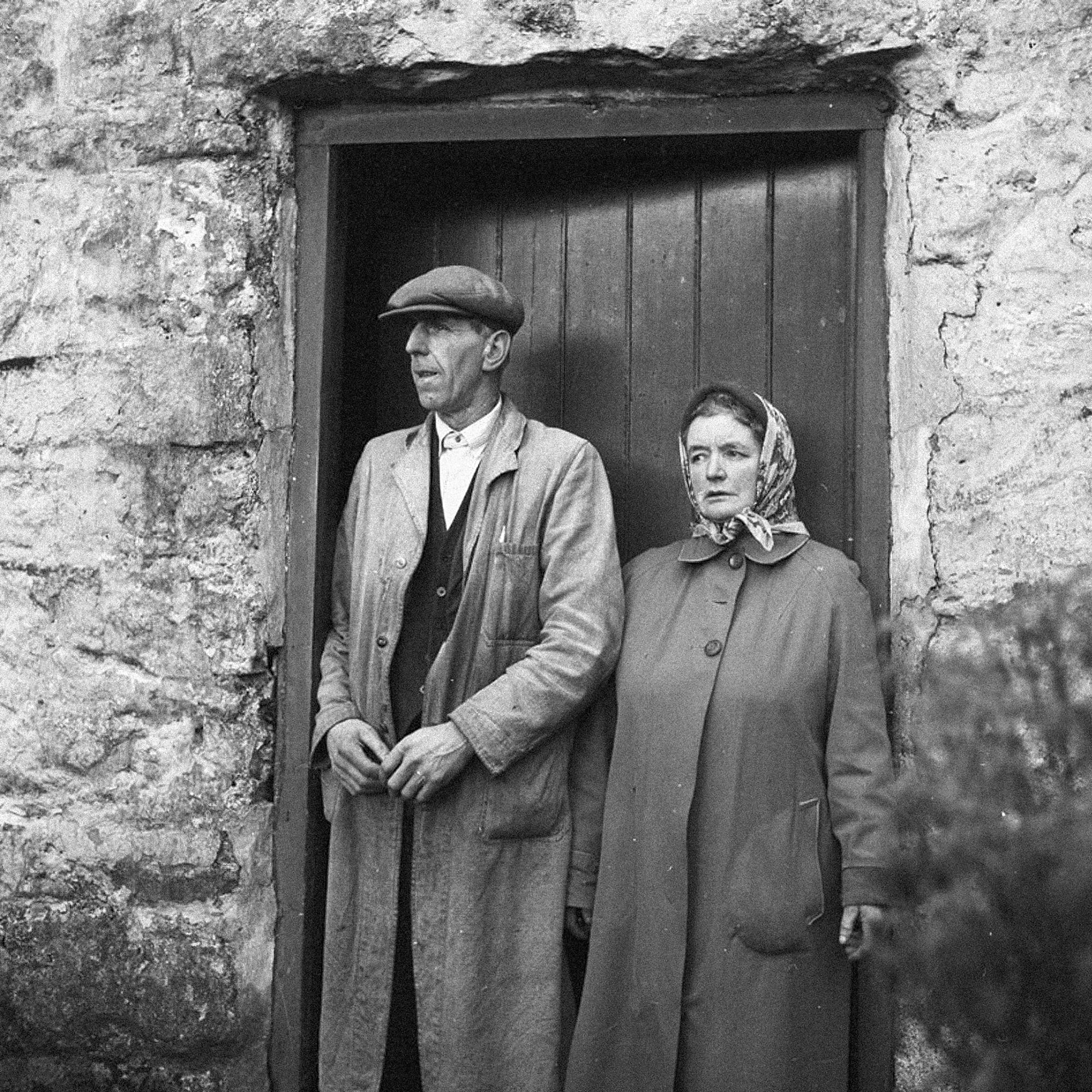
In 1961, a woman and a man in long overcoats – Mabel and John Evans – posed for a final photograph on their porch. John had lived in this house, Garnedd Llwyd, since he was three months old; his wife for thirty years. Along with their little sheepdog, they repaired to a farm that Liverpool Corporation had bought for them in the hills above Bala where, at night, they could see glimmering headlights on the new road across the valley, which made them feel a little homesick. But they were enjoying having thirty-four acres of land, pleasant neighbours and, excitingly, electricity, which they’d not had before. No question it had been a wrench to leave, they told the Liverpool Daily Post, but they were reconciled to their new life, and had refused to sign the petition of protest against Liverpool Corporation.
Some years later, they were both dead. Killed in a car crash. It was suggested by some, darkly, that this was God’s judgement for the alacrity with which they had reached generous terms with the Corporation. Another couple who had lived in the valley for sixty-one years found themselves in an agreeable terraced house in the nearby village of Frongoch, ‘within sound of the valley, which we shall never forget’.
The following June, clay for the dam’s core was first laid down and, not far from the village, gravel was dug from pits to cover the surface. Construction works began in earnest; a grotesquely ironic sign went up on the dam site saying ‘Trespassers will be prosecuted’, and the valley degenerated into a dust-ridden wasteland.
By the spring of 1963, only three families remained in Capel Celyn. Of these, the Parry Joneses held out the longest, holed up in their ghost post office, taking mournful turns in the empty village gazing out at the lorries crawling over the landscape like caterpillars. They were finally ejected on a bright morning in May 1963 and were still in sight of their old home as the bulldozers moved in. By then the school’s class size – there was only ever one class – had shrunk to fourteen. Many of the children were haunted by a sense that the waters could rise at any moment, gushing into the classroom mid-lesson, carrying them off, and drowning them deep in the valley. One exhibit at the Royal Cambrian Academy of Arts was painted by a girl from Capel Celyn. The valley, with its stark black hills, is unmistakable, and the Tryweryn stream has accrued an ominous new significance, coming across as a great slithering snake, ready to poison the landscape.
The school finally closed its doors one summer’s day in 1963. All the children posed for a final photograph with their teacher, Martha Robert Jones. She had been the schoolmistress for nine years, though she was from Bala herself, which she claimed gave her a valuable external perspective to gauge the toll of anxiety in the valley. She tried to keep the subject out of school and carry on as normal, hard enough in such a close knit community, but even harder when a JCB smashed into the school roof mid-lesson, tearing off slates. On their final day, the children received a cake from Plaid Cymru with thick dollops of icing addressed ‘to the children of Tryweryn’ – an apt metaphor, some thought, for the feebleness of the official nationalist resistance. Shortly afterwards, the bulldozers moved in.
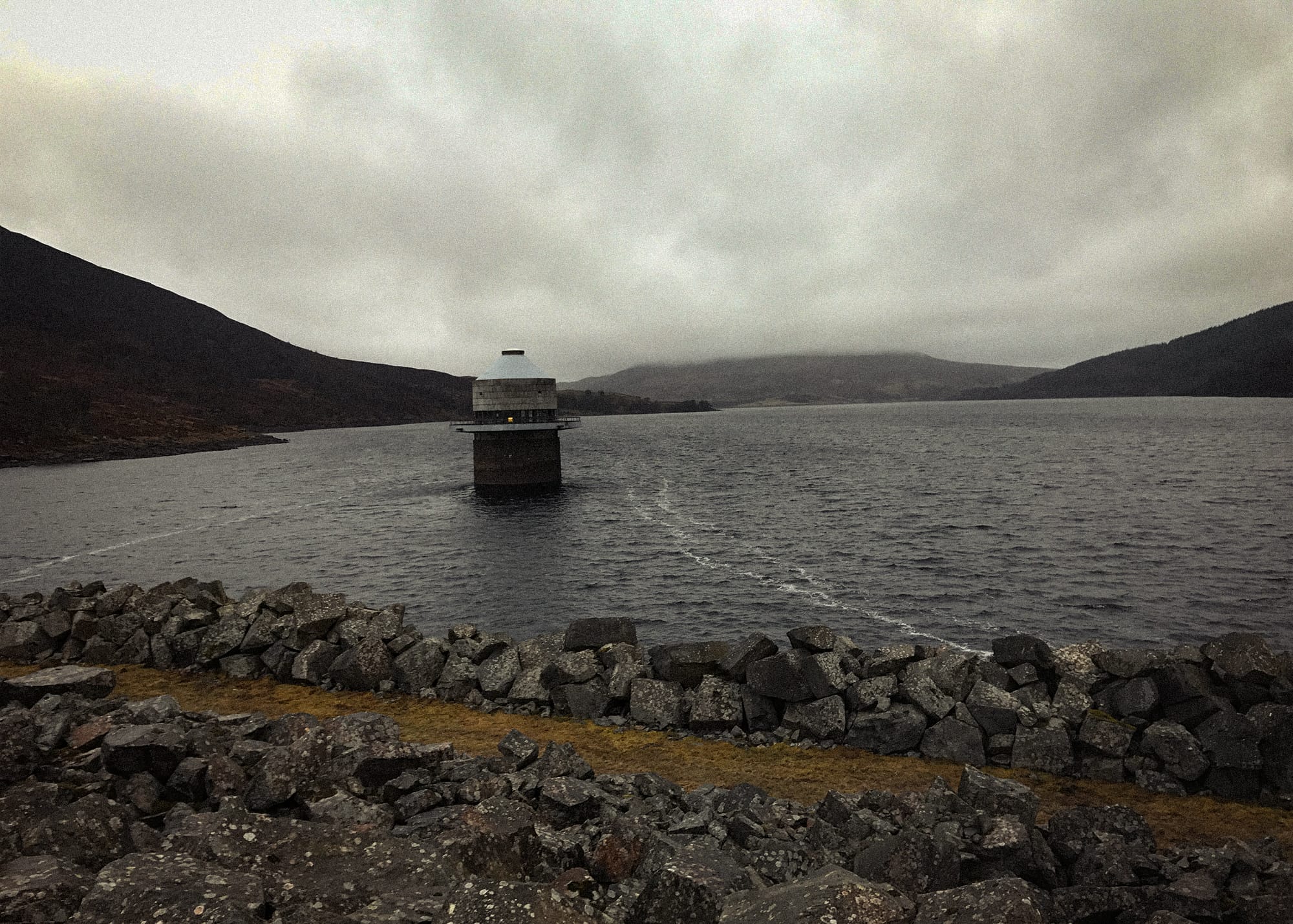
In September 1964, the basin’s floodgates were closed and the river dammed for the first time. Now the rainwater flowing down the Merionethshire hills, finding its path to the sea blocked, amassed in the shorn valley as the lake came into being. Some stood and watched as the remains of their old homes melted into the lake.
Finally, by autumn 1965, it was complete: a magnificent reservoir two and a half miles long and a mile across, a depth of 43 metres, with a capacity for 16.4 million gallons of water. Since they had spent 18 million on it, it was only right that the Liverpool Corporation should come down to admire their handiwork. And not only that – they would have a grand opening ceremony followed by an official five-course luncheon.
The date was set: Thursday 21 October 1965. Tactlessly, invitations were sent not only to local councils but anyone with family links to the valley, including those who’d fought the hardest the save it, and the dispossessed. One was sent to the chairman of the Defence Committee, Dafydd Roberts, who didn’t have to suffer the indignity of opening it since he’d died ten days earlier, foretelling how ‘echoes of songs and praise’ would for ever rise from the deep of the lake ‘to the crest of the waves above’.
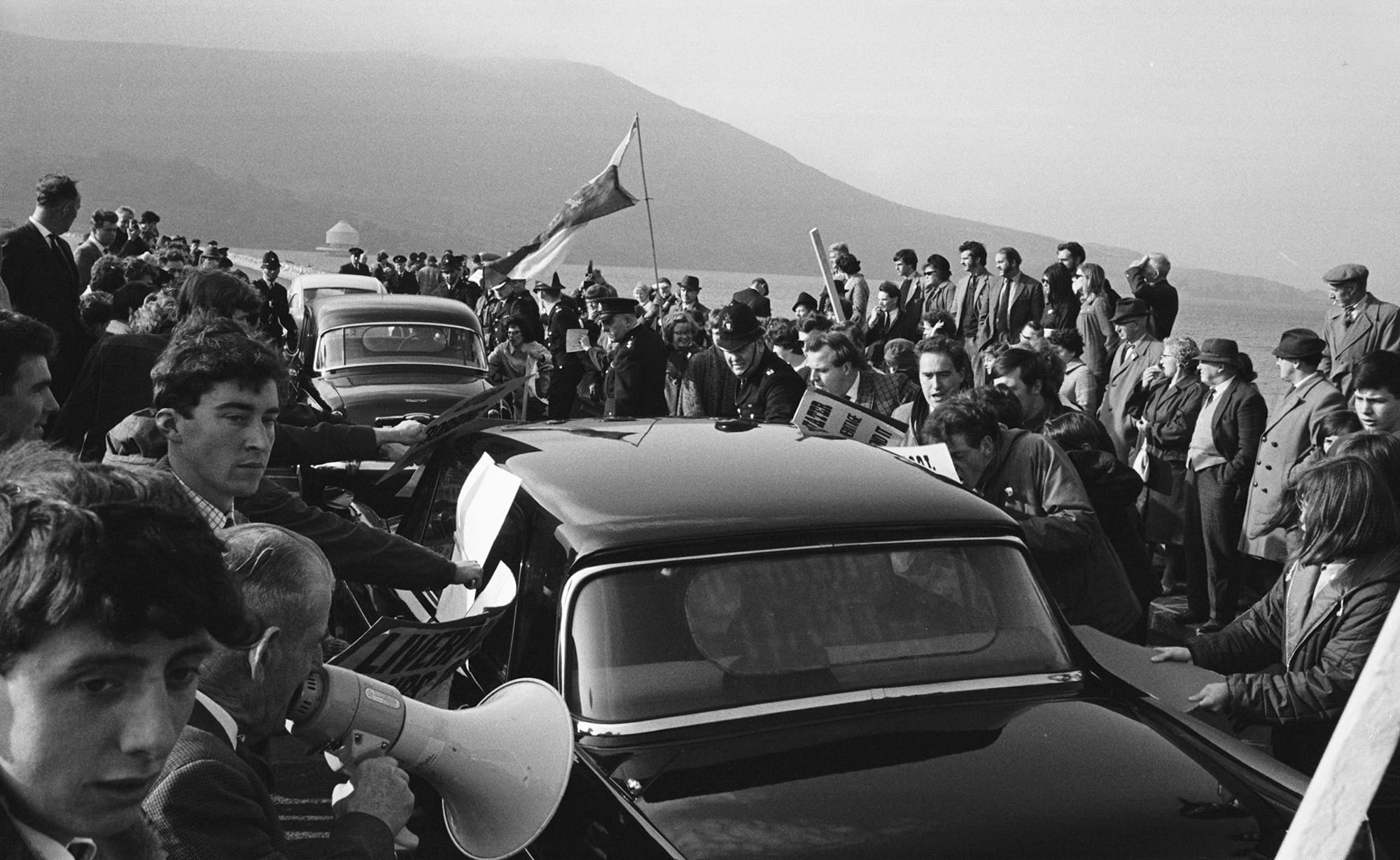
On a strangely muggy autumn morning, hundreds of protesters amassed on the edge of the reservoir. They awaited the arrival of around four hundred guests from Liverpool who would have to drive straight past them to reach the marquee by the power station down below. There were students in sunglasses, grandmothers with walking sticks, young children, mothers with babies, intellectuals with neatly swept back hair, and smart grandfathers all brandishing placards full of reproachful words, crisp against the livid-blue lake: ‘GO HOME THIEVING SCOUSE’; ‘HANDS OFF WELSH VILLAGES’; ‘GWLAD! GWLAD!’ (Country! Country!) It was not the villagers who were protesting – they had moved on with their lives – but people from all over Wales who had commandeered the anti-English cause. One banner even said ‘CRUSADE AGAINST ALL CRUELTY TO ANIMALS’, another ‘PREVENT FOREST FIRES’, showing that Tryweryn had become a lightning rod for all manner of injustices. At eleven o’ clock, the cavalcade appeared, twisting around the hillside road, and soon the mood turned dirt-ugly.
The protesters formed a quivering tunnel, bearing down upon the convoy, thwacking roofs with placards, bashing bonnets with their fists, and thrusting loudspeakers into wisely wound-up windows.
Midway through the pandemonium, the protesters, now numbering five hundred or so, spied the VIPs from Liverpool Corporation arrive in coaches on the other side of the reservoir, scuttling towards the marquee in all their finery. Furious, they broke through a police cordon, poured down the dam’s steep escarpment, and converged on the marquee where the ceremony was due to take place.
On the grandstand were the three arch-villains of the piece: Mr J. Haughton, Liverpool’s Chief Constable; Alderman David Cowley, the Lord Mayor in his ridiculous golden chain; and Alderman Frank Cain, chairman of the dreaded Water Committee. They were met by a blizzard of boos and a cacophony of plaintive chants. At first they listened in respectful silence – not realising the words to one song meant ‘all English are arseholes’ – and waited for the crowd to pipe down, but it never did. Taking the microphone, the Lord Mayor tried to give thanks for the reservoir but could only be seen ‘blabbering like a goldfish’; the microphone wires had been cut.
The bombardment of booing, jeering and chanting – amplified through loudspeakers – reduced what was meant to be a forty five minute ceremony to a three-minute travesty. One dignitary ended up with a flagpole in his eye. The Lord Mayor had to duck a brick. The engineer of the dam was struck on the shoulder by a chunk of slate. At one point a side of the marquee mysteriously collapsed. Three young guns from the Free Wales Army attempted to burn a Union Jack, bringing petrol for the purpose, but it refused to light. In the end, they trampled on it in a foaming frenzy, and threw it in the reservoir. The tattered and sullied flag ended up drifting across the surface of the lake.
Raising his voice, Cain went on to explain that Liverpool Corporation had nothing – nothing! – to feel ashamed of. It had put its case to the Welsh people and to Parliament and had been given the authority to go ahead. It was, therefore, a privilege and a pleasure to declare the Llyn Celyn reservoir open.
He yanked on a lever, sending millions of gallons of water spurting from the stilling basin into the river below, drowning out the rousing tones of ‘Land of My Fathers’ in a monstrous, obliterative gush just as they, earlier, had drowned him out. The protesters fell silent and listened to the roar of the water. It was a harrowing moment and the symbolism was lost on no one – here, once again, was the Welsh way of life being drowned, here was Welsh culture being diluted, here was Wales’s most precious natural resource being drained, here, pissed upon, was the spirit of the Red Dragon, dissolved into tiny particles of water at the hand of an English oppressor.
The councillors bid adieu to the querulous mob. They were much looking forward to sinking their teeth into some succulent Welsh lamb •
This excerpt was originally published March 22, 2022
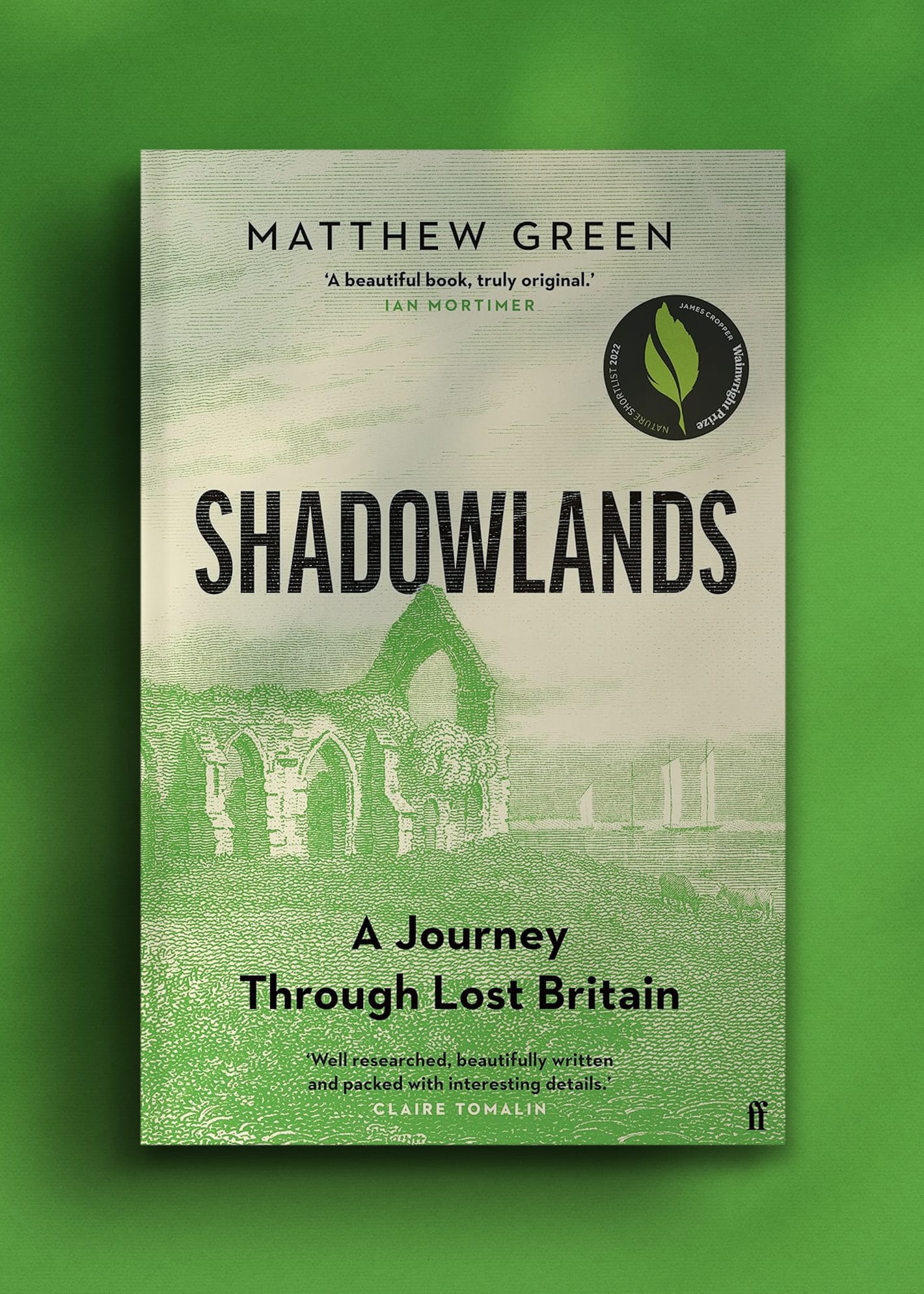
Shadowlands: A Journey Through Lost Britain
Faber, 6 April, 2023
RRP: £10.99 | ISBN: 978-0571338030
“Brilliant”– Tom Holland
Drowned. Buried by sand. Decimated by plague. Plunged off a cliff.
This is the forgotten history of Britain's lost cities, ghost towns and vanished villages: our shadowlands.
Historian Matthew Green travels across Britain to tell the forgotten history of our lost cities, ghost towns and vanished villages. Revealing the extraordinary stories of how these places met their fate - and exploring how they have left their mark on our landscape and our imagination - Shadowlands is a deeply evocative and dazzlingly original account of Britain's past.
“Consistently interesting . . . Green's passion and historical vision bursts from the page, summoning up the past in surround sound and sensual prose”
– Cal Flyn
“A haunting, lyrical tour around the lost places of Britain”
– Charlotte Higgins
With thanks to Kate Burton and Faber. Author photograph © Hayley Benoit.
📸 Dive into our Features
🎤 Read Interviews
🎧 Listen to Podcasts
🖼️ Buy fine art prints & more at our Store