
The Art of the Grimoire
A gallery of Magic Books and Spells with Owen Davies


Grimoires, textbooks of magic and occult knowledge, have existed through the ages alongside other magic and religious texts in part because of the need to create a physical record of magical phenomena, but also to enact magic through spells and rituals.
To understand the history of these texts is to understand the influence of the major religions, the development of early science, the cultural influence of print, the growth of literacy, the social impact of colonialism, and the expansion of esoteric cultures across the oceans.
In this Viewfinder gallery, we’ve picked ten of the best, with commentary from Owen Davies, author of Art of the Grimoire.

1/10
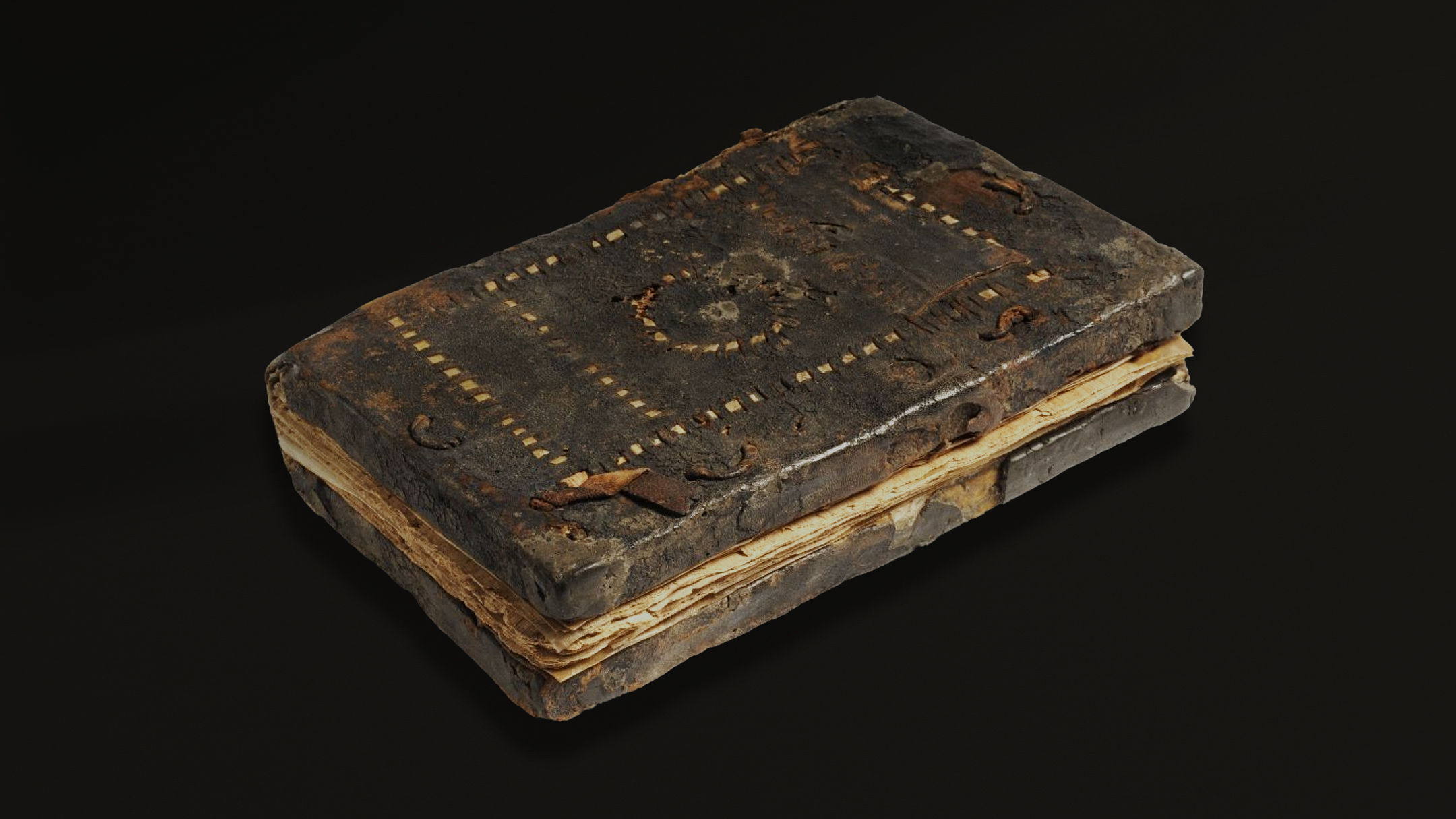
Papyrus Codex
Papyrus codex with leather cover and parchment decoration, probably from Thebes (6th century CE). Over 16 pages, the Christian author charts a careful course through what is magical and what is liturgical. It includes an apocryphal exchange of letters between Jesus and King Abgar V of Osroene (Upper Mesopotamia), to be copied for protection.
2/10
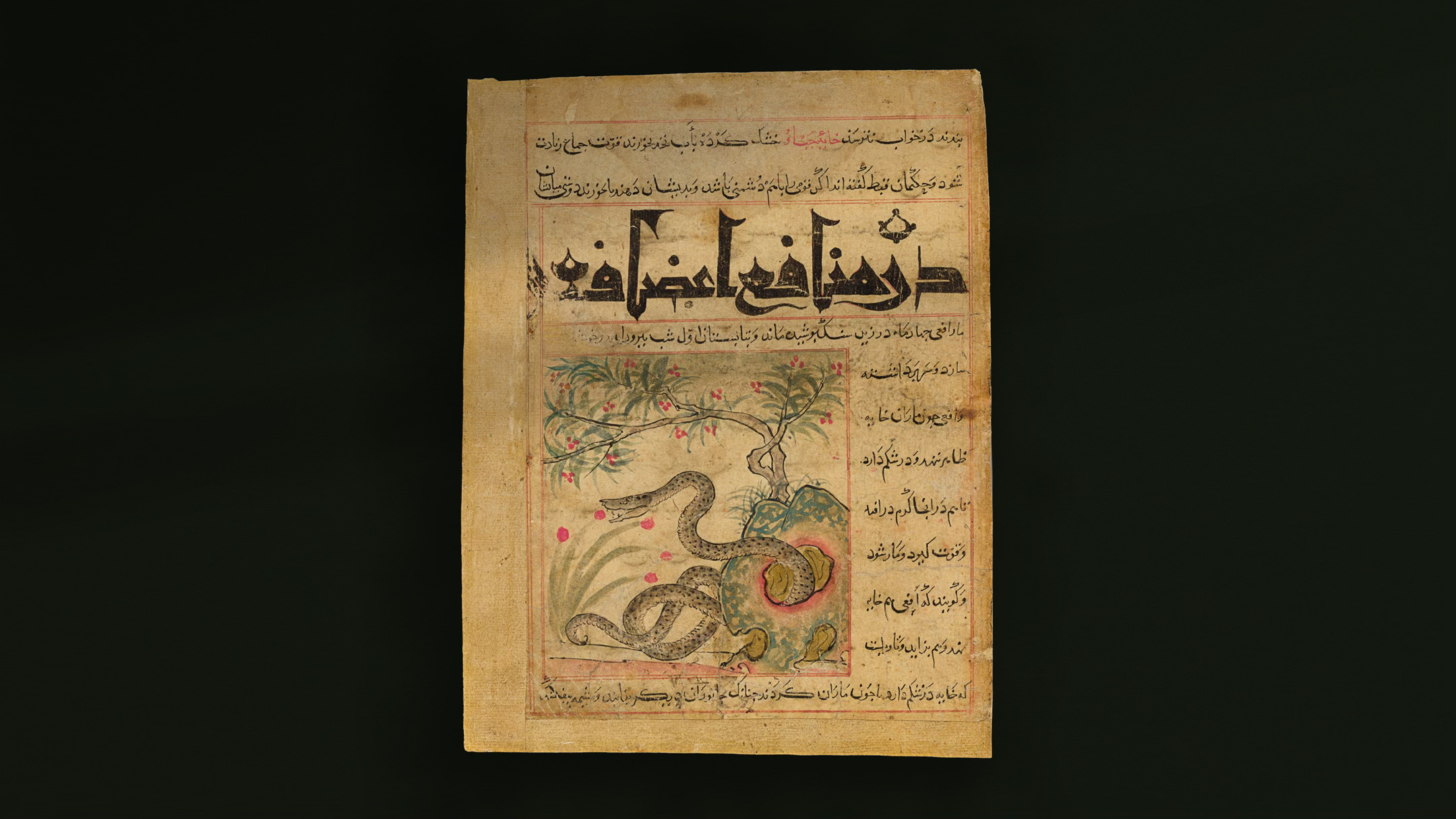
The Snake
Watercolour and ink on paper, an illustration of a snake from a version of the Kitab al Manafi al Hayawan (Book on the Usefulness of Animals), Iran (c. 1300). It was originally written by the Persian physician Ibn Baktishu (d. 1058) who drew upon ancient Greek medicine for his manual on the medical properties of animals.
3/10
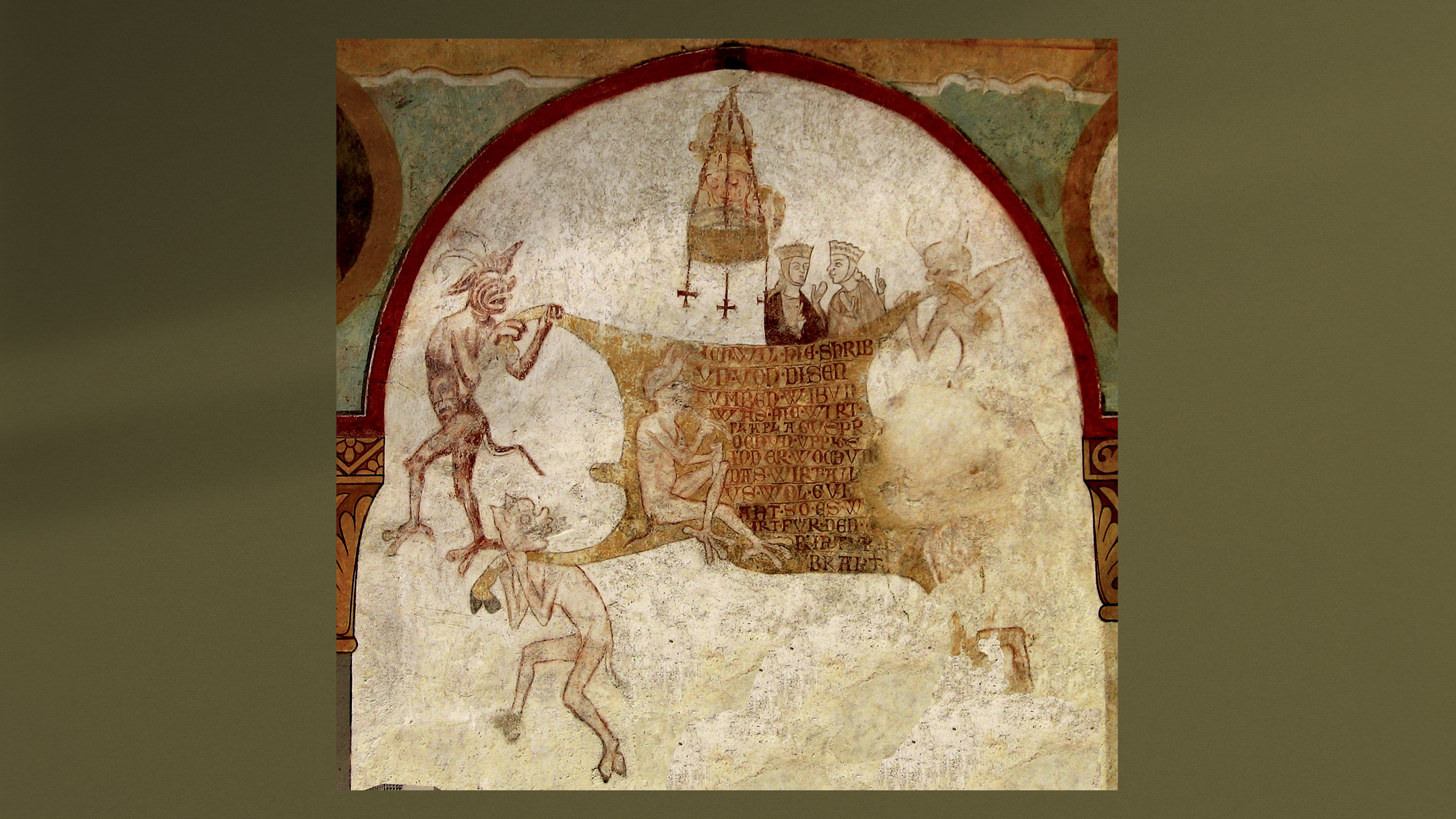
Four Demons
Medieval fresco from the Church of Saint George at Reichenau Abbey, Lake Constance, southern Germany (14th century). It shows four demons stretching out a whole, uncut parchment hide. Another demon is depicted writing on the parchment regarding the fate of the foolish gossiping figure just above.
4/10
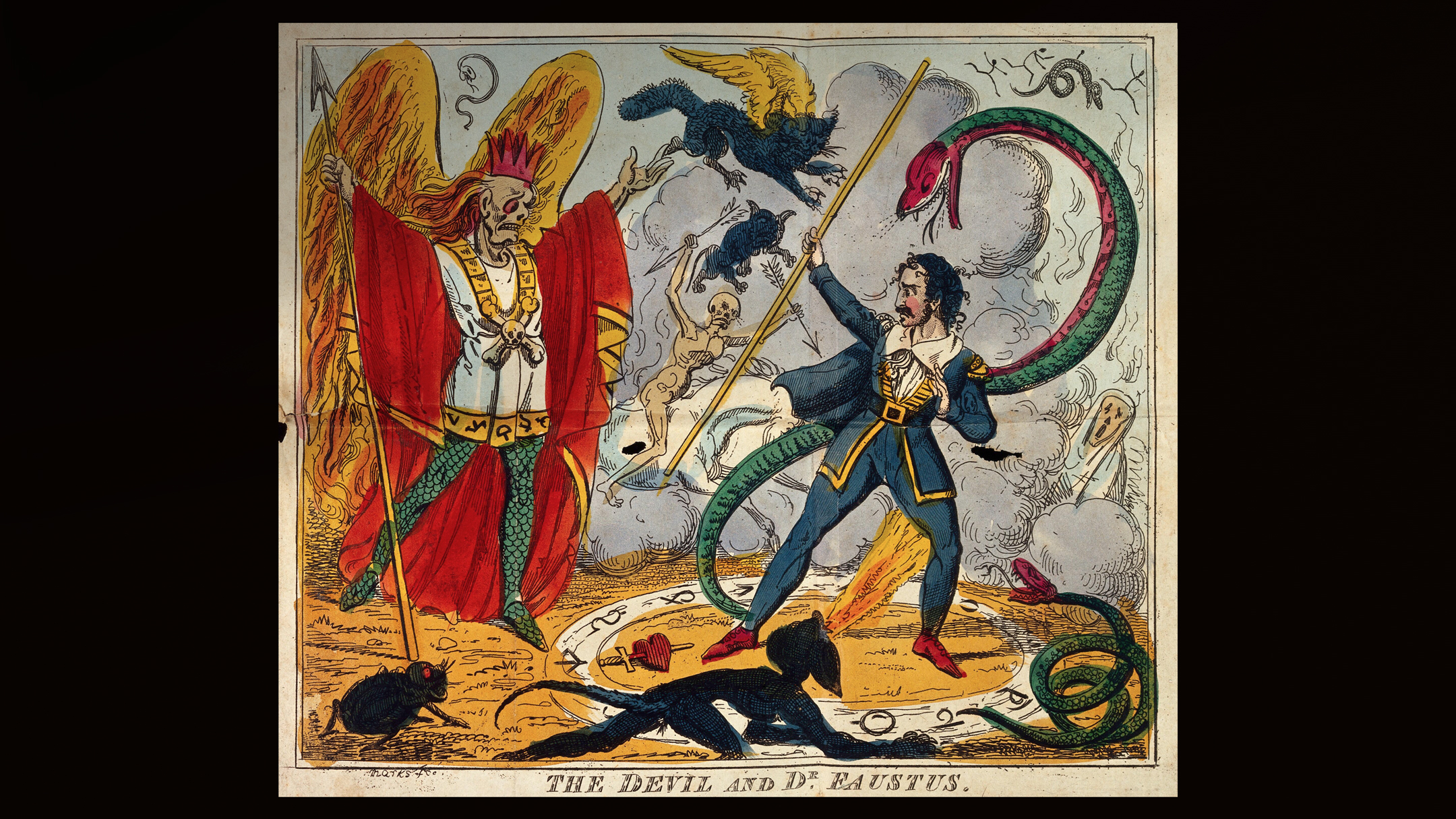
Faustus and the Devil
Coloured print entitled ‘The Devil and Dr Faustus’ (c. 1825). The fascination with the Faust story – fuelled by popular literature and art of this kind over the centuries – influenced impressionable young men to seek and emulate the notorious magician, using the grimoires attributed to him to conjure up the Devil.
5/10
A Working Grimoire
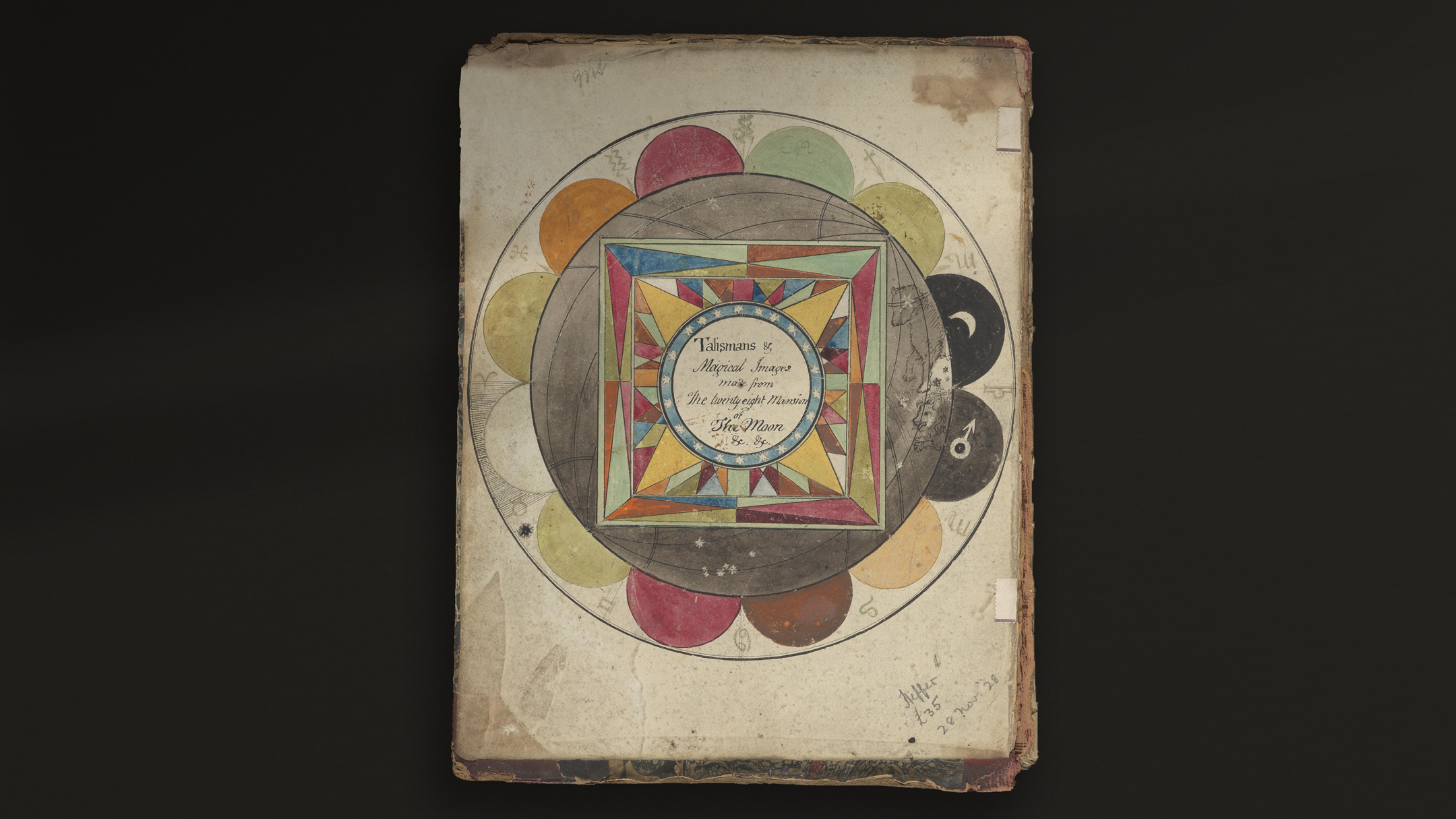
Illustration entitled ‘Talismans & Magical Images made from the twenty eight Mansion of The Moon’, from Francis Barrett’s manuscript of The Magus, held in the Wellcome Library, London. It is far from an exact copy of the printed version, and was perhaps Barrett’s own working grimoire for instructing his pupils before The Magus was published in 1801.
6/10
The Magus
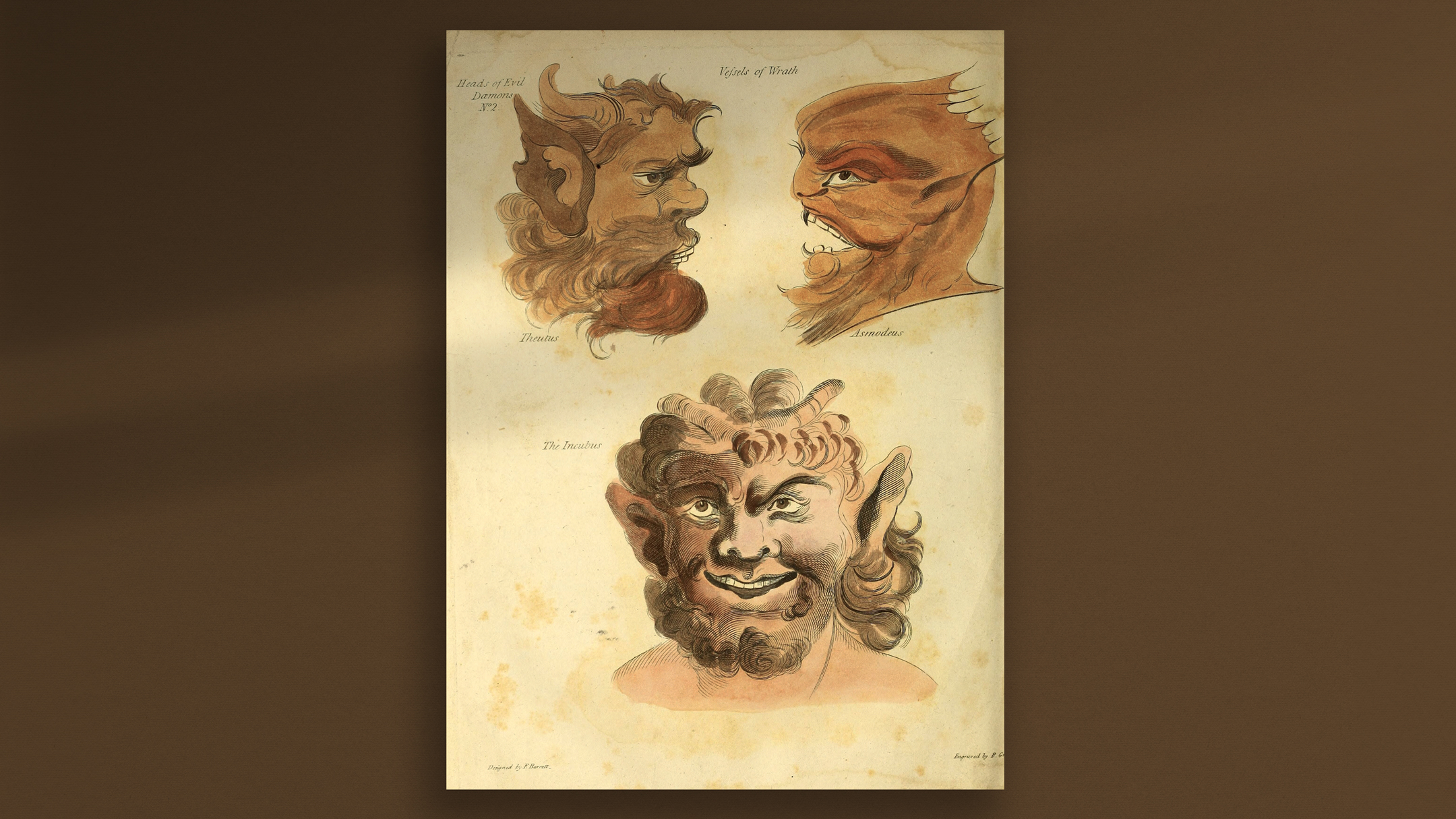
‘Heads of Evil Demons, Vessels of Wrath’ from The Magus (1801), designed by Francis Barrett and engraved by R Griffith. The three demon heads depicted here are Theutus, Asmodeus, and the Incubus. Theutus is little known, and Barrett likely came across him from a reference in Agrippa’s Three Books, where he is described as the devil who ‘taught dice and cards’.
7/10
The Key of Hell
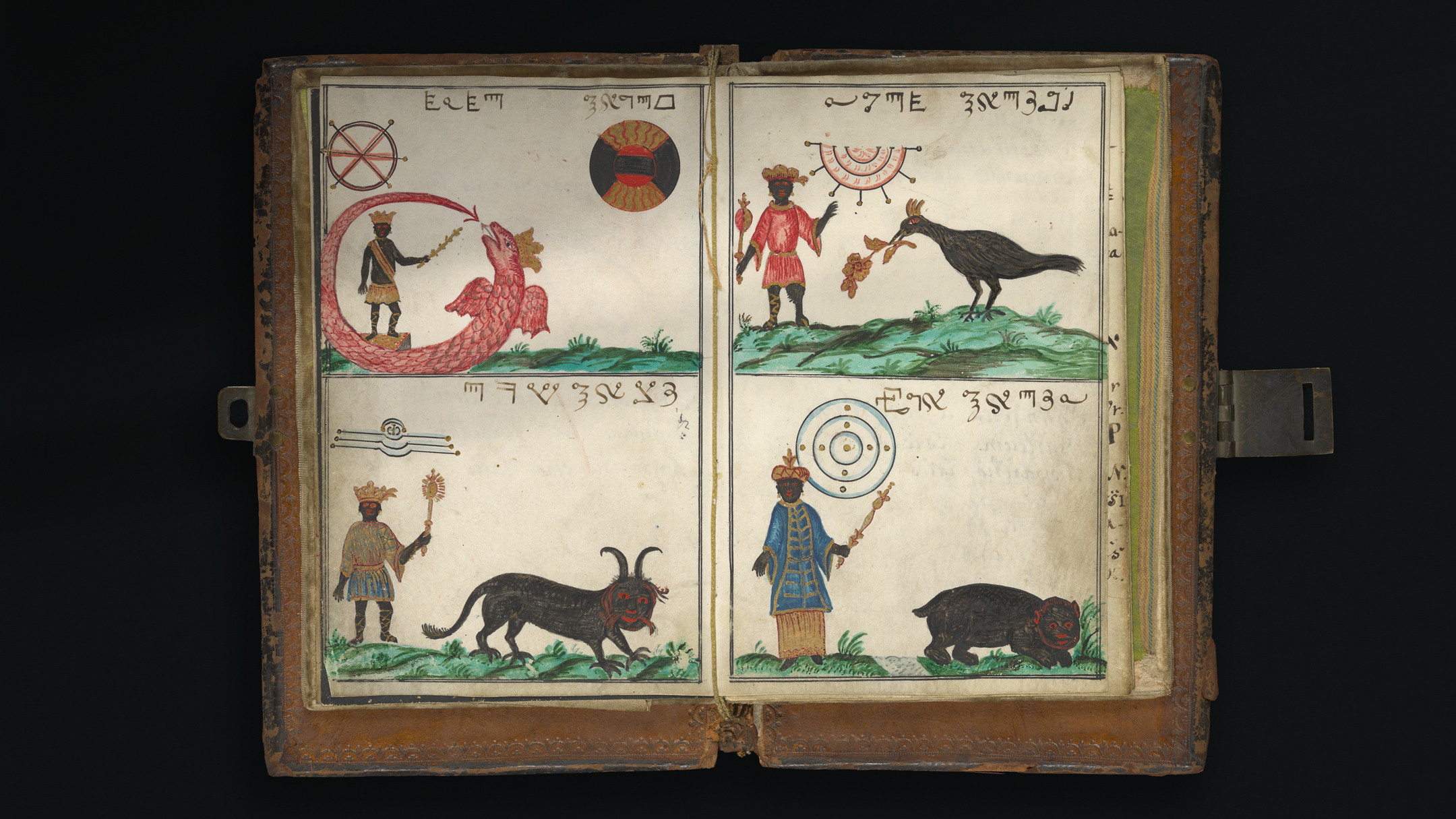
Illustration from the Clavis Inferni sive magia alba et nigra approbata Metatona (The key of hell with white and black magic proven by Matatron). Created in ink and watercolour on vellum, it is written in Hebrew, Greek, Latin, and secret code. While dated 1717, it is mostly likely from the late 18th century. The image depicts four spirit kings and their animal forms, which could be conjured up by the magician.
8/10
Amulet
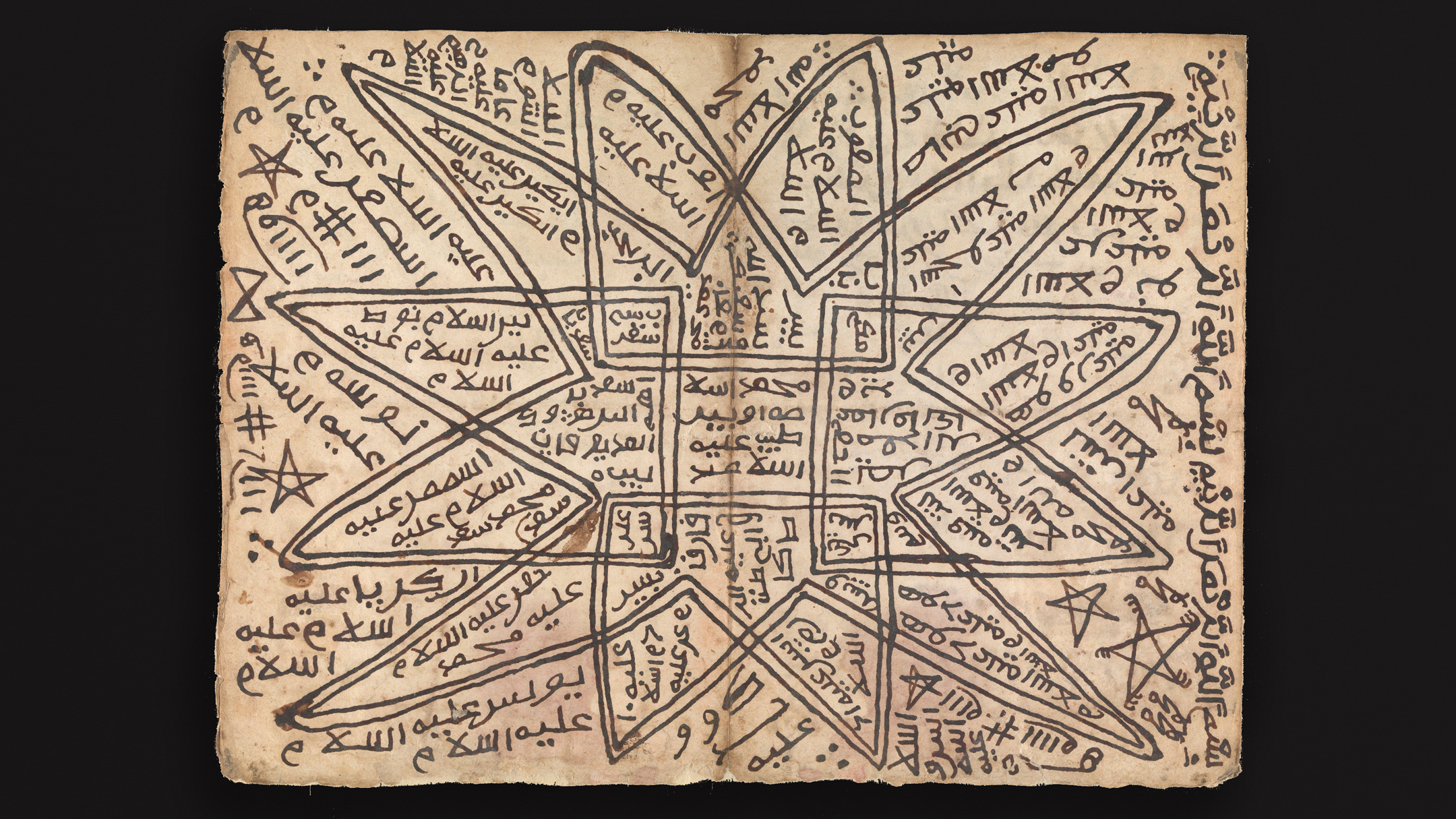
Sudanese Islamic amulet, in ink on paper (19th century). This was an amulet to be worn against the power of the evil eye. It is from a miscellaneous collection of Arabic esoteric manuscripts (one of numerous in European libraries) including an older Arabic alchemical text, and another Sudanese charm consisting of letters from the word ‘Mohammed’.
9/10
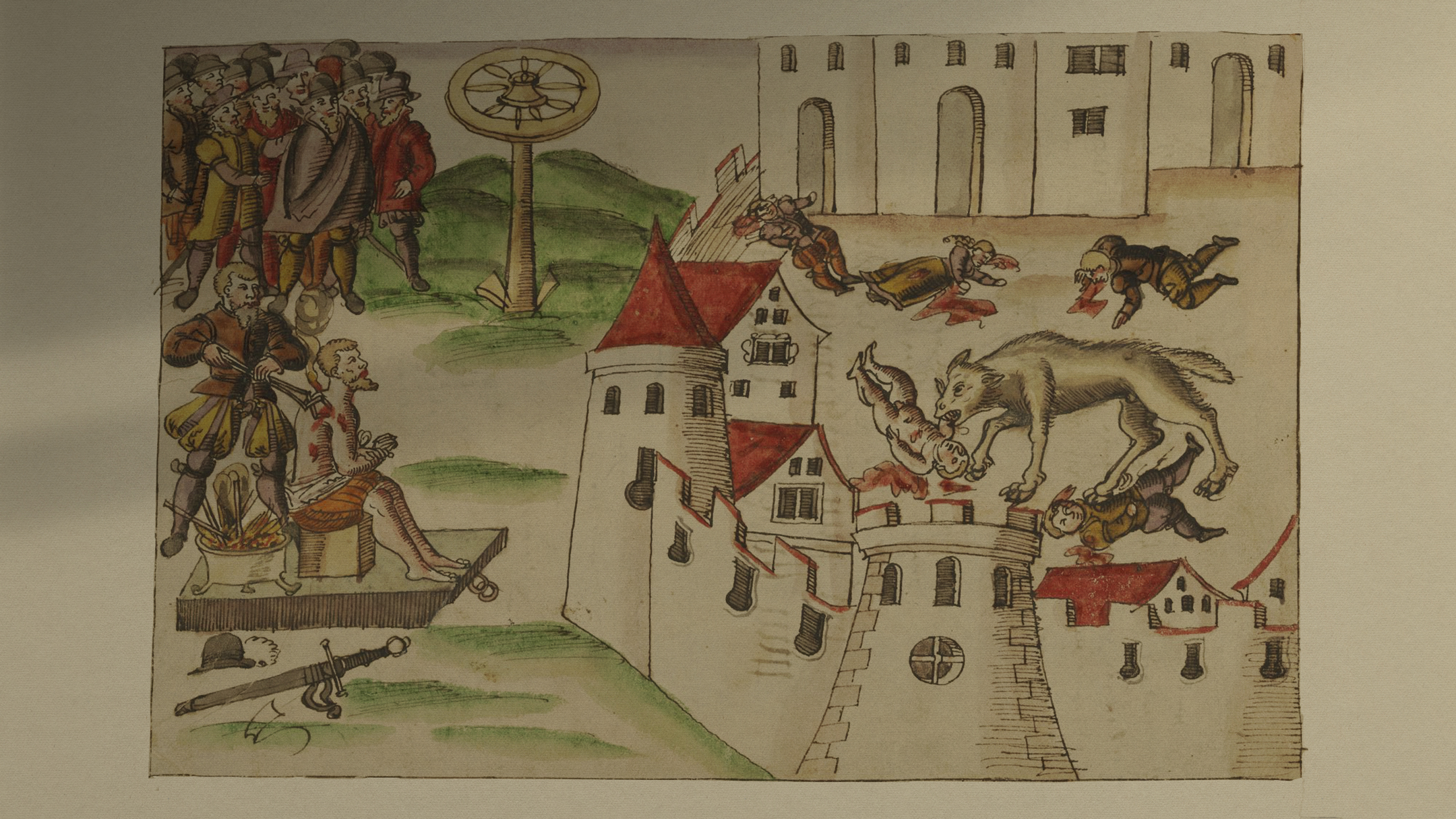
The Werewolf of Geneva
Pen ink drawing of a werewolf attack and subsequent execution, from Johann Jakob Wick’s Wonder Book (c. 1580). It depicts a man from Geneva being tortured with red hot pincers, and destined to be executed for the killing of 16 children in the city, while in his wolf state. The drawing shows clear influences of earlier, widely distributed images of werewolf atrocities arising from the prosecution of suspected werewolves in Switzerland and France during the 16th century.
10/10
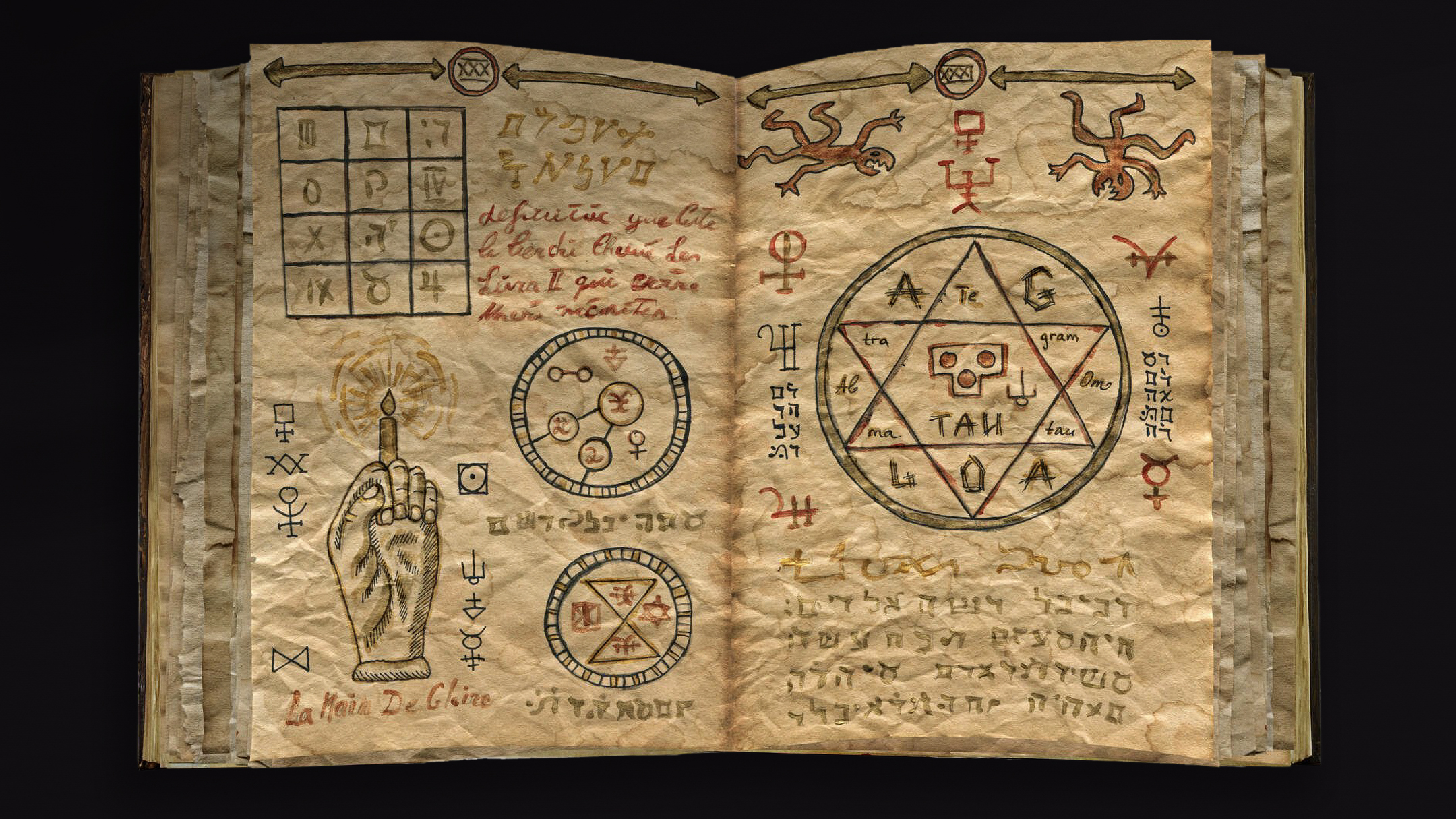
The Hand of Glory
Image from an ‘Old magic book with magic mystic symbols and drawings’ by Vera Petruk, watercolour and collage. Petruk’s work draws inspiration from eastern and western esoteric and occult themes. These illustrations show several pages that Petruk has created for an imagined European grimoire. They play with Hebraic-looking script, the characters or signs of spirits, magic squares, demon images, and talismans. She has also included an example of the Hand of Glory, which is an iconic image originally from the Petit Albert, which was a very popular 18th to 19th century French book of spells, recipes, and household tips. The Hand was that of an executed criminal and, when preserved, if a candle was placed in it and lit, it would stupefy the inhabitants and so allow burglars to go about their business •
This Viewfinder gallery was originally published October 31, 2023.
Art of the Grimoire: An Illustrated History of Magic Books and Spells
Yale University Press, 10 October, 2023
RRP: £25 | 978-3002720170
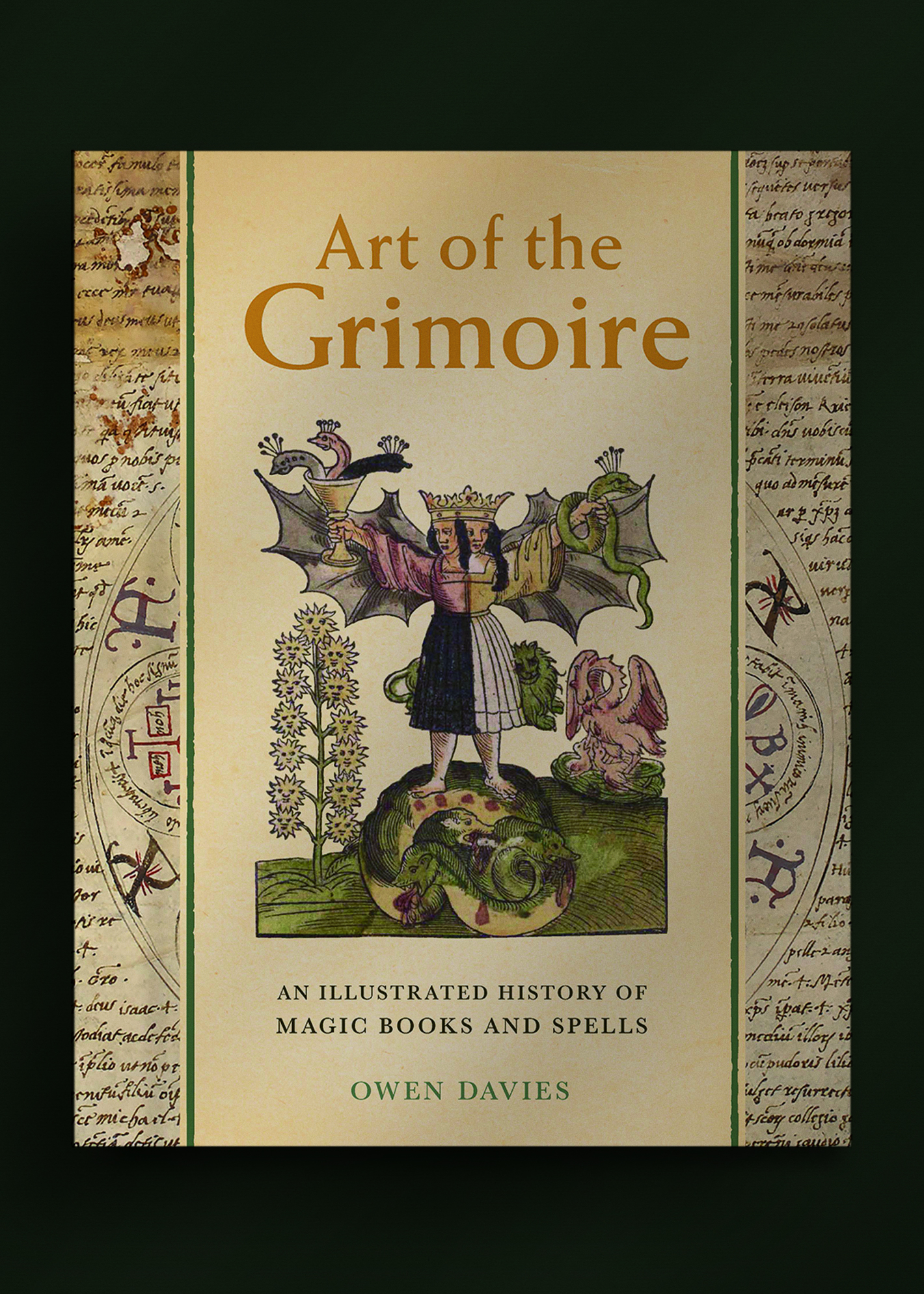
“A richly illustrated study that ranges from ancient Greek and Egyptian papyri to Japanese encyclopaedias of demons” – Apollo Magazine
Grimoires, textbooks of magic and occult knowledge, have existed through the ages alongside other magic and religious texts in part because of the need to create a physical record of magical phenomena, but also to enact magic through spells and rituals.
To understand the history of these texts is to understand the influence of the major religions, the development of early science, the cultural influence of print, the growth of literacy, the social impact of colonialism, and the expansion of esoteric cultures across the oceans.
In more than two hundred color illustrations from ancient times to the present, renowned scholar Owen Davies examines little-studied artistic qualities of grimoires, revealing a unique world of design and imagination. The book takes a global approach, considering Egyptian and Greek papyri, ancient Chinese bamboo scripts, South American pulp prints, and Japanese demon encyclopedias, among other examples.
This book will enchant readers interested in the history of magic and science, as well as in book and manuscript history.
“A beautiful production: a typographic and calligraphic treat as treasurable as a rare magical text itself. Almost every page is filled with wonder”
― Suzi Feay, The Spectator
“This is simply the best illustrated history of magical texts yet written, covering the whole of history and of the planet with equal erudition”
― Ronald Hutton, Bristol University
Images and captions reproduced with permission from Yale University Press.
📸 Dive into our Features
🎤 Read Interviews
🎧 Listen to Podcasts
🖼️ Buy fine art prints & more at our Store


