
1949: The Chicago Theatre
The bright lights of the 'wonder theatre of the world' caught the attention of a young Stanley Kubrick


On a wet night in 1949, a steady flow of people made for the Chicago Theatre in State Street to enjoy the latest production in town. For years the Jack Carson Show had been a staple of the CBS and NBC schedules and in 1949 Carson - a burly comic who was familiar for appearing in films alongside stars like James Cagney and Cary Grant - took his show on the road.
This photograph captures the moment that his live show arrived in Chicago.
Words by Peter Moore
Photographs Remastered and Colourised by Jordan Acosta

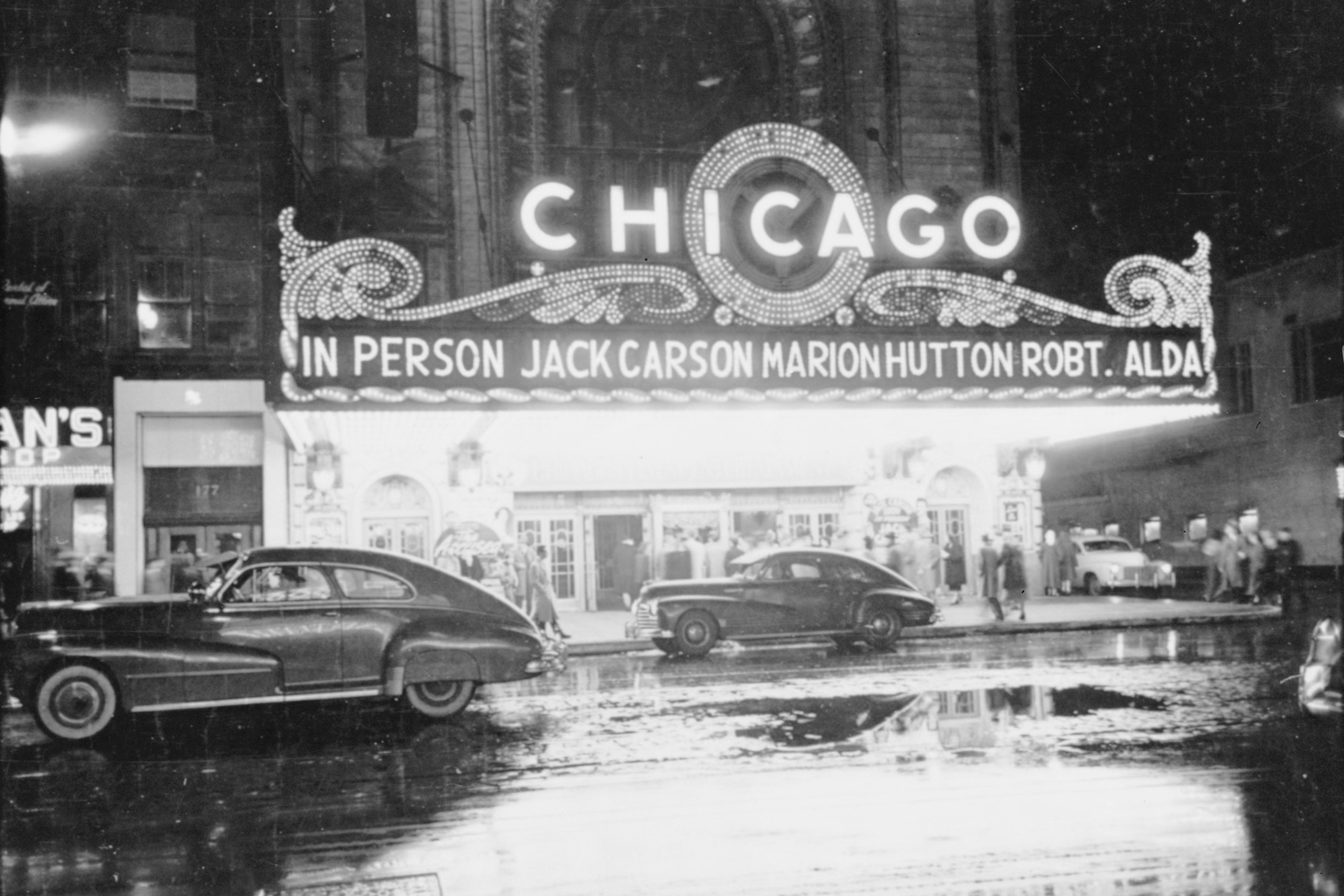
For more than two decades the Chicago Theatre had been established as one of the premiere venues in the United States. Having cost $4 million to construct and with a capacity of 3,880, it had opened in 1921 in a blaze of publicity that billed it as ‘the Wonder Theatre of the World’.
The insides of the theatre were indeed a wonder. It was fitted with elaborate balconies and mezzanines as well as capacious main floor, all of which faced towards a grand proscenium which framed the stage. But it was the theatre's luminous facade that was cherished most of all. In 1926 its marquee front was fitted with glittering rows of coloured lights. Most prominent of all was the word 'Chicago', which sat proudly in the centre of a dazzling circle.
On a dreary night, like that when this photograph was taken, the lights of the Chicago Theatre seemed to burn like flaming torches. It was said that 20,000 light bulbs, all told, were required to illuminate the building. As people turned into State Street, reflected one theatre-goer, 'the Chicago sign blazed at them. Boy, was that a sign! It made daylight of the whole block.'
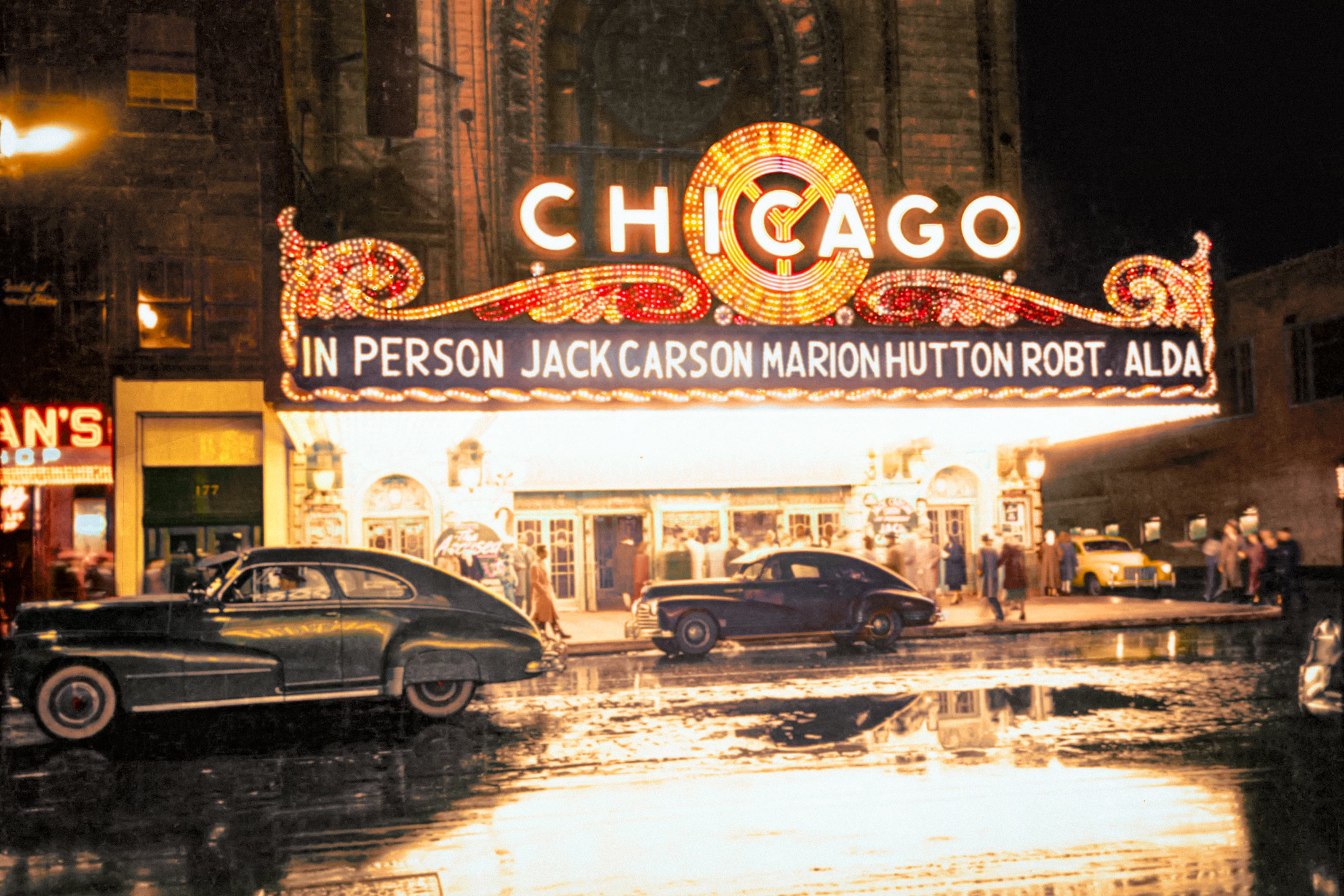
The colourisation of this photograph draws out many of these details. There's an intensity to the light. Its glare on the sodden street is so powerful that it is too much for the film to handle. The rain adds to the atmosphere still further, generating reflections and washing clean the paintwork of the cars parked outside.
All this is interesting, but the identity of the photographer adds an extra element of intrigue. This picture is one of a series taken by a young Stanley Kubrick who at the time was working as a young documentary photographer for Look magazine.
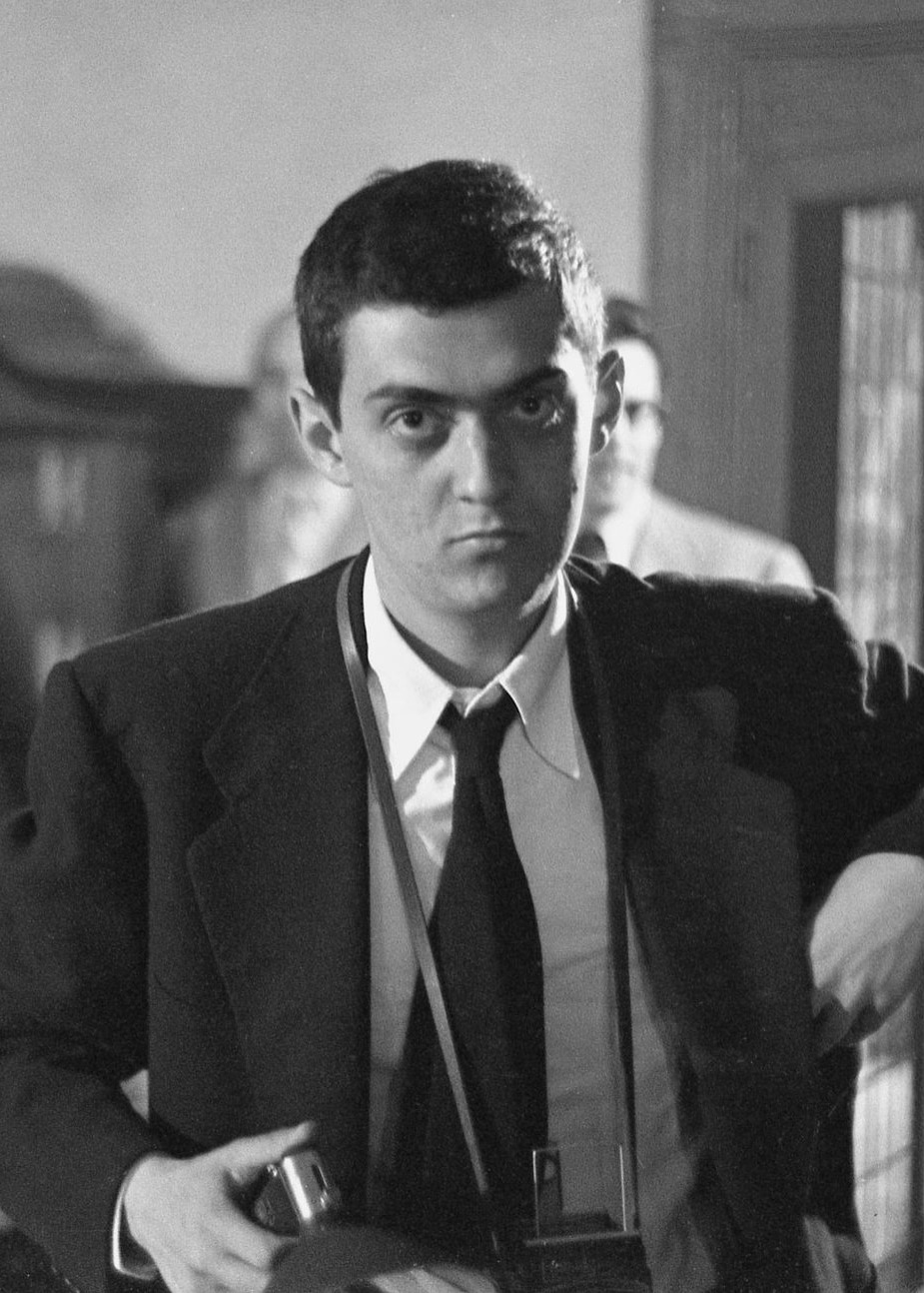
Kubrick would, of course, go on to become one of the twentieth century's great film directors. But here, outside the Chicago Theatre in 1949, we catch a very early glimpse of him at work.
This photograph belongs to a series called 'Chicago: City of Extremes'. While creating this series, Kubrick would take photographs of mill workers, school children and traders at the stock exchange.
Given his future career, though, there is something especially poignant about this photograph. It places him, as a cub journalist on $50, standing in the rain outside a theatre. He remains an outsider, gazing towards the kind of building in which his films would one day be shown.
There is much to enjoy while examining this photograph, but for those of you who would like to know what awaited those damp theatre-goers in the queue outside, here is a review of the Jack Carson Show from a visit to Cincinnati earlier in its run:
8 January 1949
It’s a tight package, good for big yocks thuout [sic], that film comic Jack Carson and his entourage of radio Hollywood talent tosses around here this week. The big, likeable Carson, working a trick laugh to the hilt and buttressed by Marion Hutton and Robert Alda, of the films and George Mann, Dave Willock and Bob Sweeney, from his air show, with an assist from the Emerald Sister, dishes up variegated comedy that reeks with conviviality and has pew sitters in his coern from the start.
Not a little of it is pure corn, buttered and salted to sate the tastes of young and old alike. Slapstickery dominates the show even when the serious is attempted. Burlesque situations have their innings, as in the case of Carson’s tonsiling of He’ll Love Texas Until the Day He Dies, and Melancholy Baby, with Mann, Sweeney and Willock backing him in a phony hand-balancing turn that brings screams of delight.
Standout is the old burly turn, The Stand-In portraying a film studio’s sound stage and replete with the usual pie-tossing, water dousing and knockabout falls, with Carson the poor unknowing lunk on the receiving end. His aides give the set up effective treatment.
Carson, in the emsee role, operates in easy, informal style and is all over the place for the major portion of the show, setting up humorous situations and spicing them with deft ad-libs. His little-girl-big-brother turn with the elongated Mann and running comedy chatter with Willock and Sweeney are potent stints that bring big chuckles.
Emerald Sisters send the show off to a speedy start with a number of amusing across turns. They went away a solid winner. Robert Alda film name, sports a snazzy var voice in his Pretty Baby and Oh! Marie clicking handsomely on the latter.
Blond and shapely Miss Hutton packs an abundance of charm and knows how to hold and please listeners. She offered a zingy Good Day, Brooklyn Love Song, done in Brooklynese, and Who Stole the Jam? Chalking up extended palm whacking for each effort •
This Snapshot was originally published January 26, 2024.
Ad: Unseen Histories relies on your patronage to operate. Our webstore offers a wide range of collectible museum-grade fine art prints, hand-printed in England for your wall space.
ColorGraph™ presents the most incredible colorized photography bringing the past to life. From start to finish, a ColorGraph print is made with exceptional care and attention. To mark its provenance, we emboss each one in the final stage of the hand-finishing process.
📸 Dive into our Features
🎤 Read Interviews
🎧 Listen to Podcasts
🖼️ Buy fine art prints & more at our Store


.jpg)