
What the Genoese Could Have Told the Dutch
Nicholas Walton finds similarities in the histories of the Genoese and the Dutch


The year 1492 brought Christopher Columbus's famous crossing of the Atlantic Ocean and propelled the nations of Europe towards an entirely new phase of global history.
Spain and Portugal were the nations that led the way. But two other powers, the Genoese and the Dutch, began at this point to expland their outlooks in surprising ways of their own.
Nicholas Walton, the author of the new book, Orange Sky, Rising Water, examines what happened as ships from these two little republics began to explore the wide world.

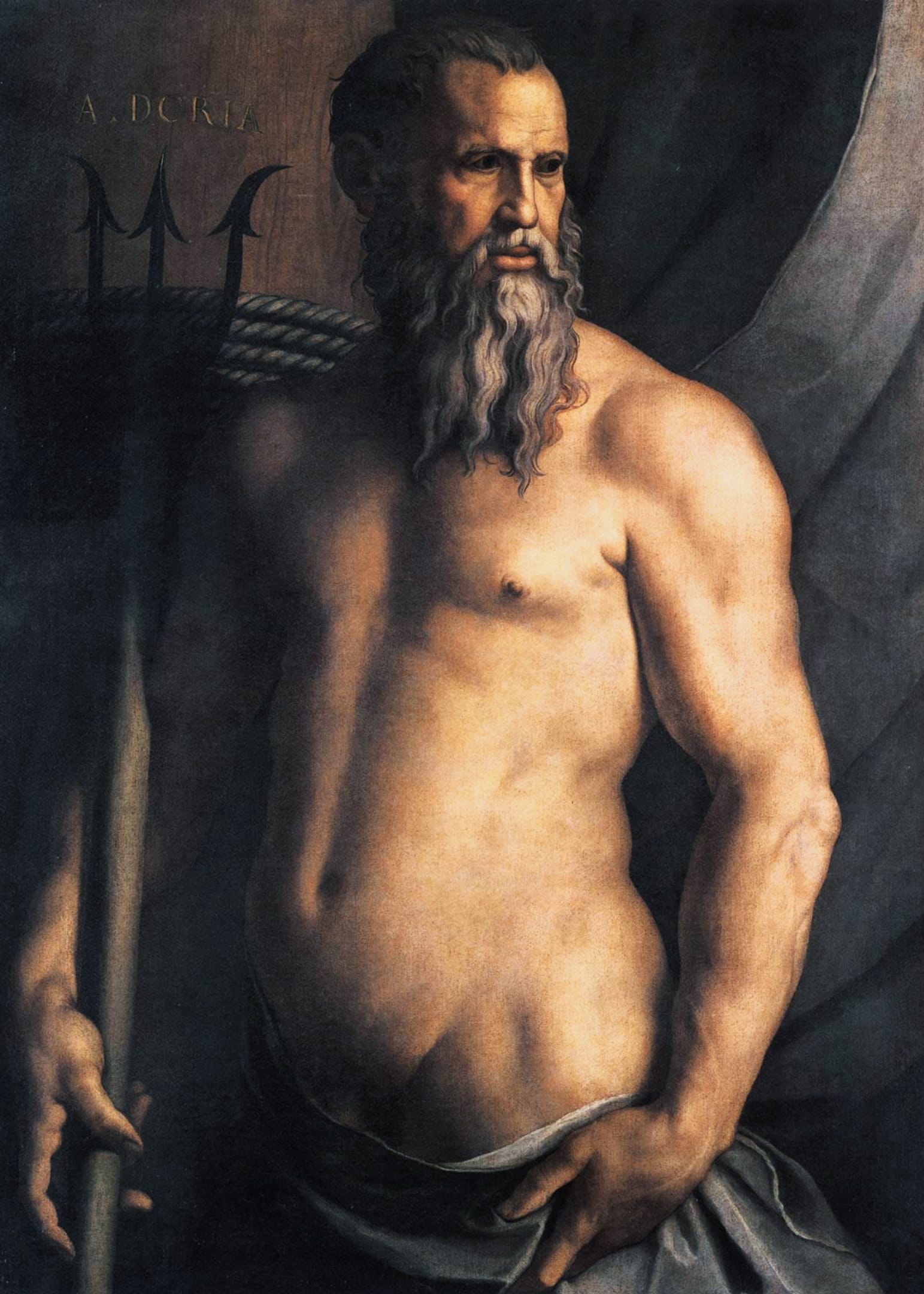
The painting shows a water god made human, a Neptune with a dead eyed stare and a naked torso, his shoulders pulsing with muscular purpose. The canvas is by Angelo Bronzino, and that water god, complete with straggling beard and trident, was a man called Admiral Andrea Doria. Admiral Doria chose to be portrayed as Neptune because he was undoubtedly a great man, and through the late fifteenth and early sixteenth century he battled to save the city state of Genoa from the tides of history.
Genoa had been glorious, a merchant pirate superpower that battled with Venice and sent its galleys across the Mediterranean to find fortunes. Now, however, larger nation states like France and Spain had shoved the city states aside, and the action had shifted from the Mediterranean to the Atlantic and beyond. Admiral Doria did his best, but even he, with those muscular shoulders, and resolute eyes could not save Genoa from history.
The Republic of Genoa had been founded on great men like Andrea Doria. At the turn of the millennium it was little more than a jumble of rocks on the northern edge of the Mediterranean. It was a marginal, unpromising home, with no meaningful space for agriculture and little room for error.
Behind it lay the barren and jagged Apennines, and in front lay the sea and great danger. From across those seas came men in ships, marauding the coasts, looking for victims. The unlucky would be wrenched away to the shores of North Africa and slavery.
The Genoese faced a choice: retreat to the mountaintops inland, like so many Italian communities of that time, or face down the danger.
The Genoese in those early years were not necessarily virtuous or kind, but they certainly were not victims. They were skilled seafarers, and that hard homeland had made them tough and uncompromising. They resolved to take to the seas themselves, mirroring the way the Venetians on the other side of the Italian mainland had come out fighting and trading from their own unpromising marshy beginnings.
Venice and Genoa flourished in this steely world of brute force, seafaring skills, and ingenuity. They were to fire the early medieval economy, linking early manufacturing centres like Florence with its textile trade, with raw materials, such as wool from England and Flanders.
As a more networked European economy found its feet, Venice and Genoa plugged it in to trade routes from the east, to the Levant, the Black Sea and beyond. They sailed and fought in mighty galleys bristling with oars, and traded in spice and silk, wax and furs.
They were opportunists and networkers who knew a profit when they saw it. When the Black Death came to Europe, it unsurprisingly arrived on Genoese ships, fleeing a Mongol siege in Caffa on the Crimea. Genoa was an integral and vital part of medieval Europe’s connective tissue.
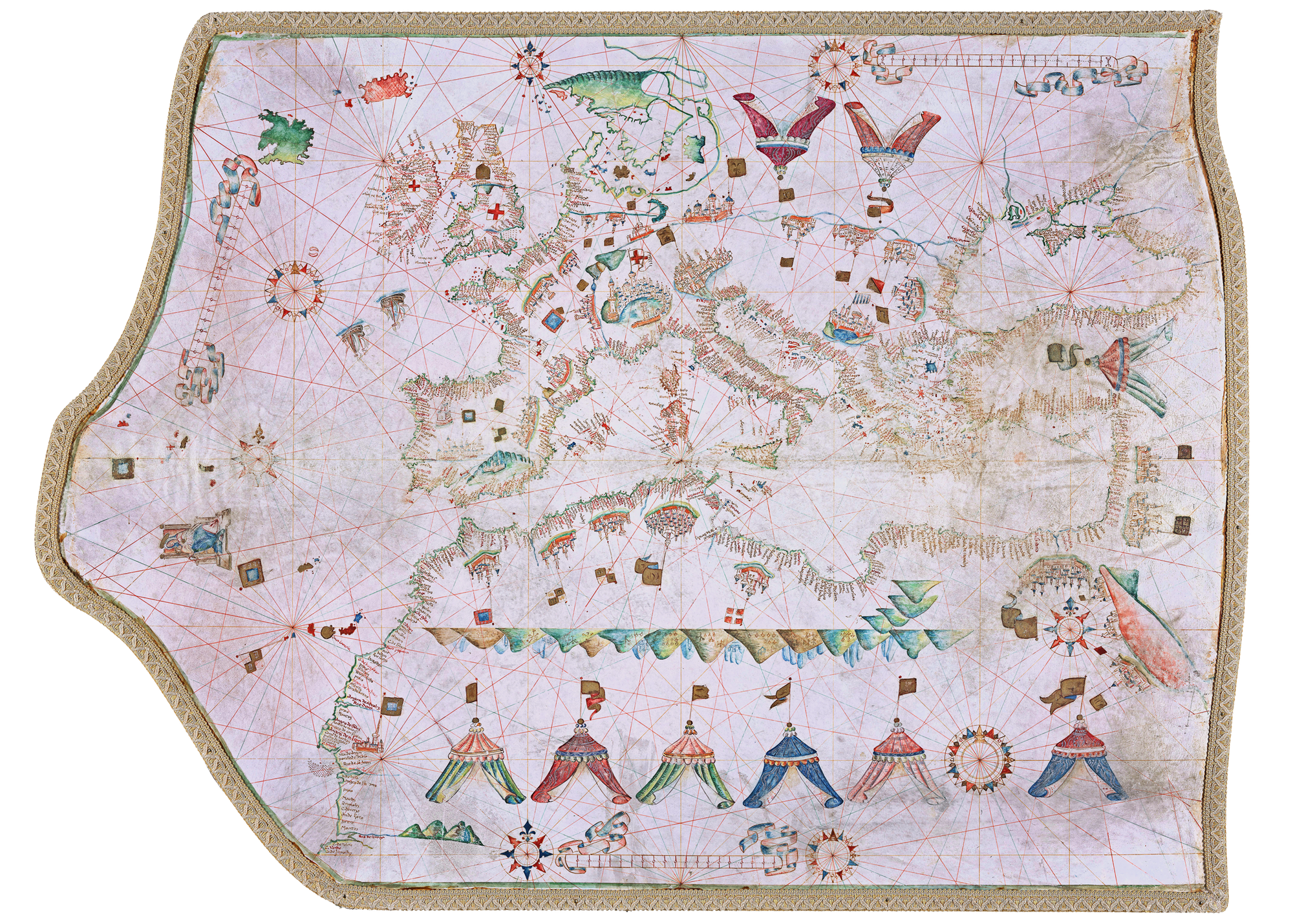
By the time of Andrea Doria that had changed. He was born in 1466, and the great turn in history that he struggled against was the shift from the Mediterranean to the oceans of the world. Sailing ships had replaced galleys, and maritime powers such as Genoa and Venice had given way to a new and dynamic generation of states that faced the ocean: Spain and Portugal, England and the Netherlands.
The tough and wily seafarers produced by Genoa remained in demand, including Christopher Columbus and John Cabot. But ironically, the shift towards ocean-going voyages was powered by a search for a better way to access the trade in spices that the Genoese and Venetians had done so much to open up.
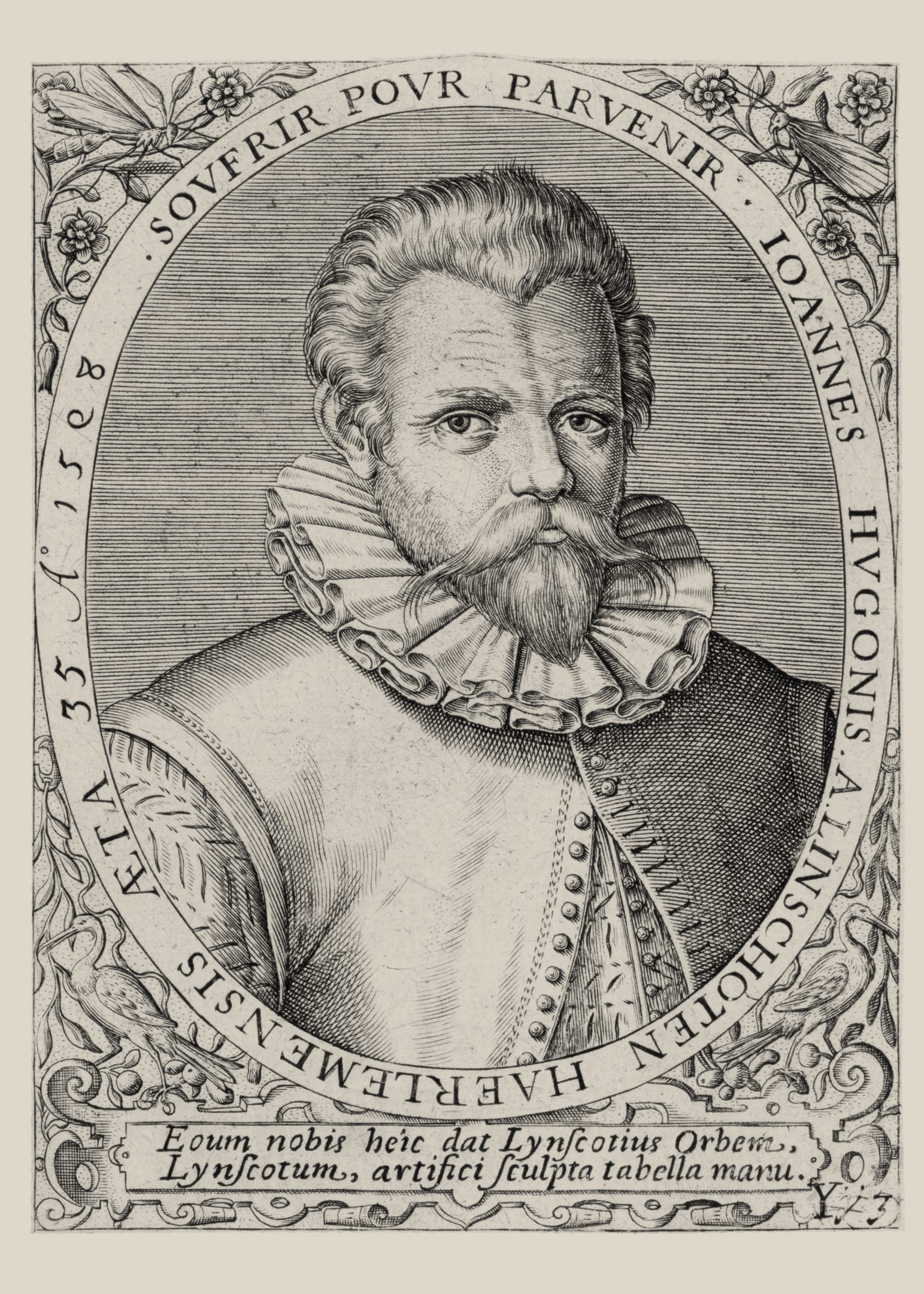
The Portuguese had led the way, rounding Africa in 1488 and crossing the Indian Ocean to the east. This proved extremely lucrative, and they guarded their navigational secrets fiercely. But by the 1590s a Dutchman called Jan Huyghen van Linschoten, who had spent years with the Portuguese in Goa and the Azores, published three crucial books. These unlocked the spice routes.
The Dutch dispatched their first expedition to what they called the Indies in 1595. This Eerste Schipvaart was in itself financially disastrous, leaving little more than a trail of destruction, cannonades and mutiny across the Indian Ocean.
But back home the Netherlands at the time was developing into a dynamic and deeply enterprising power. In the wake of the Reformation it had welcomed Protestant refugees, often with capital and merchant links, from Antwerp and beyond.
It was a vibrant society fizzing with ideas and entrepreneurialism, where solid commercial common sense ran unfettered by hierarchies and entrenched institutions.
When a second fleet returned from the Indies carrying lucrative cargos including hundreds of tonnes of pepper and cloves, along with other spices, Dutch merchants began considering better ways of organising their trade with the east.
By the time of Andrea Doria that had changed. He was born in 1466, and the great turn in history that he struggled against was the shift from the Mediterranean to the oceans of the world. Sailing ships had replaced galleys, and maritime powers such as Genoa and Venice had given way to a new and dynamic generation of states that faced the ocean: Spain and Portugal, England and the Netherlands.
The tough and wily seafarers produced by Genoa remained in demand, including Christopher Columbus and John Cabot. But ironically, the shift towards ocean-going voyages was powered by a search for a better way to access the trade in spices that the Genoese and Venetians had done so much to open up.
The Portuguese had led the way, rounding Africa in 1488 and crossing the Indian Ocean to the east. This proved extremely lucrative, and they guarded their navigational secrets fiercely. But by the 1590s a Dutchman called Jan Huyghen van Linschoten, who had spent years with the Portuguese in Goa and the Azores, published three crucial books. These unlocked the spice routes.
The Dutch dispatched their first expedition to what they called the Indies in 1595. This Eerste Schipvaart was in itself financially disastrous, leaving little more than a trail of destruction, cannonades and mutiny across the Indian Ocean.
But back home the Netherlands at the time was developing into a dynamic and deeply enterprising power. In the wake of the Reformation it had welcomed Protestant refugees, often with capital and merchant links, from Antwerp and beyond.
It was a vibrant society fizzing with ideas and entrepreneurialism, where solid commercial common sense ran unfettered by hierarchies and entrenched institutions.
When a second fleet returned from the Indies carrying lucrative cargos including hundreds of tonnes of pepper and cloves, along with other spices, Dutch merchants began considering better ways of organising their trade with the east.
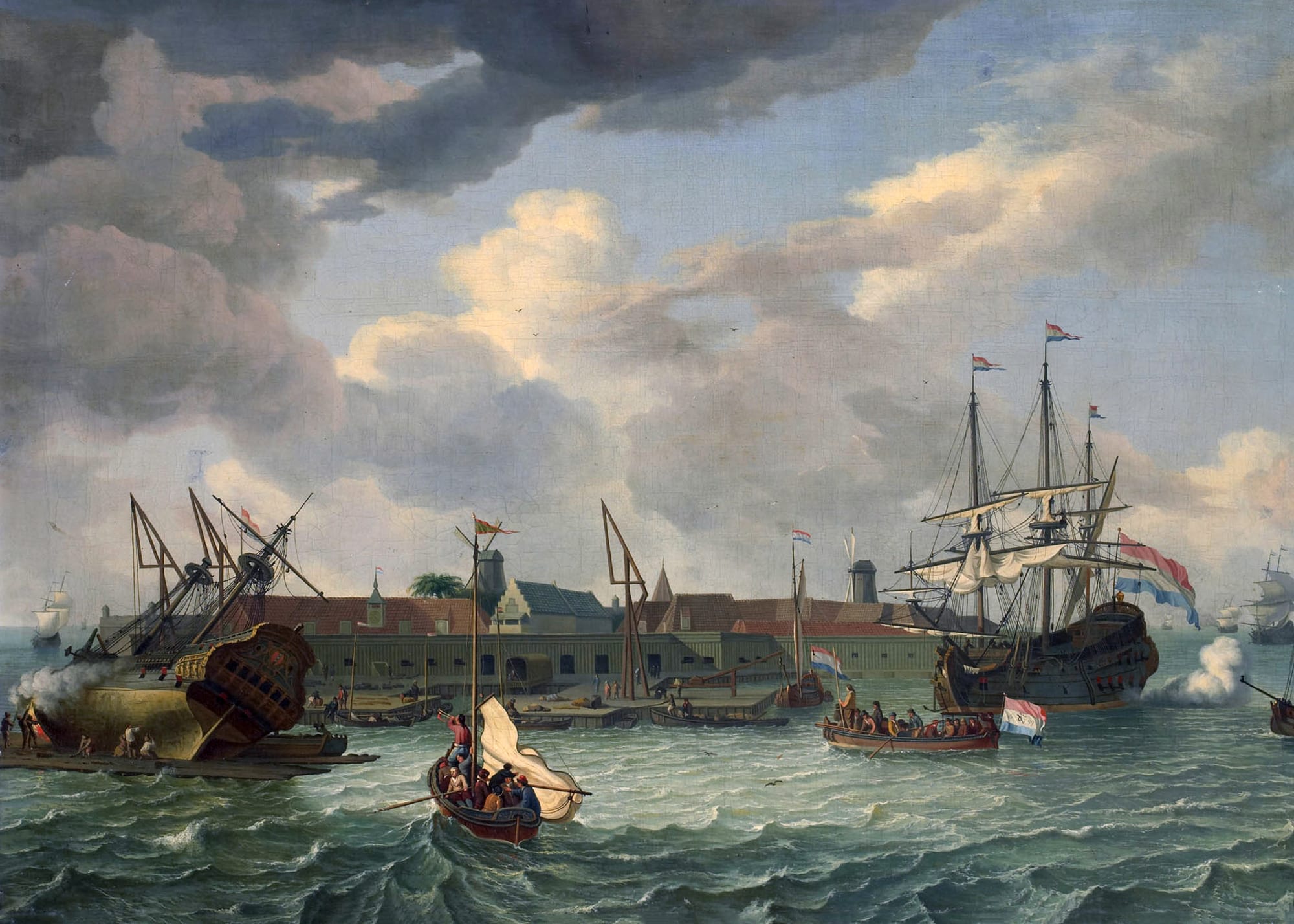
The answer was to replace the free-for-all with a combined approach. The Dutch East India Company (Verenigde Oost-indische Compagnie or VOC) was a pioneering joint stock corporation, bringing together money, talent, logistics and experience in a shared monopoly enterprise. The VOC (and later the GWC, the Chartered West India Company) was the vehicle that gave a small and soggy corner of the European continent a vast global empire.
A common mistake is to see modern Indonesia, the independent successor to the Dutch East Indies, and imagine that for several hundred years the Netherlands ran that enormous archipelago as a unitary and complete whole. Not so. The VOC initially pieced together the Dutch East Indies through treaties, coercion and highly specific land grabs, notably of the scattering of tiny islands (such as Ambon and Ternate) that actually grew the invaluable spices.
If, as John Seeley had it, the British Empire was established in a ‘fit of absence of mind’, the Dutch imperium might be characterised as the product of unscrupulous management consultants: the VOC seized the source of production, those spice islands, and then set about building the back office for an effective supply chain that led back to the wharves of Amsterdam.
Jan Pieterszoon Coen was the central VOC figure, single minded and austere, and driven by a convenient belief that God sanctioned whatever it is that he decided to do. He wrested Batavia (now Jakarta) from English control and made it the centre of his vision of a Dutch commercial empire based around outposts and violent coercion.
Only when the market for spices began to falter did the Dutch consider pivoting towards a more complete territorial plantation-based imperial system. That entailed a gradual takeover of that entire enormous archipelago, stretching more than 3,000 miles from Aceh in Sumatra (which became part of the empire in 1904 after a bloody 3 decades conflict) to West Papua (the Dutch claimed the whole of the province in 1828).
The Second World War was a cold shower for the Dutch. Occupied in Europe by the Nazis and in Southeast Asia by the Japanese, the sheer size of the Dutch imperium could not cover the fact that the home country had long ago lost the vigour of the buccaneering 1600s. They ended the war warning that ‘Indië verloren, ramspoed geboren’ (‘Losing the Indies brings disaster’), but that is exactly what then happened.
Admiral Andrea Doria would have appreciated Dutch impotence. The Netherlands had to rethink its place in a world that had left its comparative advantage far behind. Doria could never recapture the glories of that first flourish of galley-powered Genoese glory, opting instead to court the mighty Spanish, develop the financial institutions to process their silver booty from the New World, and continue the age-old struggle against Mediterranean piracy.
The Dutch themselves settled on a less racy course, becoming a sober cornerstone of a New Europe, an innovative industrial middleweight, and reinventing football in the 1970s. Losing the Indies was inevitable, thanks to the kind of turn of history that had unseated the Genoese. But as Admiral Doria would have agreed, perhaps the real test of a nation is when it is forced to rethink itself, and survive •
This feature was originally published December 4, 2025.
You can view a series of walking videos at ⇲ Ten Walks Explain, in which Walton walks across different parts of the Netherlands and evaluates the country's identity, its challenges and cultural history.
Orange Sky, Rising Water: The Remarkable Past and Uncertain Future of the Netherlands
Hurst, 11 September, 2025
RRP: £18.99 | ISBN: 978-1805264156
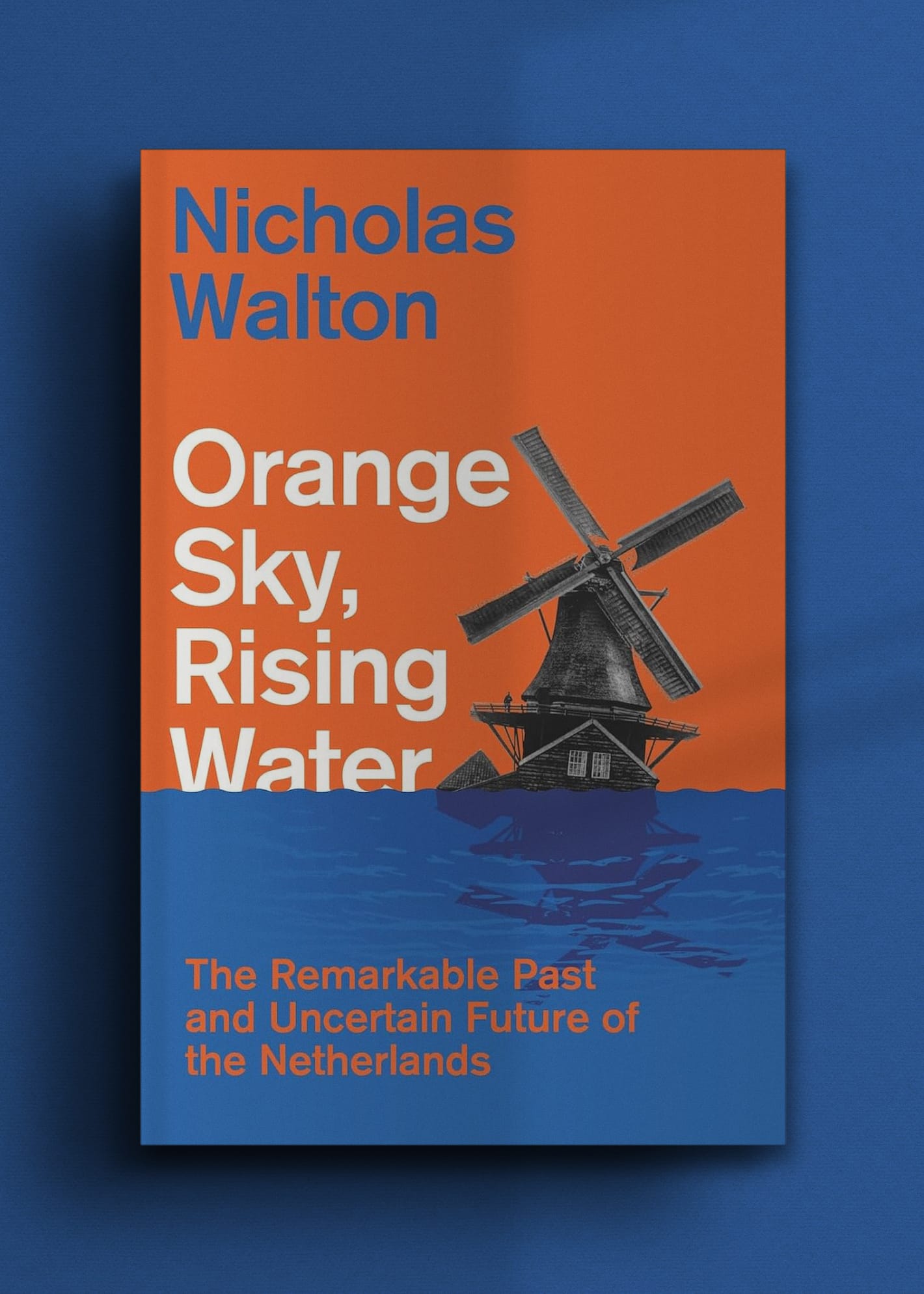
From deeply unpromising marshy beginnings, the Netherlands grew into a naval, imperial, artistic, cultural, economic, scientific, agricultural and footballing superpower. How did it get there?
Journalist Nicholas Walton paints a vivid portrait of one of the world’s most remarkable places. Drawing on interviews and his own years living in the Netherlands, as well as Dutch history and popular culture, he tells a story of floods and riots, engineering brilliance and wartime treachery. Through ten walks around their towns and cities, fields and beaches, he reveals how the Dutch built a system that organised politics and tamed the water. But now, the country faces an unpredictable future: sea levels are rising, and extreme weather is swelling the rivers that cut across this flat land. At the same time, farmers are protesting with their tractors on the streets and voters are voicing their discontent over everything from immigration and inequality to a dysfunctional housing market.
Amid the existential challenges of the twenty-first century, Orange Sky, Rising Water asks whether the extraordinary Dutch success story can continue―or will the country, its people and its way of life be swept away?
“A fond, funny and sometimes critical account of this remarkable country that has defied nature for centuries―and will have to keep defying it as the waters rise. Walton is a wonderful guide to the Netherlands’ hidden oddities, and perhaps even to the country’s soul”
– Simon Kuper
With thanks to Jess Winstanley.
📸 Dive into our Features
🎤 Read Interviews
🎧 Listen to Podcasts
🖼️ Buy fine art prints & more at our Store


.jpg?ref=unseen-histories.ghost.io)